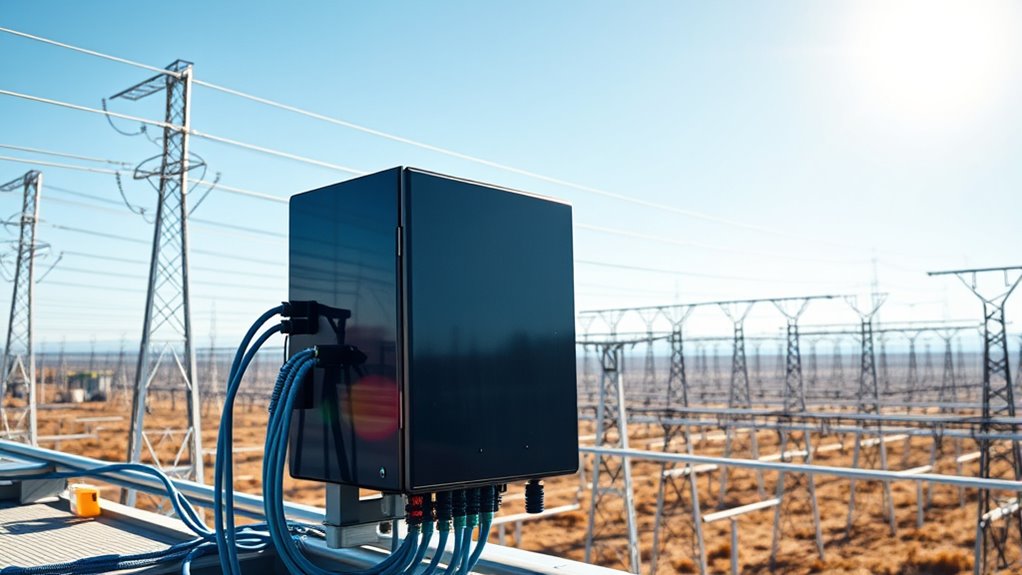

Understanding how solar inverters communicate with the grid is vital for grasping the role they play in maintaining a stable energy system. These devices don’t just convert sunlight into electricity; they also constantly exchange data with the grid to guarantee everything runs smoothly and safely. As renewable energy becomes more common, knowing how inverters interact with the grid reveals the essential factors behind reliable, efficient power delivery—and the potential challenges that come with it.
Key Takeaways
- Solar inverters use communication systems to exchange real-time data with the grid, enabling adaptive responses.
- They detect grid fluctuations like voltage or frequency deviations and automatically adjust power output accordingly.
- Communication allows inverters to implement safety features such as anti-islanding, preventing energization during outages.
- Through grid signaling, inverters help maintain voltage stability and support overall grid reliability.
- Effective communication ensures seamless integration of solar energy, enhancing grid stability and compliance with regulations.
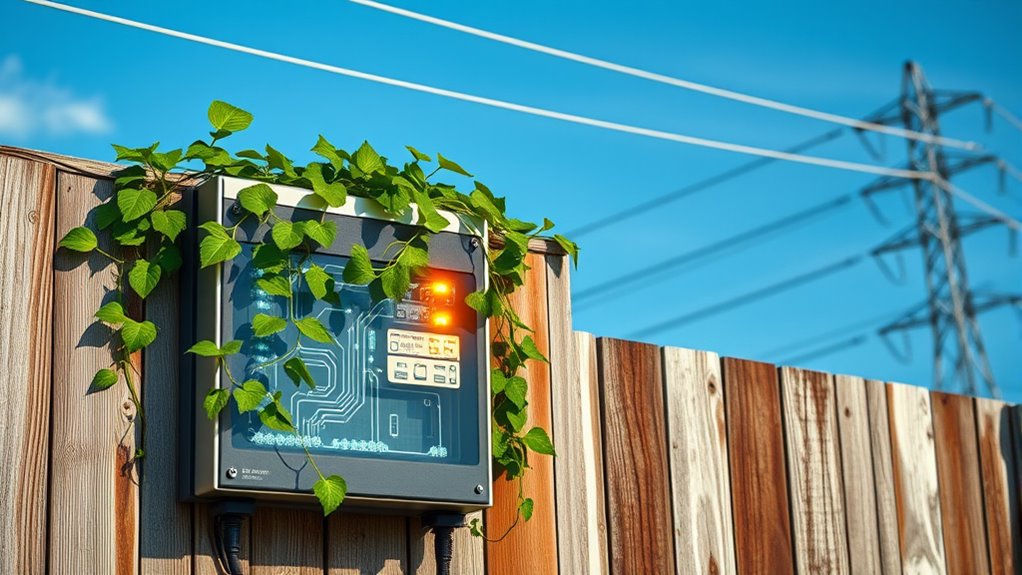
Solar inverters play a crucial role in integrating solar power systems with the electrical grid, guaranteeing that the energy generated by your panels can be safely and efficiently fed into the grid. When your solar system produces electricity, the inverter’s job is to convert the direct current (DC) from your panels into alternating current (AC) that matches the grid’s voltage and frequency. But beyond this basic function, modern inverters are equipped with sophisticated communication capabilities that allow them to interact seamlessly with the grid. This communication is essential for maintaining grid stability, especially as more renewable sources connect to the network.
Inverter communication enables your solar system to stay in sync with the grid’s conditions. When the grid experiences fluctuations—like voltage changes or frequency deviations—your inverter responds automatically. It adjusts its output to prevent disturbances, ensuring your system doesn’t cause instability or damage. This dynamic exchange of information helps keep the entire grid stable, even as multiple distributed energy resources like solar panels come online. Without effective communication, these fluctuations could lead to power outages or equipment failures, underscoring why inverter communication is so critical.
Furthermore, grid stability depends heavily on how well your inverter can detect and react to grid signals. For example, if there’s a sudden drop in grid frequency, your inverter can reduce its output or temporarily disconnect to prevent causing or exacerbating the problem. Conversely, during periods of high demand, it can ramp up production accordingly. These real-time adjustments are only possible because of the inverter’s ability to communicate with the grid’s control systems, ensuring smooth operation and preventing disruptions.
Inverter communication enables real-time responses to grid fluctuations, ensuring stability and preventing disruptions.
This communication also facilitates compliance with grid regulations and standards. Utilities often require inverters to support grid stability by incorporating features like anti-islanding and reactive power control. Anti-islanding prevents your system from energizing the grid during outages, protecting workers and equipment. Reactive power control helps maintain voltage levels within safe limits. Your inverter’s communication capabilities enable these functions to operate automatically, reducing the need for manual intervention.
In essence, the way your solar inverter talks to the grid isn’t just about technical compatibility; it’s about safeguarding the entire electrical system. Effective inverter communication ensures your solar energy is integrated smoothly, supporting a stable, reliable, and resilient grid. As renewable energy continues to grow, the importance of this communication will only increase, making it a key factor in the future of sustainable power generation. Understanding inverter communication is vital for appreciating how renewable energy connects to the broader grid infrastructure.
Conclusion
Understanding how solar inverters communicate with the grid is key to appreciating renewable energy’s role in our future. Did you know that over 70% of new solar installations now include smart inverters capable of real-time grid interactions? This seamless communication helps prevent blackouts and keeps the power flowing smoothly. By ensuring safe, stable energy transfer, these systems make renewable energy more reliable and accessible, paving the way for a greener, more resilient grid for everyone.