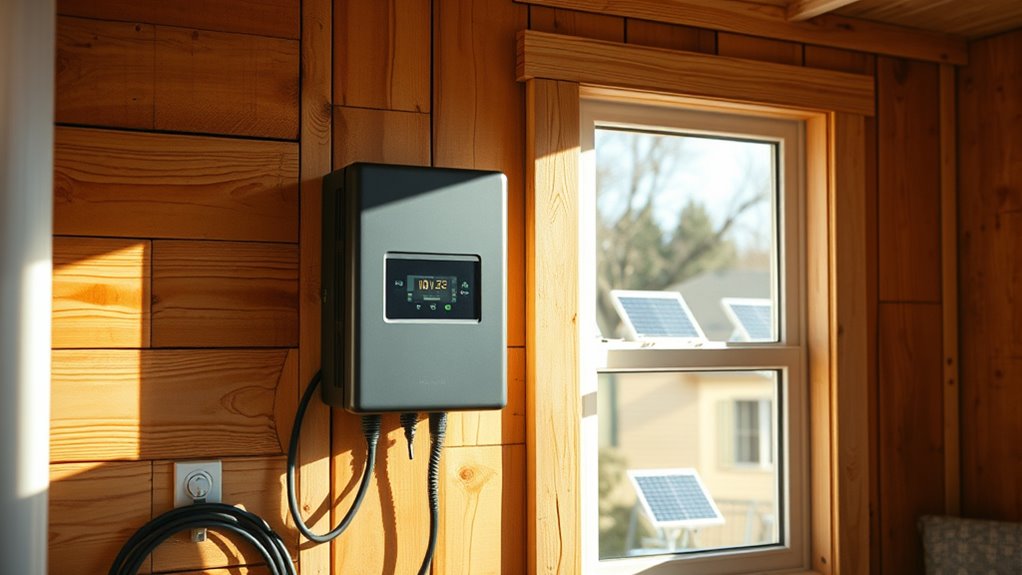

If you’re considering a solar inverter for your tiny house, you’ll want to know it’s crucial for converting the DC power from your solar panels into usable AC energy for your appliances. Efficiency is key to maximize power and reduce waste, while the right size ensures you meet your energy needs without overspending. Compatibility with batteries and standards guarantees safety and longevity. Keep these factors in mind, and you’ll find choosing the right inverter becomes clearer as you explore further.
Key Takeaways
- What size inverter is suitable for a tiny house’s energy needs and how to determine proper capacity.
- How does inverter efficiency impact energy savings and overall system performance in small-scale solar setups.
- Compatibility considerations between inverters, batteries, and other solar components for tiny houses.
- Safety standards and certifications to look for when choosing a reliable solar inverter.
- Tips for maintaining and troubleshooting inverters to ensure long-term, efficient operation.

Are you wondering how a solar inverter works for your tiny house? Well, it’s a key component that converts the direct current (DC) electricity generated by your solar panels into alternating current (AC), which is what your appliances use. When sunlight hits your panels, they produce DC power, but since most household devices run on AC, you need an inverter to bridge that gap. This process is crucial to making your solar setup functional and reliable. You’ll want to pay close attention to inverter efficiency, which measures how well your inverter converts DC to usable AC power. Higher efficiency means less energy loss during conversion, giving you more usable power from your solar system. This is especially important in a tiny house, where space and resources are limited. You don’t want to waste any of the energy you generate, so choosing an inverter with a high efficiency rating helps maximize your system’s output and keeps your energy bills low.
Battery storage is another critical aspect to think about. In a tiny house, your solar inverter often works in tandem with batteries, storing excess energy generated during sunny days for use at night or on cloudy days. When you invest in battery storage, it’s crucial to select an inverter compatible with your batteries. Some inverters are designed to handle battery charging and discharging efficiently, which ensures your stored energy is used most effectively. This setup not only provides backup power during outages but also allows you to manage your energy consumption better, reducing reliance on grid power if it’s available. The integration of battery storage with your inverter also plays a role in your system’s overall efficiency. When your inverter efficiently manages both energy conversion and battery charging, you get more reliable, consistent power, and extend the lifespan of your batteries. Additionally, understanding technology standards can help you choose a compatible inverter that meets current safety and performance regulations.
In addition to efficiency and battery compatibility, you should also think about the inverter’s capacity—how much power it can handle at once. A tiny house typically doesn’t require a massive inverter, but it’s important to size it correctly for your needs. Oversized inverters can be unnecessary and more expensive, while undersized ones might limit your energy use or cause system inefficiencies. Look for a unit that balances capacity with efficiency, ensuring you’re getting the most out of your solar investment. By understanding how your inverter works, especially in relation to battery storage and efficiency, you’ll be better equipped to make informed decisions. This knowledge helps you build a sustainable, cost-effective solar system tailored to your tiny house lifestyle, providing clean energy and independence for years to come.
Frequently Asked Questions
Can I Upgrade My Tiny House Inverter Later?
Yes, you can upgrade your tiny house inverter later, but it depends on inverter compatibility and your current system setup. To guarantee a smooth upgrade process, check if the new inverter matches your existing battery bank and solar system specifications. You might need additional components or adjustments. Planning ahead and consulting a professional can help you upgrade efficiently without compromising system performance or safety.
How Do Inverters Handle Power Surges in Tiny Homes?
Think of your inverter as a sturdy bridge that withstands rushing waters. When a power surge hits your tiny home, most inverters include built-in power surge protection to prevent damage. High-quality inverters are designed for durability, absorbing sudden voltage spikes and shielding your system. To keep your setup safe, choose an inverter with reliable surge protection, ensuring your tiny house’s power stays steady and secure through unexpected electrical storms.
Are Portable Inverters Suitable for Tiny House Use?
Yes, portable inverters are suitable for tiny house use because they provide flexible portable power options. You just need to choose an inverter size that matches your energy needs, guaranteeing it can handle your appliances’ wattage. Portable inverters are convenient for off-grid or backup power, making them ideal for tiny homes. Just remember to check their capacity to ensure they can support your essential devices safely and efficiently.
What Maintenance Do Tiny House Inverters Require?
You should regularly check your tiny house inverter for dust and debris, and keep the cooling vents clear to prevent overheating. Battery maintenance is essential; ensure your batteries are charged properly and inspect for corrosion or leaks. Proper maintenance extends your inverter lifespan, saving you money long-term. Also, follow the manufacturer’s guidelines for specific upkeep tasks, and consider routine professional checkups to keep your system functioning smoothly and efficiently.
How Do Inverters Impact Tiny House Resale Value?
Think of your tiny house as a story waiting to be told; a high-quality inverter acts as a compelling chapter that enhances resale value. A reputable inverter brand boosts solar panel efficiency, making your home more attractive to buyers. When you choose a reliable inverter, you demonstrate long-term investment and quality, which can markedly increase your tiny house’s resale value. Ultimately, a good inverter is your tiny house’s silent ambassador.
Conclusion
Now that you’ve got the essentials down, you’re ready to power your tiny house with confidence. Remember, choosing the right inverter isn’t just about technology, it’s about shaping your sustainable lifestyle—think of it as your modern-day “philosopher’s stone.” With a little research and a clear plan, you’ll turn your tiny house into a self-sufficient haven, proving that sometimes, the smallest spaces can hold the biggest dreams.