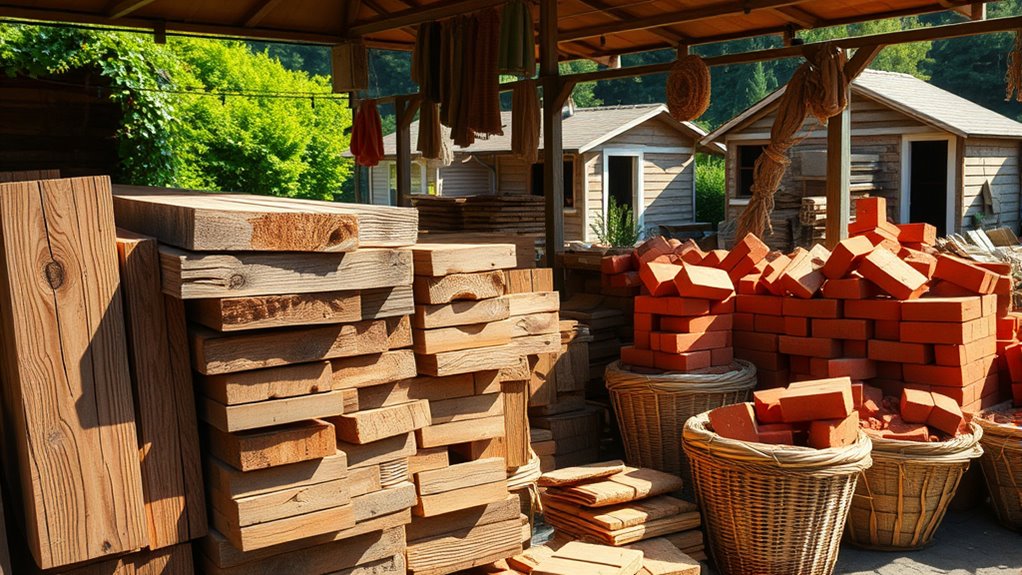

Sourcing sustainable building materials locally helps reduce transportation emissions, supports nearby economies, and guarantees materials better fit your community’s climate and needs. By choosing locally grown and recycled resources like urban forestry products or recycled aggregates, you decrease environmental impact and promote regional sustainability. Collaborating with nearby suppliers fosters resilient supply chains and can lower costs. To discover more about incorporating these eco-friendly options into your project, keep exploring how local sourcing benefits both you and the environment.
Key Takeaways
- Prioritize local suppliers to reduce transportation emissions and support regional economies.
- Use urban forestry materials like reclaimed timber and biomass to promote sustainability.
- Incorporate recycled aggregates to minimize quarrying impacts and conserve natural resources.
- Collaborate with nearby partners to enhance transparency, reduce costs, and strengthen regional supply chains.
- Align sourcing strategies with community initiatives to promote environmental responsibility and long-term resilience.

Choosing sustainable building materials locally is one of the most effective ways to reduce your project’s environmental impact. When you source materials nearby, you cut down on transportation emissions, support local economies, and often find options better suited to your climate and community needs. One valuable resource you should consider is urban forestry, which involves utilizing locally grown and processed wood and plant materials. Urban forestry projects can provide reclaimed timber, mulch, and other biomass that can be repurposed for construction, landscaping, or structural elements. Not only does this reduce the demand for virgin materials, but it also promotes the health and biodiversity of your local green spaces. Using urban forestry-derived materials helps you close the loop on waste and fosters sustainable land management practices within your community. Additionally, engaging with local urban forestry initiatives can foster community engagement and strengthen regional sustainability efforts.
In addition to urban forestry, recycled aggregates play a crucial role in sustainable construction. These materials often consist of crushed concrete, brick, glass, or other processed waste that would otherwise end up in landfills. By incorporating recycled aggregates into your project, you markedly reduce the need for quarrying new raw materials, which often has detrimental environmental effects like habitat destruction and high energy consumption. Recycled aggregates are versatile, suitable for concrete mixes, road bases, and drainage systems, making them a practical and eco-friendly choice. When you choose recycled aggregates sourced locally, you further minimize transportation emissions and support regional waste management efforts. This not only conserves natural resources but also helps create a circular economy where waste becomes a valuable resource.
Sourcing these materials locally also encourages collaboration with nearby suppliers and recycling centers, fostering a more resilient and sustainable regional supply chain. You’ll find that local suppliers often have better transparency about their sourcing practices, allowing you to verify that the materials are ethically and sustainably obtained. Additionally, working with local urban forestry initiatives and recycling facilities can sometimes lead to innovative solutions tailored to your project’s specific needs. This approach reduces costs, shortens lead times, and enhances your project’s overall sustainability credentials.
Ultimately, integrating urban forestry products and recycled aggregates from your local area demonstrates a commitment to environmental responsibility. It aligns your project with principles of sustainability, reduces your carbon footprint, and supports community-based resource management. By making conscious choices to prioritize local, eco-friendly materials, you contribute to a healthier planet while also creating a building that reflects sustainable development practices. This approach not only benefits the environment but also enriches your project’s connection to the community and promotes a resilient, sustainable future.

Heritage Timber Reclaimed Axed Cut Faux Wood Beam, 3-Sided (U-Beam), 3 1/2"W x 5 1/2"H x 72"L, Warm Caramel Finish
Item Description: Heritage Timber Reclaimed Axed Cut Faux Wood Beam, 3-Sided (U-Beam), 3 1/2"W x 5 1/2"H x…
As an affiliate, we earn on qualifying purchases.
As an affiliate, we earn on qualifying purchases.
Frequently Asked Questions
How Do Local Regulations Impact Sustainable Material Sourcing?
Local regulations directly impact your sustainable material sourcing by enforcing zoning restrictions that may limit where certain materials can be used or installed. You’ll also need to secure environmental permits, which guarantee your project adheres to eco-friendly standards. These regulations can slow down your process or increase costs, but they also help you choose truly sustainable options that meet community and environmental goals. Staying informed helps you navigate these rules effectively.
What Are the Cost Differences Between Local and Imported Materials?
You’ll find that local materials often have a lower cost comparison because you avoid high import tariffs and transportation fees. Imported materials usually come with added expenses due to tariffs, customs, and longer shipping times, which raise their overall cost. By sourcing locally, you can save money and support nearby economies, making your project more sustainable both financially and environmentally.
How Can Small Builders Access Local Sustainable Material Suppliers?
Think of yourself as a gardener tending a rare, valuable plant. To access local sustainable material suppliers, you must cultivate relationships through material recycling initiatives and supplier partnerships. Visit local markets, attend industry events, and network with regional producers. These efforts help you uncover hidden gems, ensuring your building project benefits from eco-friendly, locally sourced materials, ultimately fostering a thriving community and a greener future.
What Certifications Should I Look for in Sustainable Building Materials?
You should look for eco labels like FSC, LEED, or Green Seal, which verify sustainable practices. Also, check material standards such as ASTM or ISO certifications to guarantee quality and environmental responsibility. These certifications help you identify materials that meet strict sustainability criteria. By choosing certified products, you ensure your building project minimizes environmental impact and aligns with sustainability goals, making your construction more eco-friendly and compliant with industry best practices.
How Does Sourcing Locally Affect Project Timelines and Availability?
Sourcing locally can speed up your project by reducing supply chain delays, but it might also cause some variability in material quality. You’ll likely find materials more readily available, helping you stick to your timeline. However, keep in mind that local sources may have limited options, which could impact consistency. Staying flexible and working closely with local suppliers guarantees you manage availability and quality effectively, keeping your project on track.

New Concrete Mix Design for Recycled Concrete Aggregates
As an affiliate, we earn on qualifying purchases.
As an affiliate, we earn on qualifying purchases.
Conclusion
By choosing local, sustainable building materials, you’re planting seeds for a greener future. Each brick, timber, or stone becomes more than just a part of your project – it’s a symbol of your commitment to the Earth’s well-being. Like a tree’s roots connecting deeply with the soil, your choices strengthen communities and nurture the environment. Embrace this path, and watch your building grow as a living symbol of sustainability and hope for generations to come.

Harvesting Urban Timber: A Guide to Making Better Use of Urban Trees (Woodworker's Library)
Used Book in Good Condition
As an affiliate, we earn on qualifying purchases.
As an affiliate, we earn on qualifying purchases.

Essential Sustainable Home Design: A Complete Guide to Goals, Options, and the Design Process (Sustainable Building Essentials Series, 5)
As an affiliate, we earn on qualifying purchases.
As an affiliate, we earn on qualifying purchases.