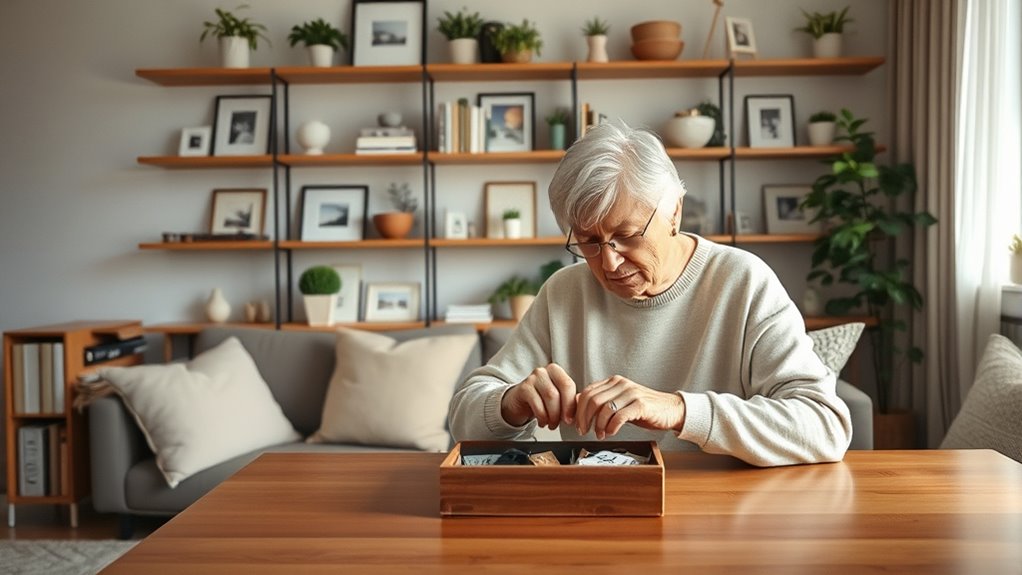

Imagine your home as a garden that needs regular tending—each item a plant that either thrives or withers. Swedish Death Cleaning offers a mindful way to clear out the overgrowth, making space for what truly matters. By taking practical, manageable steps, you can create an organized environment that benefits not just you but those who follow. Ready to discover how this approach can fit any stage of life?

Get compact home essentials delivered free with Prime
- Fast, free delivery on millions of items
- Prime Video, Amazon Music and more included
- Member-only deals all year
Key Takeaways
- Start decluttering early with small, manageable tasks to prevent overwhelming feelings and establish sustainable routines.
- Sort belongings into keep, donate, or discard, and clearly label storage to aid family members.
- Regularly review and update your possessions, dedicating brief weekly sessions to maintain an organized home.
- Involve family members in decluttering to foster shared understanding and ease future transitions.
- Focus on intentional living by handling belongings thoughtfully, preserving meaningful items, and creating a peaceful environment.

Swedish Death Cleaning, or “döstädning,” is a practical approach to decluttering that encourages you to organize your belongings thoughtfully before it’s too late. It’s not just about tidying up; it’s about creating a system that benefits both you and your family. When you start death cleaning, you’re taking control of your space and easing the burden on your loved ones. By establishing clear decluttering routines, you can regularly review and remove items that no longer serve a purpose. This proactive process helps prevent clutter from piling up, making daily life more manageable and less stressful.
Incorporating family organization into your death cleaning efforts is essential. You want your family members to find comfort in your home, not chaos. When you declutter with intention, you’re also thinking about how your belongings are stored and accessed by others. It’s helpful to label boxes or storage spaces clearly, so your loved ones know what’s what. This clarity reduces confusion and saves time when they need to locate items or decide what to do with belongings after you’re gone. You don’t have to do everything all at once—small, consistent routines can make a significant difference over time. For example, you might set aside 10 minutes each week to review a different area of your home, sorting items into keep, donate, or discard piles.
By establishing these routines, you create a sustainable system that keeps clutter in check, regardless of your age or stage of life. As you progress, you’ll notice how your home becomes more organized, and your mental clarity improves. Plus, you’re modeling healthy decluttering habits for your family, encouraging them to also stay organized and intentional with their belongings. This ongoing process minimizes the emotional and physical burden that clutter can cause, especially when the time comes to pass on possessions. It also ensures that your belongings are handled with care, and valuable keepsakes are preserved or passed on thoughtfully.
Ultimately, Swedish death cleaning isn’t just about preparing for the future; it’s about living intentionally now. When you incorporate decluttering routines and focus on family organization, you create a home that’s easier to maintain and more welcoming. You’re not only taking care of your space but also fostering a sense of order and peace that benefits everyone around you. Through mindful decluttering, you make sure your home reflects your values and makes life simpler for those who come after you.
labeling storage bins for decluttering
As an affiliate, we earn on qualifying purchases.
As an affiliate, we earn on qualifying purchases.
Conclusion
So, embrace Swedish Death Cleaning—you’ll be surprised how freeing it is to clear out clutter before anyone else has to. Ironically, by tidying up your belongings, you’re actually making life easier for your loved ones when you’re gone. Who knew that sorting through your stuff could be a gift in disguise? Just remember, the goal isn’t perfection; it’s peace of mind—so start small and enjoy the surprisingly calming effect of letting go.
Halloween Picks
halloween
As an affiliate, we earn on qualifying purchases.