
For your tiny house, you’ll need reliable, eco-friendly tools like a cordless drill, circular saw, level, measuring tape, and clamps to guarantee precise assembly. Use sustainable materials such as reclaimed wood, bamboo, or FSC-certified lumber for framing, combined with steel or engineered wood for durability. Safety gear like gloves and goggles is essential. Focusing on eco-conscious choices and quality tools will set you up for a durable, sustainable build—keep going to learn more about creating your perfect tiny home.
Key Takeaways
- Use lightweight, strong framing materials like wood, engineered lumber, or recycled steel for durability and ease of construction.
- Essential tools include circular saws, cordless drills, level, measuring tape, and safety gear for precise assembly and safety.
- Incorporate sustainable materials such as reclaimed wood, bamboo, or FSC-certified wood to minimize environmental impact.
- Maintain a sturdy work surface, double-check measurements, and verify levelness to ensure accurate and durable framing.
- Prioritize eco-friendly practices and durable materials to promote a healthy, long-lasting tiny house structure.
Building a tiny house requires careful selection of tools and materials to guarantee a sturdy and efficient structure. The foundation of your project starts with choosing the right foundational framing materials. You want something that’s strong enough to support the entire structure while remaining lightweight. Common options include wood, steel, or engineered lumber, each offering different benefits. Wood is popular for its ease of use and affordability, but if you’re aiming for a more durable, long-lasting frame, steel might be the better choice. Engineered lumber offers a balance—it’s stable, less prone to warping, and easy to work with. Whichever material you select, ensure it’s suitable for your climate and load requirements.
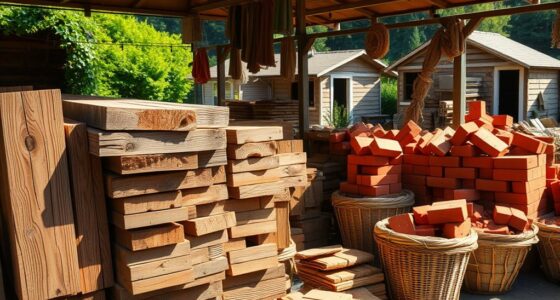
Sustainable materials are becoming increasingly essential in tiny house construction. You should prioritize eco-friendly options that minimize your carbon footprint. Reclaimed wood, bamboo, and recycled steel are excellent choices, as they reduce waste and often carry lower environmental impacts. Using sustainable materials not only benefits the planet but can also improve your home’s energy efficiency and indoor air quality. For example, choosing FSC-certified wood guarantees that your framing materials are harvested responsibly. Incorporating sustainable materials into your foundational framing helps you build a tiny house that’s both eco-conscious and durable.
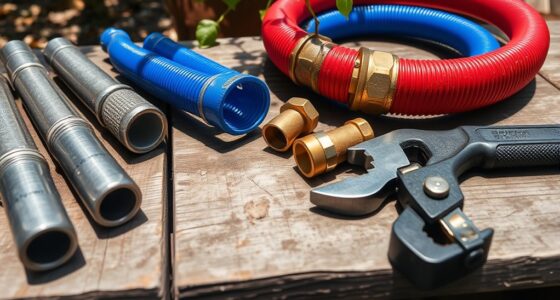
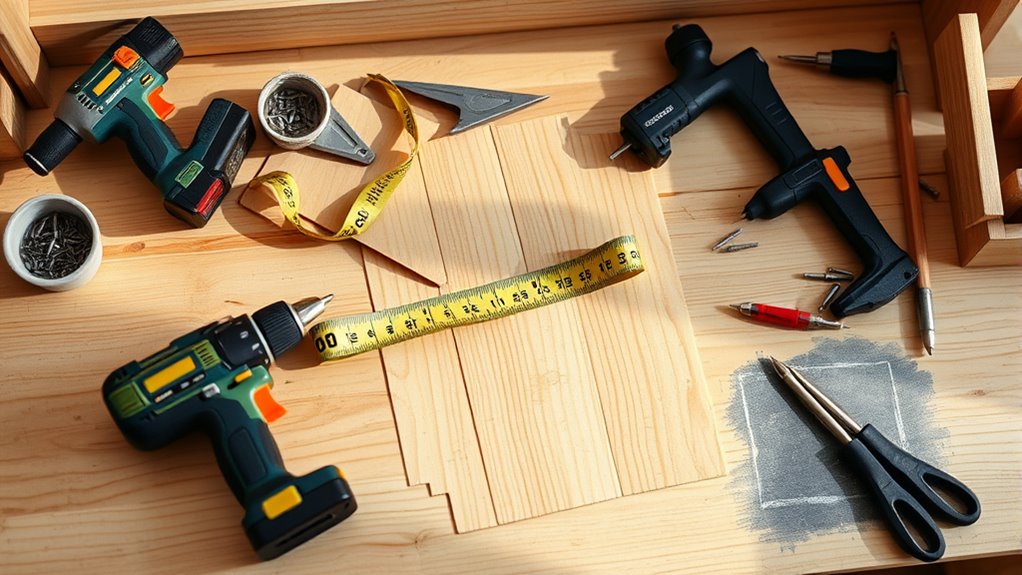
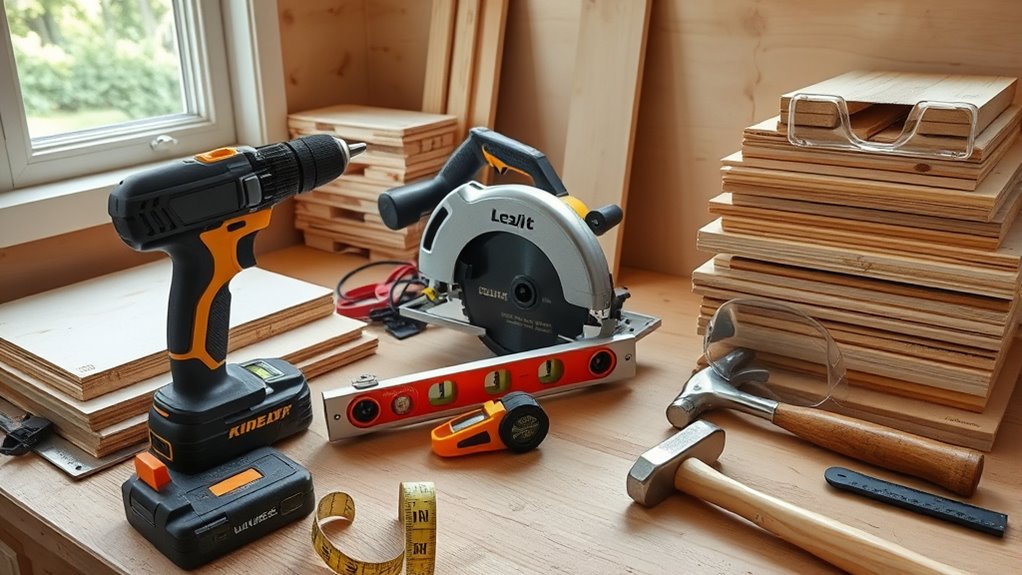
When it comes to tools, having the right ones at your fingertips makes all the difference. For framing, a reliable circular saw and a cordless drill are essential. They’ll help you cut and assemble your framing members quickly and accurately. A level and measuring tape are indispensable for ensuring your walls are straight and your measurements precise. Don’t forget a hammer, square, and clamps—they’re your everyday essentials for securing joints and keeping everything aligned. For working with sustainable materials, especially reclaimed or engineered wood, a pry bar and a saw with fine teeth can help you make clean cuts and adjustments without damaging the material. Safety gear like gloves, goggles, and ear protection should always be in your toolkit to keep you safe during construction.
Additionally, having a sturdy work surface, such as a workbench, will keep your projects organized and efficient. As you assemble your foundational framing, remember that precision is key. Double-check measurements, verify the levelness of your frame, and ensure your materials are properly secured. Incorporating eco-friendly practices into your building process not only reduces environmental impact but also promotes healthier indoor air quality. Using sustainable materials thoughtfully not only enhances the eco-friendliness of your tiny house but also ensures each component contributes to a durable, long-lasting structure. By selecting the right foundational framing and sustainable materials, and equipping yourself with essential tools, you set the stage for a successful tiny house build that’s both strong and environmentally responsible.
Frequently Asked Questions
What Safety Gear Is Recommended During Tiny House Construction?
During tiny house construction, you should wear protective eyewear to shield your eyes from debris and dust, and hearing protection to avoid damage from loud tools. Always prioritize safety by using gloves, dust masks, and sturdy footwear. These precautions help prevent injuries and ensure you work confidently. Remember, staying safe maintains your project on track and makes the process more enjoyable. Always adhere to safety guidelines for a successful build.
How Do I Choose Eco-Friendly Building Materials?
To choose eco-friendly building materials, prioritize sustainable sourcing by selecting options from suppliers who use renewable resources and ethical practices. Look for recyclable materials like reclaimed wood, recycled metal, and eco-friendly insulation to minimize environmental impact. Consider certifications such as FSC or Green Seal, which guarantee sustainability and safety. This approach helps you build a tiny house that’s both environmentally responsible and durable, reducing your ecological footprint.
Are There Specific Permits Required for Tiny House Building?
You need to check local building codes and zoning regulations before building your tiny house. These rules vary by city or county and may require permits for construction, foundation, or utility connections. Contact your local building department to confirm what’s needed and verify your tiny house complies. Failing to obtain the necessary permits can lead to fines or having to dismantle your project, so always verify regulations first.
What Are Cost-Effective Tools for Beginners?
Starting out in tiny house building, you’ll want budget-friendly tools that won’t break the bank. Consider investing in basic beginner construction equipment like a cordless drill, a handsaw, and a tape measure—these are versatile and easy to use. Look for quality yet affordable options, and prioritize multipurpose tools. With these cost-effective essentials, you’ll build confidence and progress steadily without feeling overwhelmed by expensive equipment.
How Can I Ensure Insulation Efficiency in Small Spaces?
To guarantee insulation efficiency in small spaces, choose the right insulation types like spray foam or rigid foam boards for better thermal barriers. Seal all gaps and cracks tightly to prevent air leaks, which can compromise insulation performance. You should also install vapor barriers where necessary. Regularly inspect your insulation for damage or settling, and add more if needed, to maintain peak thermal performance and keep your tiny house cozy.
Conclusion
Equipped with the right tools and materials, you’re ready to turn your tiny house dreams into reality. Remember, every nail, board, and power tool is a step closer to your perfect escape. Think of these essentials as the keys to opening your creativity and building a space that truly feels like home. With patience and passion, you’ll craft more than just a tiny house—you’ll create a haven that reflects your unique spirit.