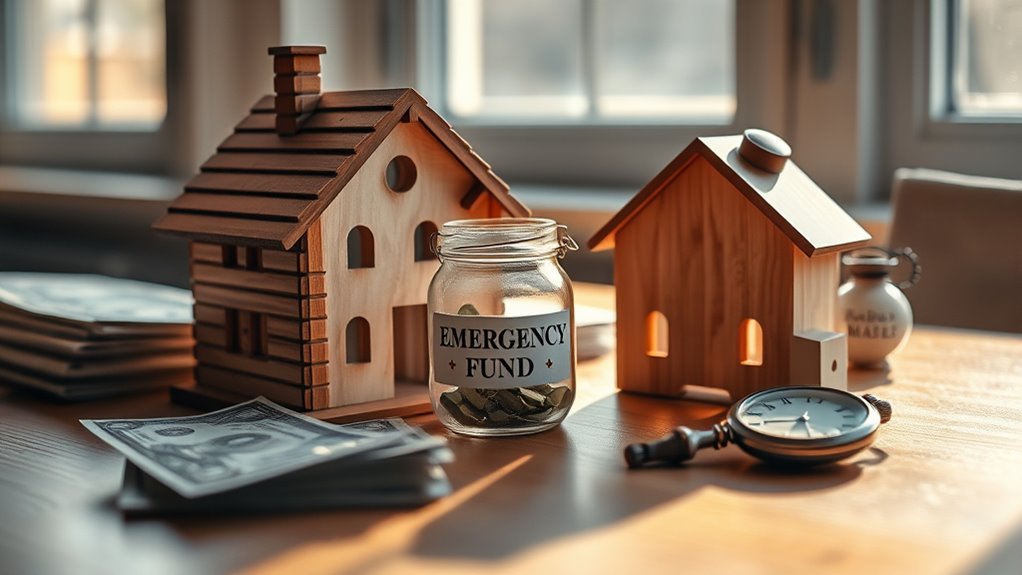

Creating a tiny house emergency fund is key to protecting your minimalist lifestyle from unexpected costs. Start by evaluating your monthly expenses and savings capacity, then set aside money specifically for urgent repairs or emergencies like system failures, medical issues, or utility disruptions. Keep this fund in a liquid, high-yield account and make regular contributions. By staying proactive, you’ll ensure you’re prepared for anything — and there’s more tips on how to build and maintain your fund below.
Key Takeaways
- Assess monthly expenses and savings capacity to determine a realistic emergency fund goal.
- Prioritize saving for repairs of eco-systems like solar panels, water systems, and safety equipment.
- Automate regular contributions into a high-yield, liquid savings account for quick access during emergencies.
- Use the fund solely for genuine emergencies, such as equipment failures, medical issues, or utility disruptions.
- Implement preventative maintenance and water/energy conservation measures to minimize future emergency costs.
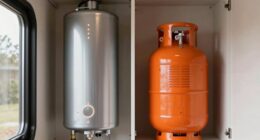
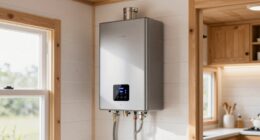
Have you ever considered how a small emergency fund can protect your tiny house lifestyle? Living in a tiny home offers freedom and simplicity, but unexpected costs can quickly disrupt your plans. That’s where an emergency fund comes in. It’s your safety net, ready to cover surprises like equipment repairs, medical expenses, or sudden utility issues. Since tiny houses often rely on eco-friendly solutions such as solar power and water conservation systems, it’s smart to include potential repair or replacement costs for these essential features in your fund. Solar panels can save you money long-term, but they may need maintenance or repairs after a storm or wear and tear. Similarly, water-saving appliances and filtration systems can malfunction or require upgrades, and having funds set aside ensures you won’t be caught off guard. Regular maintenance of your fire safety equipment is also vital to prevent accidents and ensure safety during emergencies. Building your emergency fund starts with evaluating your monthly expenses and identifying how much you can comfortably save without sacrificing your lifestyle. Since tiny living emphasizes minimalism and efficiency, your expenses are likely lower than traditional living, freeing up some cash to put toward your fund. Automate your savings if possible, so a small portion of your income is always directed toward this safety net. Remember, even a modest amount can make a significant difference during a crisis. It’s also wise to keep your emergency fund liquid—preferably in a high-yield savings account—so you can access it quickly when needed. Water conservation plays a critical role in reducing ongoing costs and preventing unexpected expenses. Installing efficient fixtures, like low-flow showerheads and dual-flush toilets, helps conserve water and lowers your utility bills. However, these systems can sometimes fail or require replacement parts. Having funds set aside means you can handle these repairs promptly without dipping into your regular budget. Solar power systems, while eco-friendly and cost-effective over time, aren’t immune to issues. Panels may need cleaning, or in rare cases, replacement due to damage. Maintaining a reserve for such repairs ensures your energy source remains reliable, especially during cloudy days or after storms.

High-Yield Savings Accounts vs. Stocks: What Should You Do Right Now
As an affiliate, we earn on qualifying purchases.
As an affiliate, we earn on qualifying purchases.
Frequently Asked Questions
How Much Should I Initially Save for My Tiny House Emergency Fund?
You should aim to save at least three to six months’ worth of living expenses for your tiny house emergency fund. This amount covers unexpected costs like tiny house insurance or repairs. Focus on reaching key emergency fund milestones, like saving $1,000 initially, then gradually increasing it. Having this cushion provides you with peace of mind and ensures you’re prepared for unforeseen expenses, keeping your tiny house journey smooth.
What Are the Best Places to Keep My Emergency Savings?
You should keep your emergency savings in accessible investment options like a high-yield savings account or a money market fund. These options offer liquidity and safety, essential for emergency planning. Avoid riskier investments that could lose value when you need funds quickly. By choosing these secure, easily accessible accounts, you guarantee your emergency fund is ready whenever unexpected expenses arise, giving you peace of mind for your tiny house journey.
How Often Should I Review and Adjust My Emergency Fund?
You should review and adjust your emergency fund at least every six months, just like Sarah did when her job situation changed. Regular reviews help you stay aligned with your financial goal setting and guarantee your emergency fund maintains its importance. Life changes, inflation, or new expenses might require you to increase your savings. Staying proactive keeps your safety net reliable, so you’re prepared for unexpected events whenever they occur.
Can I Use a High-Yield Savings Account for My Fund?
Yes, you can use a high-yield savings account for your emergency fund. These accounts offer higher interest rates, helping your savings grow faster. Look for accounts with features like no monthly fees, easy access, and FDIC insurance for safety. Regularly compare interest rates and account features to guarantee you’re getting the best deal, so your emergency fund remains accessible and earns more over time.
What Unexpected Expenses Should I Plan for in a Tiny House?
You should plan for unexpected expenses like appliance repairs and pest control, which can quickly add up. Tiny houses often have unique systems that might break down unexpectedly, so setting aside funds for repairs is essential. Pest control costs can also surprise you, especially if you encounter insects or rodents. By preparing for these expenses, you guarantee your tiny house stays functional and comfortable without draining your emergency fund.

Solar Pool Supply Universal Repair Kit for Solar Pool Heaters to Fix Leaky Solar Panel Pool Heaters in Minutes — Original Plugs, 0.25" Diameter
PROVEN RELIABILITY. Have a leaking solar pool heater that needs repair? No contractors are required with this easy-to-use…
As an affiliate, we earn on qualifying purchases.
As an affiliate, we earn on qualifying purchases.
Conclusion
Now that you know how to create a tiny house emergency fund, are you ready to start saving today? Remember, even a small stash can make a big difference when unexpected expenses pop up. Don’t wait until it’s too late—taking action now guarantees you’re prepared for anything that comes your way. Keep your tiny house safe and sound by building that emergency fund. Are you ready to take the first step toward financial peace of mind?

Earth Showerhead – Niagara Conservation | Energy & Water Saving Showerhead (1.75 GPM) High-Efficiency 3-Spray Chrome Fixed Shower Head (N2917CH)
1. 75 GALLONS PER MINUTE – This water-saving shower head has a flow rate of 1. 75 gallons…
As an affiliate, we earn on qualifying purchases.
As an affiliate, we earn on qualifying purchases.

Magnetic Eyeglass Repair Kit, Glasses Repair Kit with Eyeglass Screws Include Nose Pads, Precision Screwdriver Tool Set and Tweezers for Eyeglasses, Sunglasses, Watch Clock Spectacle Repair
【Complete Eyeglasses Repair Kit】This repair kit includes all the eyeglasses screwdrivers, 14 size of eyeglass screws, 9 Pairs…
As an affiliate, we earn on qualifying purchases.
As an affiliate, we earn on qualifying purchases.