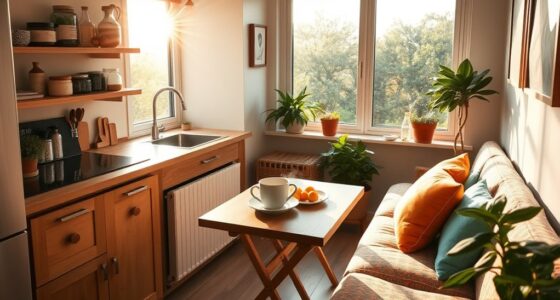
Adapting to the tiny house lifestyle means intentionally managing your space with minimalist principles and smart design choices. Focus on multi-purpose furniture, built-in storage, and vertical space to maximize usability. Simplify your belongings by keeping only what’s essential and meaningful. Make lifestyle adjustments like embracing community resources and mindful consumption. These steps help create a functional, peaceful home. If you keep exploring, you’ll discover how to make your tiny living experience truly enjoyable and sustainable.
Key Takeaways
- Embrace minimalist principles by evaluating belongings carefully to reduce clutter and maximize functionality.
- Optimize space with multi-purpose furniture and built-in storage solutions to enhance livability.
- Prioritize intentional living by focusing on quality, purpose, and essentials over excess possessions.
- Develop daily routines that incorporate community resources and sustainable practices.
- Maintain an organized environment through designated storage and vertical space utilization for tranquility.
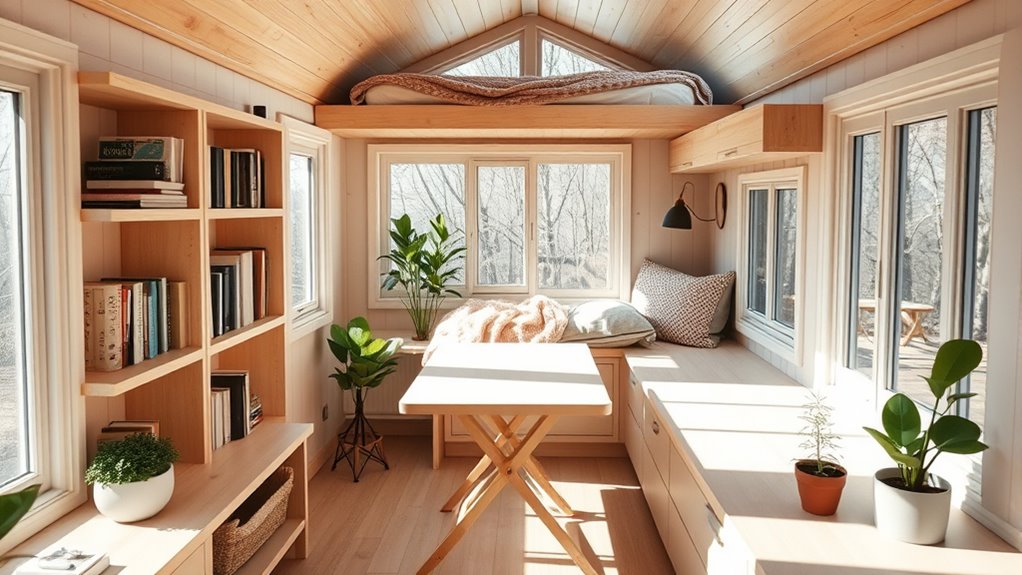
Adjusting to the tiny house lifestyle can be both exciting and challenging, especially if you’re used to more spacious living. One of your first priorities is mastering space optimization. Every inch counts in a tiny house, so you’ll need to think creatively about how to make your space both functional and comfortable. Start by choosing multi-purpose furniture, like a sofa bed or fold-away tables, which can serve more than one purpose. Built-in storage solutions are also essential; shelves that go up to the ceiling or hidden compartments can help keep clutter out of sight. Using vertical space effectively allows you to maximize your living area without sacrificing comfort. With limited square footage, maintaining a clean and organized environment becomes easier when you guarantee everything has a designated place.
Maximize tiny house space with multi-purpose furniture and clever built-in storage solutions.
Additionally, many tiny house dwellers find that incorporating local community resources can help them access fresh, locally sourced ingredients, making meal planning more sustainable and enjoyable.
Alongside space optimization, adopting a minimalist design is vital in adapting to your new lifestyle. Minimalism isn’t just about having fewer belongings; it’s about intentionality. You’ll want to evaluate your possessions carefully, keeping only items that add value or serve a clear purpose. This shift helps prevent your tiny house from feeling cramped or cluttered. Opt for a neutral color palette and simple decor to create a sense of openness and calm. By reducing visual clutter, your space feels larger and more inviting. Minimalist design also encourages you to be more mindful of what you bring into your home moving forward, helping you avoid unnecessary accumulation and maintain a tidy environment.
As you switch, you’ll notice that every decision about furniture, storage, and decor directly impacts how spacious and livable your tiny house feels. It’s about creating a streamlined environment where everything has its place and nothing feels extraneous. This approach not only makes daily routines more efficient but also fosters a sense of tranquility. You might find that investing in quality, space-saving pieces pays off in the long run, as they often serve dual functions and last longer. Over time, you’ll develop a keen eye for what truly enhances your living experience and what can be left behind.
In essence, embracing space optimization and minimalist design transforms your tiny house into a functional sanctuary. It encourages you to live intentionally and prioritize what matters most. While the adjustment can be a challenge initially, you’ll soon discover that less truly is more. With thoughtful planning and a clear focus on simplicity, you can make your small space feel spacious, welcoming, and perfectly suited to your lifestyle.

LOVEINUSA DIY Wooden Dollhouse Furniture Set, 3D Puzzle Miniature Room Accessories, Natural Wood
Super Value Pack: You will get 34 accessories to assemble various wooden dollhouse furniture such as a lounge…
As an affiliate, we earn on qualifying purchases.
As an affiliate, we earn on qualifying purchases.
Frequently Asked Questions
How Do I Handle Storage in a Tiny House?
You handle storage in a tiny house by using creative storage solutions and space optimization techniques. Think vertically with wall-mounted shelves and under-utilized areas like stairs or furniture. Use multi-purpose furniture, such as beds with built-in drawers or fold-away tables, to maximize every inch. Regularly declutter to keep things tidy, and invest in compact, efficient storage options. With these strategies, you’ll keep your tiny house organized and functional.
What Are the Best Ways to Insulate a Tiny Home?
You should choose high-quality insulation materials like spray foam, rigid foam boards, or sheep’s wool to guarantee effective temperature regulation. These options help keep your tiny home warm in winter and cool in summer, maximizing comfort and energy efficiency. Proper insulation not only maintains a consistent indoor climate but also reduces energy costs. Make sure to insulate walls, floors, and ceilings thoroughly for the best results.
How Can I Secure Financing for a Tiny House?
You can secure financing for your tiny house by exploring specialized tiny house loans or personal loans from banks and credit unions. Some lenders now offer tiny house financing options tailored specifically for these small homes. Make sure to compare interest rates and terms, and gather documentation like plans and proof of income. With the right research, you’ll find a financing option that fits your budget and helps you make your tiny house dreams a reality.
What Are Legal Restrictions for Tiny Houses in Different Areas?
You might worry about legal restrictions, but understanding zoning laws and building codes helps you navigate your area’s rules. Many zones restrict tiny houses on wheels or require them to meet specific standards. Check local regulations, as some areas permit tiny homes on foundations or have special exemptions. By researching your local zoning laws and building codes, you can find legal ways to enjoy your tiny house without surprises.
How Do I Maintain Privacy in a Small Living Space?
To maintain privacy in a small living space, you need to set clear personal boundaries and create designated areas. Use room dividers, curtains, or furniture placement to block views and define spaces. Establish privacy routines with your housemates or family, like knocking before entering or setting quiet hours. Address privacy concerns openly to make sure everyone respects each other’s personal space, making your tiny home feel comfortable and secure.

KHNR 4-Tiers Slim Bathroom Storage Cabinet, Foldable Storage Cabinets,Narrow Bathroom Storage,Movable Bathroom Storage Organizer for Small Spaces,Bathroom,Kitchen,Laundry,White
【Space-Saving Slim Design】This Slim Bathroom Storage Cabinet is the ultimate solution for tight spaces. Its sleek, narrow design…
As an affiliate, we earn on qualifying purchases.
As an affiliate, we earn on qualifying purchases.
Conclusion
As you settle into the tiny house, you realize it’s more than just a small space—it’s a vessel for simplicity and freedom. Like a seed blossoming into a sturdy tree, you’ve rooted yourself in a lifestyle that nurtures mindfulness and purpose. Every corner becomes a symbol of intentional living, reminding you that abundance isn’t measured by size but by the richness of your experiences. Embrace this new chapter, and watch your life grow in unexpected, beautiful ways.

Designing Tiny Spaces with Character: Smart Solutions for Small Homes and Modern Apartments (The Intentional Living Spaces Series)
As an affiliate, we earn on qualifying purchases.
As an affiliate, we earn on qualifying purchases.

Furinno Fulda Book Shelf, 3-Tier Narrow Bookshelf, Bookcase with 6-in Width Storage Shelf, 9.3 x 5.9 x 31.5, for Living Room, Bedroom, Home Office, White
SLIM & SPACE-SAVING DESIGN: This 3-tier narrow book shelf features a tall vertical frame with a 6-inch width,…
As an affiliate, we earn on qualifying purchases.
As an affiliate, we earn on qualifying purchases.