To guarantee a smooth tiny house road trip, plan your meals with non-perishables and prepare some ahead of time, while packing essential utensils and cooler for fresh items. Check your vehicle’s tires, fluids, brakes, and lights, and carry repair supplies like a spare tire and jumper cables. Map out your route and reservations, secure your belongings inside, and verify safety equipment and systems. For more tips on organizing your perfect journey, keep exploring this thorough checklist.
Key Takeaways
- Pack versatile, non-perishable foods and prepare some meals in advance for easy, minimal-stop dining.
- Conduct vehicle maintenance checks, including tire, fluid levels, lights, and emergency supplies.
- Map out routes, secure reservations, and organize supplies to ensure smooth travel and proper accommodations.
- Verify safety equipment, emergency supplies, and system functionality to prevent breakdowns and ensure safety.
- Organize personal and tech essentials, secure all items inside the tiny house, and plan for contingencies.
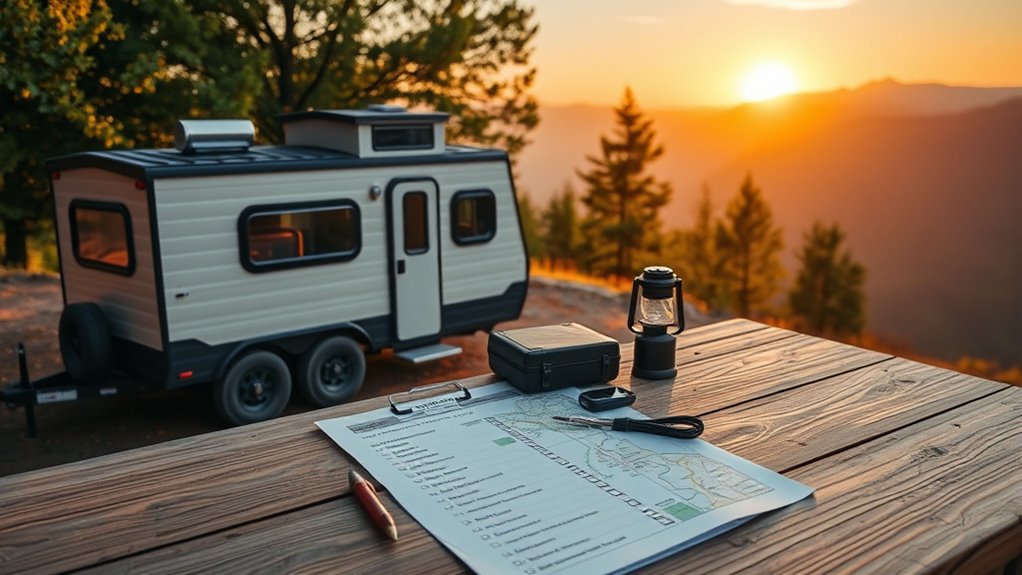
Planning a tiny house road trip can be exciting, but it also requires careful preparation to guarantee everything runs smoothly. One of the most important aspects is meal planning. You want to pack enough non-perishable food and easy-to-prepare meals to keep everyone satisfied without cluttering your space or causing unnecessary stops. Think about versatile ingredients like dried pasta, canned beans, rice, and snacks that don’t require refrigeration. Preparing some meals ahead of time can save you effort on the road and help you stick to your budget. Remember to bring essential utensils, portable cookware, and a cooler for fresh produce or dairy. Having a clear plan for meals not only minimizes stress but also ensures you won’t run out of food at inopportune moments.
Plan meals ahead with non-perishables and portable cookware for a smooth tiny house road trip.
Equally crucial is vehicle maintenance. Before hitting the road, give your tiny house vehicle a thorough check-up. Confirm that your tires are properly inflated and in good condition, as flat or worn tires can lead to dangerous situations or breakdowns. Check your fluid levels—oil, coolant, brakes, and windshield washer fluid—and top them off as needed. Inspect your brakes, lights, and signals to ensure everything functions correctly. It’s also wise to have your mechanic perform a quick tune-up, especially if your vehicle has high mileage or hasn’t been serviced recently. Carrying basic repair supplies, like a spare tire, jack, jumper cables, and emergency tools, can save you time and trouble if issues arise along the way. These steps help you prevent breakdowns and keep your trip smooth and enjoyable.
In addition to meal planning and vehicle maintenance, double-check your route and accommodations. Map out your stops, campsites, or RV parks in advance, ensuring they can accommodate your tiny house. Pack essential supplies such as water, batteries, first aid kits, and personal items. Make a checklist of must-have tech like chargers, GPS devices, and backup power sources. Don’t forget to secure everything inside your tiny house to prevent shifting or damage during transit. Test your systems—like water, heating, and appliances—before departure to catch potential issues early. It’s also beneficial to monitor air quality indicators in your vehicle or living space, especially if traveling through areas with high pollution or allergens, to ensure a comfortable environment. By organizing your supplies, reviewing your route, and preparing your vehicle, you set the stage for a safe, enjoyable adventure.
Ultimately, thorough planning in these areas helps you focus on the fun parts of your trip—exploring new places and making memories—without worrying about avoidable mishaps. Proper meal planning and vehicle maintenance are the foundation for a seamless tiny house road trip, giving you peace of mind as you hit the open road.
Frequently Asked Questions
How Do I Secure My Tiny House During Travel?
To secure your tiny house during travel, first check parking regulations along your route to make certain you’re parked legally. Then, focus on securing doors and windows tightly with locks or latches to prevent them from opening. Use wheel chocks or blocks to keep your tiny house stable, especially on inclines. Double-check everything before hitting the road, so your tiny house stays safe and secure throughout your journey.
What Insurance Is Recommended for Tiny House Road Trips?
You should get specialized insurance coverage for your tiny house during road trips. Look for policies that offer extensive coverage, including liability protection, to safeguard against accidents or damages. make certain the insurance covers both the structure and your belongings. Comparing providers and reading the fine print helps you find the right plan, giving you peace of mind while on the road. Always update your coverage before heading out.
How Do I Maintain My Tiny House’s Systems on the Road?
To keep your tiny house’s systems running smoothly on the road, regularly check your tiny house plumbing for leaks or clogs, and make certain all connections are secure. Inspect your tiny house insulation to prevent issues caused by temperature fluctuations. Keep a basic toolkit and spare parts handy for minor repairs, and schedule routine system checks. Proper maintenance ensures comfort and prevents costly problems during your trip.
What Are the Best Routes for Tiny House Travel?
You should focus on scenic routes like Pacific Coast Highway or Blue Ridge Parkway for stunning views. When travel planning, consider road conditions, low-clearance bridges, and campgrounds along your path. Use apps and maps to find the best routes that suit your tiny house’s size and your adventure style. Prioritize routes with plenty of rest stops and camping options, ensuring a smooth and enjoyable journey with breathtaking scenery.
How Do I Find Safe Parking Spots Overnight?
To find safe parking spots overnight, explore various parking options like designated campgrounds, truck stops, or RV parks. Use apps and websites that specialize in tiny house parking to discover verified spots. Always prioritize safety tips such as checking for good lighting, avoiding isolated areas, and locking doors. Read reviews from fellow travelers, and trust your instincts to guarantee a secure and comfortable overnight stay.
Conclusion
With this checklist in hand, your tiny house road trip is set to be smooth sailing. Think of it as your trusty compass, guiding you through every twist and turn, ensuring you don’t miss a thing. When you’re well-prepared, the journey becomes a breeze rather than a storm. So pack smart, stay flexible, and enjoy the adventure ahead—your tiny house is your ship, and the open road is calling. Safe travels!