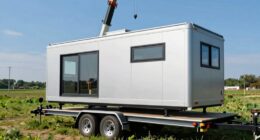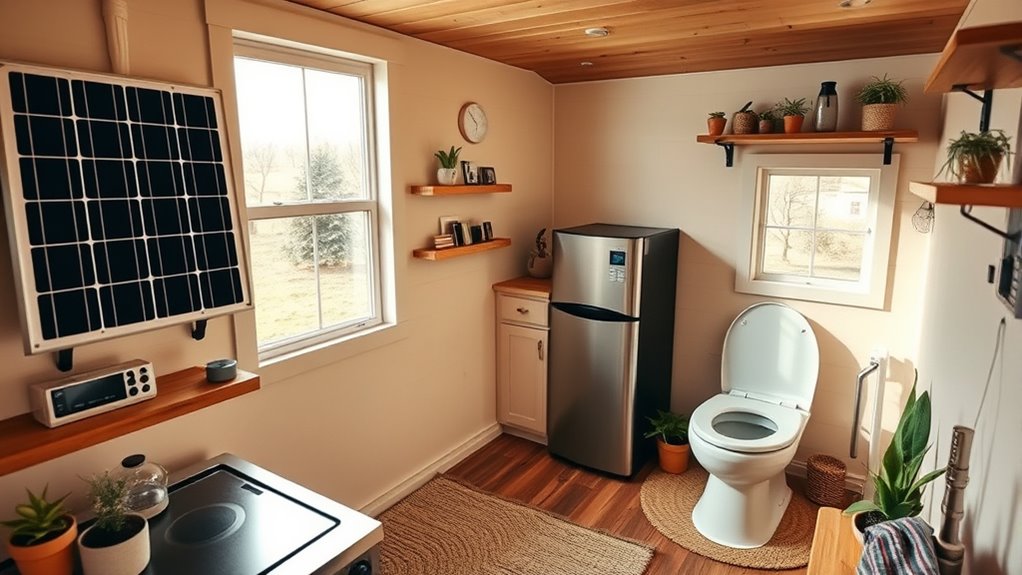

To budget effectively for tiny house utilities, plan for initial costs like solar panels, rainwater harvesting, and efficient appliances. Include ongoing expenses such as maintenance, filter changes, and repairs. Focus on efficiency measures to cut utility bills over time. Consider your location and local regulations, which may affect setup costs and system choices. If you keep these points in mind, you’ll be prepared for a sustainable and affordable tiny house living experience—more tips are just ahead.
Key Takeaways
- Include initial setup costs for solar panels, rainwater harvesting, and water filtration in your budget.
- Allocate funds for regular maintenance, inspections, and potential repairs to keep systems efficient.
- Incorporate expenses for energy-efficient appliances and water-saving fixtures to reduce ongoing utility costs.
- Consider your location’s climate and regulations to determine feasible utility solutions and associated costs.
- Plan for future upgrades or system expansions to ensure long-term sustainability and affordability.
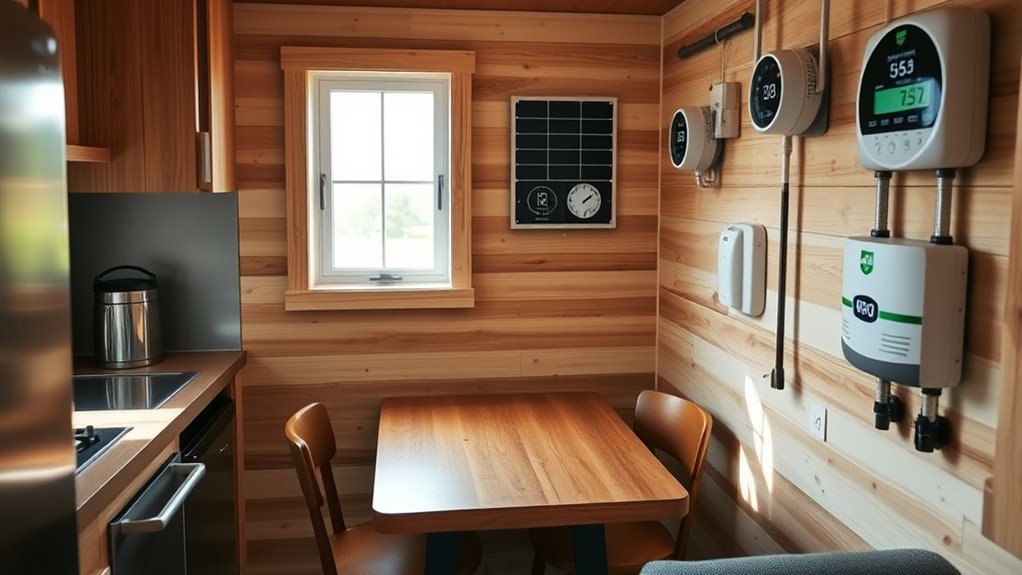
Budgeting for tiny house utilities is essential to guarantee your space remains affordable and sustainable. When you’re planning your budget, consider investing in solar panels, which can considerably cut your electricity costs over time. Solar panels provide a renewable energy source, reducing your dependence on the grid and lowering your monthly bills. While the upfront cost might seem high, the long-term savings and environmental benefits make them a worthwhile investment. Additionally, think about incorporating rainwater harvesting systems into your plans. These systems allow you to collect and utilize rainwater for your household needs, which can drastically reduce your water bills and reliance on municipal water sources. Installing a rainwater harvesting system involves initial setup costs for gutters, storage tanks, and filtration, but these expenses are offset by the ongoing savings and eco-friendly benefits.
Budget wisely by investing in solar panels and rainwater harvesting to cut costs and promote sustainability.
As you budget for utilities, don’t forget to account for ongoing maintenance costs for these systems. Solar panels require periodic cleaning and inspections to ensure peak performance, while rainwater harvesting systems need regular filter changes and tank cleaning to maintain water quality. Including these expenses in your budget prevents surprises later on. It’s also smart to explore energy-efficient appliances and LED lighting to further reduce your power consumption, making your solar system more effective and your utility bills lower. For water, choosing low-flow fixtures and water-saving appliances complements your rainwater harvesting efforts and keeps your water usage minimal. Moreover, understanding the cost-benefit analysis of different systems can help you make more informed decisions about which utilities to prioritize in your tiny house.
When estimating your utility costs, consider your location’s climate and sunlight exposure, which directly impact the efficiency of solar panels and rainwater collection. If you’re in an area with frequent rainfall, rainwater harvesting can become a highly reliable water source. Conversely, if your climate is dry, you might need to supplement your water supply with alternative sources. Be sure to research local regulations regarding rainwater harvesting and solar panel installation, as permits or restrictions could influence your costs and planning.
Finally, keep in mind that budgeting for utilities isn’t just about covering the initial setup. It’s about creating a sustainable financial plan that considers ongoing expenses, potential savings, and future upgrades. By thoughtfully allocating funds for solar panels, rainwater harvesting, and energy-efficient appliances, you ensure your tiny home remains affordable, eco-friendly, and self-sufficient for years to come. Planning ahead now will save you money and stress down the road, letting you enjoy the simplicity and freedom of tiny house living without utility worries.
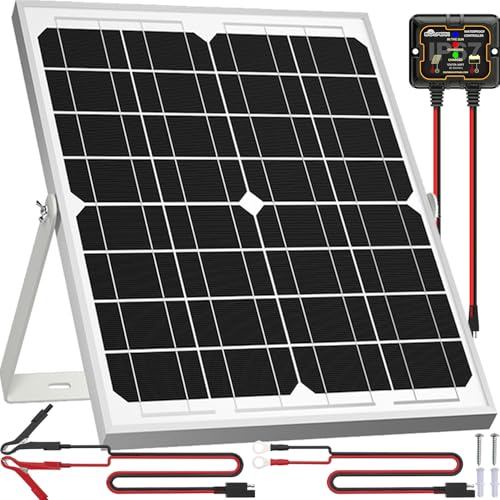
SOLPERK Solar Panel Kit 20W 12V, Waterproof Solar Battery Trickle Charger Maintainer + Smart MPPT Controller + Adjustable Mount Bracket for Boat Car RV Motorcycle Marine Automotive
【High Conversion Rate】This 20W solar panel with monocrystalline A+ solar cell has an excellent cell efficiency of 21%-30%….
As an affiliate, we earn on qualifying purchases.
As an affiliate, we earn on qualifying purchases.
Frequently Asked Questions
How Do I Estimate Long-Term Utility Costs Accurately?
You can estimate long-term utility costs accurately by tracking your current usage and factoring in solar savings and water conservation efforts. Use past bills to identify patterns, then adjust for seasonal changes. Consider installing energy-efficient appliances and solar panels to reduce costs over time. Regularly monitor your water and energy consumption, and incorporate potential savings from conservation strategies, ensuring your budget remains realistic and adaptable to future changes.
Are There Government Rebates for Tiny House Utility Setups?
Yes, there are government incentives and rebate programs available that can help offset your tiny house utility setup costs. You should research federal, state, and local programs, as many offer incentives for solar panels, energy-efficient appliances, and water-saving systems. Check government websites or contact local agencies to find current rebate opportunities. Taking advantage of these programs can markedly reduce your upfront expenses and make your tiny house more affordable and eco-friendly.
How Can I Reduce My Utility Bills in a Tiny House?
To reduce your utility bills in a tiny house, you should invest in solar power to generate your own electricity and cut costs. Additionally, practice water conservation by installing low-flow fixtures and collecting rainwater. These steps help you save money and minimize environmental impact. You’ll enjoy lower bills and a more sustainable lifestyle, making your tiny house more affordable and eco-friendly in the long run.
What Insurance Considerations Relate to Utility Failures?
Imagine your water heater fails, causing water damage. You should check if your insurance claims include utility failures, especially for plumbing. Liability coverage can protect you if someone gets hurt by a utility issue. Confirm your policy explicitly covers utility failures to avoid surprises. Regularly review your coverage to confirm it aligns with potential utility mishaps, giving you peace of mind and financial protection in case of emergencies.
How Do Seasonal Changes Affect Tiny House Utility Budgeting?
Seasonal fluctuations considerably impact your tiny house utility budgeting. During colder months, you’ll spend more on heating, while in summer, expect higher cooling costs. To manage this, plan for seasonal variations by setting aside extra funds ahead of peak seasons. Adjust your utility plan accordingly, monitoring usage closely. This proactive utility planning ensures you’re prepared for seasonal changes without financial strain, keeping your tiny house comfortable year-round.

KMJETNIVY Rainwater Harvesting System (2 x 3)
Adjustable Rainwater Collection System – invention patent pending!!!
As an affiliate, we earn on qualifying purchases.
As an affiliate, we earn on qualifying purchases.
Conclusion
By budgeting carefully for your tiny house utilities, you can turn your small space into a cozy, efficient retreat. Think of it like tending a small garden—you’ll nurture each expense to keep everything blooming smoothly. When you monitor your usage and plan ahead, you’re not just saving money; you’re creating a sustainable sanctuary. Embrace this mindful approach, and your tiny house will become a haven where comfort and practicality grow side by side.

Bigger Than Tiny, Smaller Than Average
As an affiliate, we earn on qualifying purchases.
As an affiliate, we earn on qualifying purchases.

Compact Cabins: Simple Living in 1000 Square Feet or Less
Used Book in Good Condition
As an affiliate, we earn on qualifying purchases.
As an affiliate, we earn on qualifying purchases.