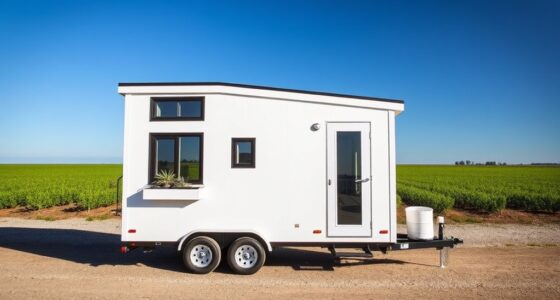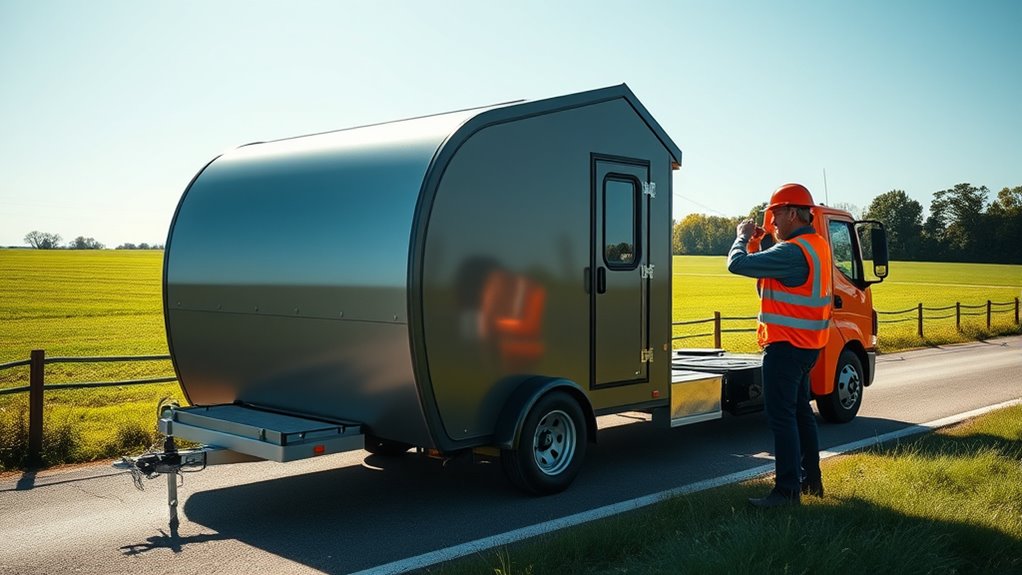

To tow a tiny house safely, plan your route carefully by checking permits, weight limits, and restrictions on bridges or roads. Secure all loose items inside and make certain your vehicle and trailer are in top condition, with proper weight distribution and secure connections. Drive cautiously, maintain a safe distance, and avoid sharp turns or sudden stops. Staying prepared and cautious is key—continue exploring to learn more about ensuring a smooth and safe journey.
Key Takeaways
- Obtain necessary permits and plan a route avoiding low bridges and heavy traffic.
- Inspect towing vehicle, trailer, and hitch to ensure all are rated for the tiny house weight.
- Properly secure and balance the load inside the tiny house, using safety chains and tie-downs.
- Drive at safe speeds, maintain distance, and avoid sharp turns or sudden maneuvers.
- Identify rest stops and parking areas in advance, and keep emergency supplies on hand.
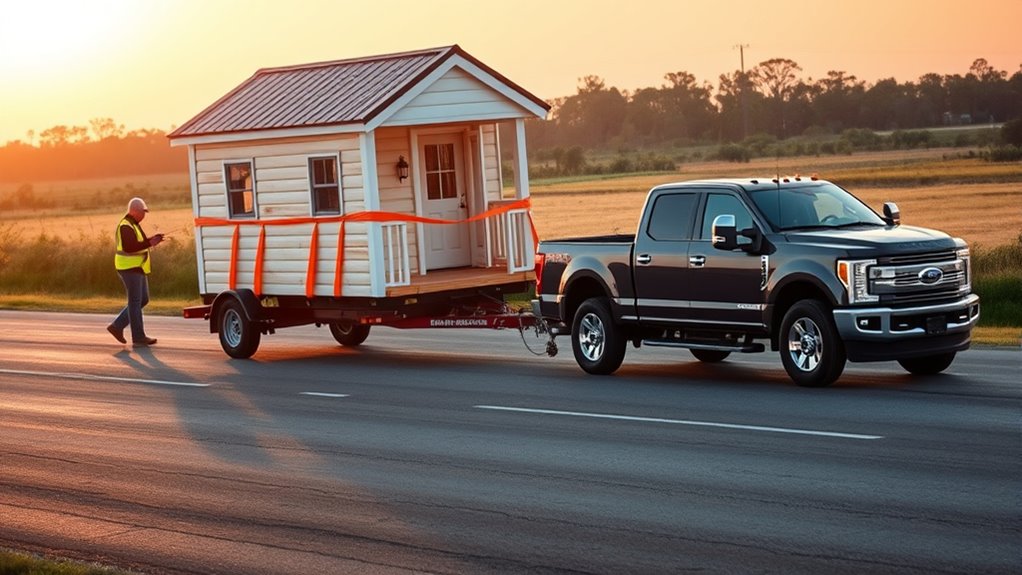
Towing a tiny house can seem challenging, but with proper preparation and the right equipment, it’s entirely manageable. One of the first steps is understanding the permitting requirements in your area. Different states and municipalities have specific rules about towing oversized loads, and failing to secure the necessary permits can lead to fines or delays. Before you hit the road, check with local transportation agencies to determine what permits are needed for your route. Some regions require special permits if your tiny house exceeds certain weight or width limits, and acquiring these permits in advance guarantees you won’t face unexpected obstacles during your trip. It’s also wise to review any restrictions on routes, such as bridge clearances or road closures, to avoid dangerous situations.
Towing safety should be your top priority throughout the process. Properly inspecting your towing vehicle and trailer is essential—make sure everything is in excellent condition. Check tire pressure, brakes, lights, and hitch connections before departure. Your towing setup must be rated for the weight of your tiny house, so verify that your hitch, receiver, and trailer are capable of handling the load. Secure all equipment tightly; loose connections can cause accidents or damage during transit. When you’re on the road, maintain a safe speed, especially around curves and on uneven surfaces. Keep a greater following distance to account for the extra stopping distance required when towing a heavy load. Remember, larger vehicles take longer to stop, so stay alert and avoid sudden maneuvers.
In addition to vehicle checks, consider the importance of load distribution. Properly balancing the weight inside your tiny house ensures stability and reduces sway. Avoid overloading any one side, and secure loose items to prevent shifting during transit. Use safety chains and breakaway cables to prevent disconnection if the hitch fails. Keep an emergency kit, including tools, reflective triangles, and a fire extinguisher, handy in case you encounter issues on the road. Planning your route with towing safety in mind is critical; select roads with minimal sharp turns, low bridges, and less traffic whenever possible. Also, inform yourself about rest stops and safe parking areas along your route to make breaks manageable. Additionally, considering electric bikes or bike generators can be helpful for powering small devices during stops, especially when traveling in remote areas.
Frequently Asked Questions
What Is the Maximum Towing Weight for a Tiny House?
The maximum towing weight for a tiny house typically ranges from 10,000 to 15,000 pounds, depending on your vehicle’s towing capacity and local towing regulations. You should always check your vehicle’s specifications and adhere to towing regulations to guarantee safety. Remember, the tiny house weight, including any added features or belongings, influences the towing limits. Stay within these limits to prevent accidents and legal issues.
How Do I Secure the Tiny House During Towing?
You might worry about your tiny house shifting during the drive, but with secure attachments, you can mitigate that risk. Use high-quality hitch pins, safety chains, and wheel chocks to keep everything stable. Double-check all connection points before hitting the road. Properly securing your tiny house ensures road safety, prevents accidents, and makes towing more manageable. Remember, taking the time to secure attachments correctly is essential for a safe, smooth journey.
Are Special Permits Required to Tow a Tiny House?
Yes, you might need special permits to tow your tiny house. Check your local tiny house regulations, as many areas require towing permits for oversized loads. These permits guarantee you comply with weight, height, and width restrictions. Before hitting the road, contact local authorities or transportation departments to verify if you need additional documentation. Securing the proper towing permits helps you avoid fines and ensures a smooth, legal journey.
What Type of Hitch Is Best for Towing a Tiny House?
You should opt for a weight-distributing hitch to tow your tiny house safely. These hitch types provide better hitch compatibility, distributing the load evenly across your vehicle and trailer, reducing sway and enhancing stability. Make sure your hitch type matches your vehicle and tiny house’s weight, and always double-check the hitch compatibility before towing. This guarantees a safer, smoother towing experience and protects both your vehicle and tiny house.
How Do Weather Conditions Affect Tiny House Towing Safety?
Imagine a clear sky suddenly turning ominous as you tow your tiny house. Weather conditions like rain, snow, or fog can make roads slick and reduce visibility, increasing your risk. Wind impact is especially dangerous, pushing your tiny house side to side on open roads. Always check road weather forecasts before towing, and adjust your speed or delay the trip if conditions are too severe for safe passage.
Conclusion
Now that you’re armed with all the tips and tricks, towing your tiny house should be a breeze—just don’t forget to pack your patience and a sense of humor. After all, nothing says “adventure” like maneuvering traffic with a house on wheels. So go ahead, embrace the chaos, and enjoy the ride. Who knew tiny living could be so big on excitement? Safe travels, and may your journey be as lightweight as your house!