
To optimize your solar setup, position trees carefully by analyzing sun paths throughout the year to avoid shading your panels. Choose species with manageable growth habits and consider seasonal leaf changes, especially with deciduous trees that shed leaves in fall. Placing trees strategically now prevents future shading issues and maximizes sunlight exposure. Planning ahead and understanding growth patterns ensures long-term solar efficiency—keep going to discover how precise shade analysis and species selection can make all the difference.
Key Takeaways
- Conduct thorough shade analysis throughout the year to identify optimal tree placement minimizing solar panel shading.
- Select appropriate tree species with manageable growth habits and mature sizes to prevent future shading issues.
- Account for seasonal foliage changes, especially deciduous trees shedding leaves, to ensure year-round solar access.
- Use shade mapping tools or software to visualize shadow patterns and plan planting locations accordingly.
- Consider long-term growth predictions and legal rights to maintain maximum solar exposure over the lifespan of the system.
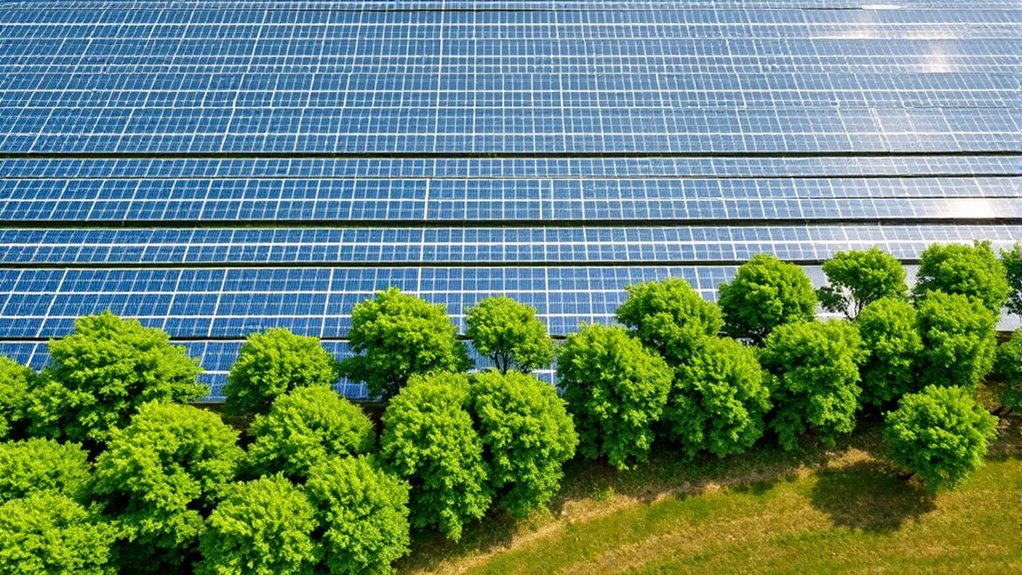
Strategic tree placement can substantially boost your solar energy efficiency by reducing shading and maintaining ideal sunlight access. To do this effectively, you need to perform a thorough shade analysis. This involves observing the path of the sun throughout the year to understand how nearby trees and structures cast shadows at different times. By identifying potential shading periods, you can determine where planting trees will least interfere with your solar panels’ exposure to sunlight. Shade analysis isn’t a one-time task; it requires considering seasonal changes, as deciduous trees shed leaves in the fall, which can temporarily increase sunlight access. Using tools like solar pathfinders or shade analysis software can help you map these shadow patterns accurately, giving you a clear picture of where to plant trees for maximum benefit.
Along with shade analysis, growth prediction plays a critical role. Trees grow over time, and their future size can considerably impact your solar setup if not planned properly. You should select species with growth habits compatible with your space constraints and sunlight goals. Fast-growing trees might seem appealing for quick shade, but they could soon overshadow your panels if not managed. Conversely, slow-growing or dwarf varieties might offer sustained benefits without risking future shading issues. By understanding each species’ expected growth rate, mature height, and canopy spread, you can plan where to plant trees so they won’t interfere with your solar system down the line. Proper growth prediction helps you avoid costly replanting or trimming, ensuring your solar investment remains efficient in the long term. Additionally, considering solar access rights can help prevent potential conflicts with neighboring properties over sunlight exposure.
Frequently Asked Questions
How Do Different Tree Species Affect Solar Panel Efficiency?
Different tree species impact solar panel efficiency based on their shade tolerance. Shade-tolerant trees, like maples, can cast significant shadows, reducing panel performance. In contrast, sun-loving species, such as oaks, grow tall with minimal shading, which helps maintain ideal solar exposure. When choosing trees, consider their shade tolerance and growth habits to prevent interference with your solar panels, ensuring you maximize energy production while enjoying natural landscaping.
What Is the Ideal Distance Between Trees and Solar Panels?
To prevent tree shading from reducing your solar panel efficiency by up to 40%, keep trees at least 10 to 15 feet away from your panels. Proper solar panel placement considers the height and growth pattern of nearby trees to maximize sunlight exposure. Regularly trimming branches further guarantees ideal performance. By maintaining this distance, you protect your investment and harness the sun’s power more effectively, saving you money and energy long-term.
How Does Seasonal Foliage Impact Solar Energy Production?
Seasonal leaf shedding and tree growth patterns substantially impact your solar energy production. When leaves shed in fall and winter, trees let more sunlight reach your panels, boosting efficiency. Conversely, during spring and summer, dense foliage can block sunlight, reducing output. By understanding these patterns, you can better plan tree placement to maximize solar gains year-round, ensuring your panels receive ideal sunlight during peak seasons and less shading when foliage is dense.
Can Trees Be Pruned to Optimize Solar Access Without Harming Them?
Yes, you can prune trees to optimize solar access without damaging them. Focus on reducing tree height and selectively trimming branches using proper pruning techniques like crown thinning or crown raising. These methods improve sunlight exposure while maintaining tree health. Always prune carefully, avoiding cutting too close to the trunk or removing large branches, and consider consulting an arborist for best results. Proper pruning ensures your trees thrive while maximizing solar efficiency.
What Are the Long-Term Maintenance Considerations for Tree-Shaded Solar Systems?
You should regularly monitor your tree-shaded solar systems to guarantee tree health remains strong and roots don’t interfere with your panels. Prune branches carefully to maintain ideal sunlight, but avoid damaging the tree’s structure. Check for root encroachment that could affect panel stability or wiring, and address any issues promptly. Consistent maintenance helps maximize solar efficiency while preserving your trees’ vitality for the long term.
Conclusion
By carefully considering tree placement, you can maximize your solar panel efficiency while maintaining a healthy landscape. For example, imagine planting strategically spaced trees around your home; they shade your panels during peak sun hours without blocking sunlight in the winter. This balance ensures year-round energy savings. With mindful planning, you create a sustainable environment that benefits both your energy needs and your garden’s health. Start mapping your trees today for a brighter, greener future.