
TL;DR

Get compact home essentials delivered free with Prime
- Fast, free delivery on millions of items
- Prime Video, Amazon Music and more included
- Member-only deals all year
A market prediction suggests there is activity around whether Chicago’s temperature will surpass 89.99°F on July 13, 2026, at 9pm EDT. The event’s outcome remains uncertain, with no definitive forecast available yet.
Market activity on Kalshi suggests there is speculation about whether the temperature in Chicago will be above 89.99°F at 9pm EDT on July 13, 2026. No official weather forecast or meteorological prediction has confirmed this yet, but the betting market indicates a perceived likelihood among traders.
The prediction is based on recent trades in the Kalshi market, where participants are betting on whether Chicago’s temperature at that specific date and time will exceed 89.99°F. These trades suggest some level of expectation or uncertainty about the weather, but they do not constitute an official forecast from meteorological agencies.
As of now, no authoritative weather model or forecast has been released for July 13, 2026, that confirms or denies this temperature threshold. The market activity reflects traders’ perceptions and risk assessments, which can be influenced by various factors including climate trends and historical data.
Implications of Market-Based Weather Predictions
This development highlights how betting markets are increasingly used to gauge public and investor sentiment about future weather conditions. While not a substitute for meteorological forecasts, such markets can influence perceptions of climate risks and economic impacts, especially for sectors like agriculture, energy, and insurance.
For the public, understanding the difference between market speculation and scientific prediction is crucial. The event’s outcome could also impact future use of prediction markets for weather-related events.
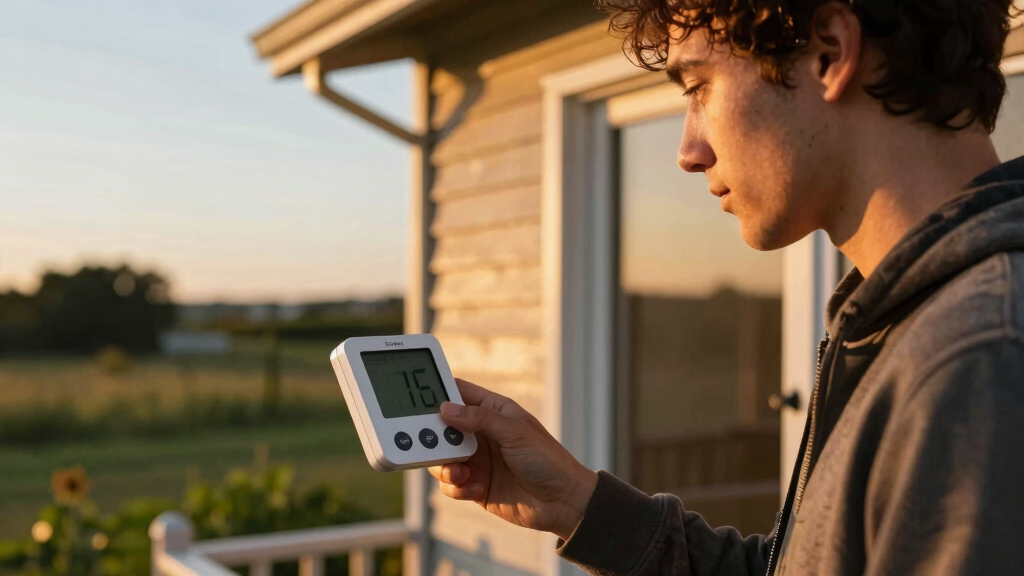
digital weather station with outdoor temperature sensor
As an affiliate, we earn on qualifying purchases.
As an affiliate, we earn on qualifying purchases.
Background on Weather Prediction Markets and Chicago Climate Trends
Prediction markets like Kalshi allow participants to trade on future events, including weather conditions, based on their expectations. The market activity around July 13, 2026, reflects a growing interest in using financial instruments to forecast climate variables.
Historically, Chicago experiences summer temperatures that can reach or exceed 89.99°F, with recent summers showing increasing variability due to climate change. However, long-term forecasts for specific dates so far in advance remain highly uncertain.
“While prediction markets can provide interesting insights into collective expectations, they are not substitutes for scientific weather forecasts, especially for specific dates years in advance.”
— Dr. Lisa Chen, Climate Scientist
Unconfirmed Nature of Long-Term Temperature Forecasts
It is not yet clear whether any meteorological model or official forecast will confirm or refute the market’s implied prediction. The weather in July 2026 is highly uncertain, and long-term forecasts at this level of specificity are inherently unreliable at this stage.
Details about the accuracy or reliability of the market predictions remain unknown, and the outcome depends on actual weather conditions closer to the date.
Monitoring Weather Developments and Market Movements
As July 13, 2026, approaches, meteorological agencies will release seasonal and short-term forecasts that may shed light on expected temperature ranges. Market activity may also fluctuate based on new data or emerging weather patterns.
Researchers and traders will continue to observe how the prediction market evolves and whether it aligns with scientific forecasts as the date nears.
Key Questions
Can the market accurately predict the temperature in Chicago on July 13, 2026?
No. The market reflects traders’ perceptions and is not a scientific forecast. Long-term weather predictions at specific times are inherently uncertain.
Will official weather agencies provide a forecast for July 13, 2026, before that date?
Most likely, detailed forecasts will only be available closer to the date, typically within a week or so, due to the inherent uncertainty in long-term weather prediction.
What factors influence the market’s prediction about Chicago’s temperature?
Market participants base their trades on historical climate data, recent weather trends, and expectations of climate variability, but these are not definitive indicators.
Could climate change affect the accuracy of long-term temperature predictions?
Yes. Climate change introduces variability and unpredictability in weather patterns, making precise long-term forecasts more challenging.
Source: kalshi
Halloween Picks
halloween
As an affiliate, we earn on qualifying purchases.