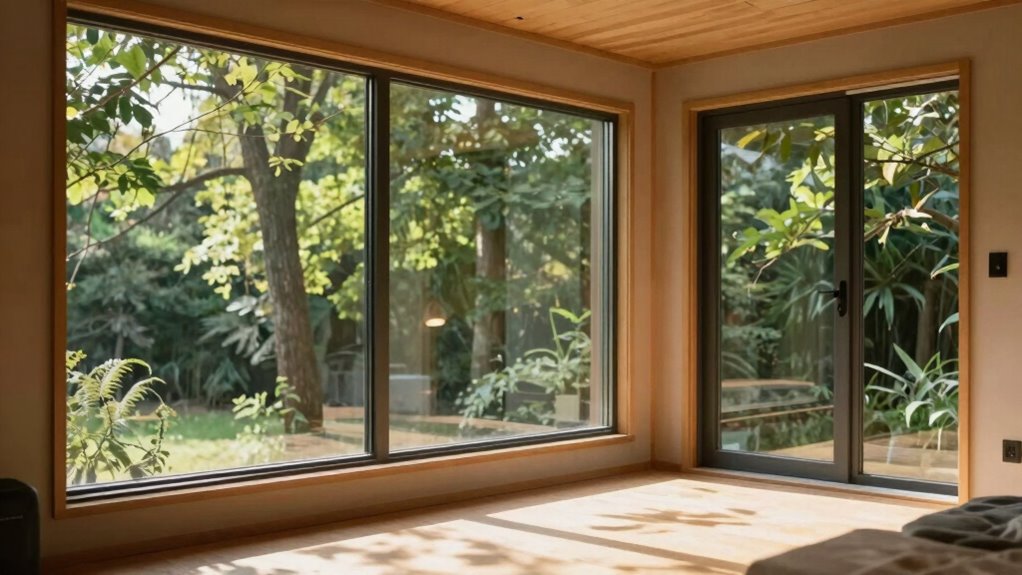

By strategically placing windows, you can maximize natural light and airflow, reducing your reliance on artificial heating and cooling. Position south-facing windows in the northern hemisphere to capture winter sun, while shading during summer keeps your home cooler. Properly aligned operable windows promote cross-ventilation, improving indoor air quality and comfort. Thoughtful window placement also enhances passive temperature regulation and overall energy efficiency. Continue exploring how these design choices can make your tiny home more sustainable and cost-effective.

Get compact home essentials delivered free — and shop member deals
- Fast, free delivery on millions of items
- Access to Prime Big Deal Days deals on October 6–7
- Prime Video, Amazon Music and more included
Key Takeaways
- Proper window placement maximizes natural light and airflow, reducing the need for artificial lighting and climate control.
- South-facing windows in the northern hemisphere capture winter sunlight, decreasing heating requirements.
- Strategic shading devices and deciduous trees block summer heat, lowering cooling energy use.
- Positioning operable windows on opposite sides enhances cross-ventilation, minimizing reliance on air conditioning.
- Aligning windows with prevailing winds and optimizing orientation improve passive cooling and heating efficiency.
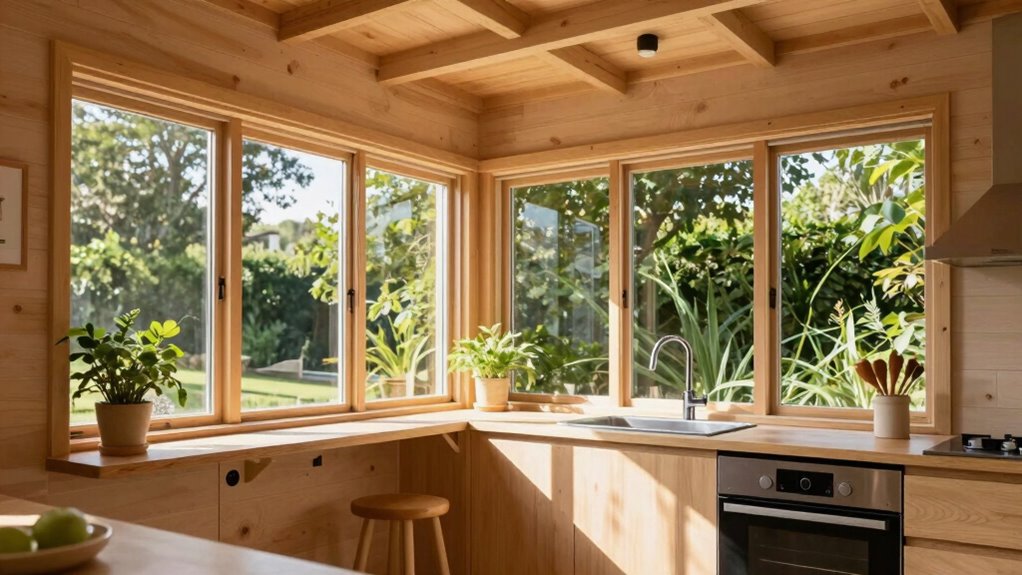
Have you ever wondered how the strategic placement of windows can considerably reduce energy consumption in tiny homes? It might seem simple, but the way you position your windows can make a big difference in how much energy you use to heat or cool your space. Proper window placement maximizes natural light and airflow, which can substantially lower your reliance on artificial heating and cooling systems. By paying attention to solar shading, you can prevent unwanted heat gain during summer, while in winter, well-placed windows let in warmth from the sun, reducing your need for additional heating. Think about positioning windows on the south side of your tiny home if you’re in the northern hemisphere; this allows maximum sunlight during winter months, helping to warm your interior naturally. Conversely, shielding or shading windows during peak summer hours prevents excess heat from entering, keeping your space cooler without air conditioning.
Natural ventilation is another key factor in reducing energy costs. When you place windows thoughtfully, you create cross-ventilation pathways that allow fresh air to flow through your tiny home effortlessly. This airflow helps remove hot, stale air in summer and brings in cool breezes, reducing the need for powered fans or air conditioning. You can achieve this by installing operable windows on opposite sides of your home, aligning them to catch prevailing winds. This setup encourages air to circulate naturally, cooling your space without extra energy consumption. Also, consider the height and size of your windows; larger or strategically positioned windows at different heights can promote better stack effect, where warm air rises and exits through higher openings, drawing in cooler air from below. Additionally, understanding solar shading techniques like overhangs, awnings, or deciduous trees can further enhance your home’s energy efficiency by blocking harsh summer sun while still allowing winter sunlight to penetrate. You might also consider window orientation to optimize heat gain and loss throughout the year. When you understand how to optimize window placement, solar shading, and natural ventilation, you make your tiny home more sustainable and cost-effective. The right combination not only saves money but also reduces your carbon footprint, making your tiny living space both comfortable and environmentally friendly. Moreover, incorporating passive design principles can significantly boost your home’s overall energy efficiency by leveraging natural climate patterns and building envelope improvements to minimize heat transfer.
A well-designed window placement can also enhance indoor air quality by facilitating better airflow and reducing the buildup of indoor pollutants.
energy-efficient operable windows for tiny homes
As an affiliate, we earn on qualifying purchases.
As an affiliate, we earn on qualifying purchases.
Frequently Asked Questions
How Does Window Size Affect Energy Efficiency in Tiny Homes?
Window size greatly impacts your tiny home’s energy efficiency. Larger windows let in more sunlight, reducing heating costs in winter, but can cause heat gain in summer. Choosing the right window shapes and framing materials helps control insulation and heat transfer. Well-sized, strategically placed windows optimize natural light, minimize energy loss, and improve comfort. You should consider how window shapes and framing contribute to overall energy efficiency when designing your tiny home.
What Materials Are Best for Energy-Efficient Windows?
Ever wondered what makes windows energy-efficient? You should opt for double glazing, which traps air for better insulation, and look for low emissivity coatings that reflect heat without blocking sunlight. These materials minimize heat transfer and keep your tiny home warmer in winter and cooler in summer. Combining these features enhances energy efficiency, reduces heating and cooling costs, and makes your space more comfortable year-round.
How Does Climate Influence Optimal Window Placement?
Your climate greatly influences ideal window placement. In colder regions, you should prioritize solar orientation by placing windows on the south side to maximize sunlight and heat gain. In windy areas, consider wind exposure, positioning windows to minimize cold drafts and wind chill. By strategically aligning windows based on your climate, you’ll improve insulation, reduce heating and cooling needs, and make your tiny home more energy-efficient year-round.
Can Window Placement Improve Natural Lighting Without Increasing Heat Loss?
Yes, you can improve natural lighting without increasing heat loss by carefully choosing window orientation and incorporating solar shading. Position windows to maximize daylight during the day, ideally facing south in the northern hemisphere. Use solar shading, like awnings or overhangs, to block excess heat during summer while still allowing light in. Proper placement balances natural light with energy efficiency, keeping your tiny home comfortable year-round.
Are There Legal Restrictions on Window Placement in Tiny Homes?
Imagine your tiny home as a carefully choreographed dance; every move, including window placement, must follow the rhythm of building codes and zoning laws. Typically, there are legal restrictions on window placement to guarantee safety and uniformity. You should check local building codes and zoning laws to avoid penalties. Consulting with local authorities or a professional guarantees your window placement dances in harmony with legal requirements.
Conclusion
By thoughtfully placing your windows, you open the door to a brighter, more efficient home. Think of your windows as the eyes of your tiny sanctuary—guiding the sunlight in and the cold out. With mindful placement, you harness nature’s energy, turning your home into a beacon of sustainability. When you align your windows with the sun’s journey, you’re not just saving energy—you’re embracing a future where your home and the planet breathe as one.
Halloween Picks
halloween
As an affiliate, we earn on qualifying purchases.