When planning a solar panel system, ignoring snow load considerations can lead to serious issues, from reduced energy output to structural damage. Snow accumulation varies by location and can be unpredictable, making it essential to evaluate local snowfall patterns. Installing panels at steeper angles and incorporating appropriate snow management features can help prevent problems. Understanding these design considerations now can help you avoid costly repairs and maximize winter performance—so, let’s explore what factors you need to keep in mind.
Key Takeaways
- Evaluate local snowfall patterns to determine appropriate panel tilt angles and structural reinforcement needs.
- Install panels at steeper angles to facilitate snow slide-off and reduce accumulation.
- Use durable, weather-resistant materials designed to withstand heavy snow loads and prevent damage.
- Incorporate snow guards or barriers to control snow slides and protect the system.
- Design the system for easy snow removal and regular maintenance to ensure continuous efficiency.
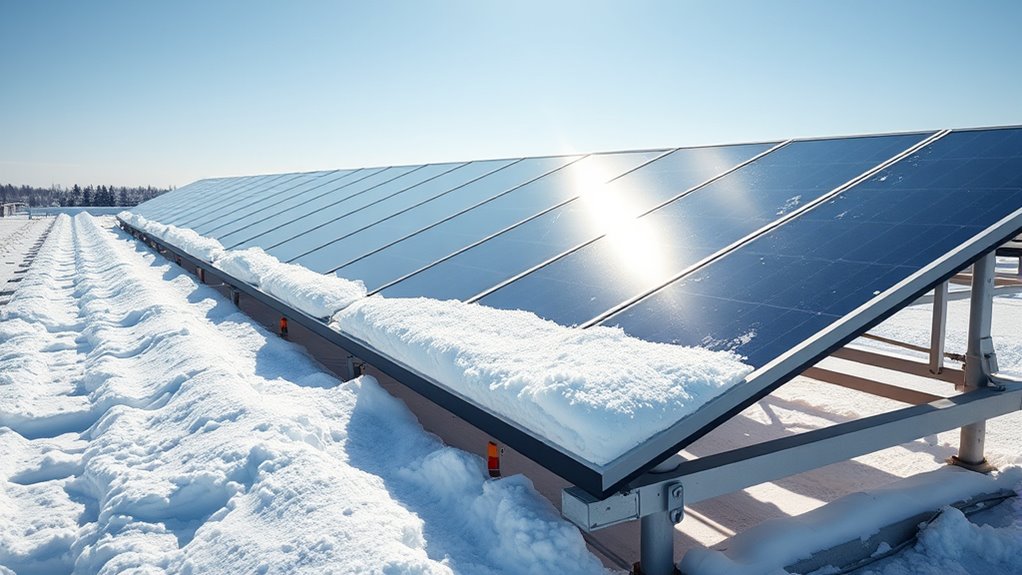
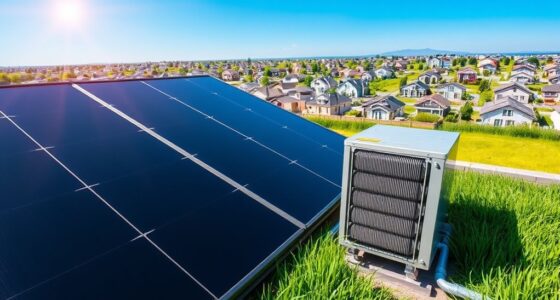
Have you ever wondered how snow impacts your solar panels during winter? When snow accumulates on your panels, it can markedly reduce their efficiency, sometimes even halting power production altogether. That’s why understanding snow load and implementing proper solar panel winterization is vital. Designing your system with snow load considerations in mind ensures you’re prepared for heavy snowfall and can maintain energy output throughout the season. One of the most effective ways to manage snow on your panels is by adopting strategic snow removal strategies. These strategies help prevent excessive buildup that can damage the panels or decrease their lifespan.
Proper solar panel winterization involves evaluating your location’s typical snowfall and ensuring your panels are installed at an ideal angle. A steeper tilt allows snow to slide off more easily, reducing the risk of heavy snow loads weighing down the panels. Besides installation angles, selecting durable, weather-resistant materials during setup can make snow removal easier and protect your panels from potential damage caused by ice or melting and refreezing cycles. Incorporating protective features such as snow guards or barriers can also be beneficial. These devices help prevent large snow chunks from suddenly sliding off and causing damage or injury.
When it comes to snow removal strategies, safety is paramount. Carefully removing snow from your panels prevents excess weight and maintains efficiency. Use soft tools like a broom or a brush—never sharp objects or metal shovels—that might scratch or break the glass surface. Always work gently and from the bottom upward, avoiding excessive force that could damage the panels. Timing is also critical; try to clear snow during daylight hours when temperatures are slightly warmer, making the snow easier to remove. If the snow is heavily packed or icy, consider using a gentle de-icer solution, but make sure it’s safe for your panels and the environment.
Conclusion
Don’t deceive yourself—skipping snow load studies spells serious strife. By balancing bold, built-in barriers with proper panel positioning, you guarantee grid greatness. Prioritize practical planning, prevent potential problems, and shield your panels from snow’s sneaky severity. With wise, weather-wise decisions, you’ll weather winter’s worst while maintaining maximum sunlight and minimal mishaps. Stay smart, stay safe, and ensure your solar system survives and thrives despite snow’s silent, sinister strike.

Hi, I’m Emma. I’m the Editor in Chief of Tiny House 43, a blog all about tiny houses. While tree houses are often associated with childhood, they can be the perfect adult retreat. They offer a cozy space to relax and unwind, surrounded by nature. And since they’re typically built on stilts or raised platforms, they offer stunning views that traditional homes simply can’t match. If you’re looking for a unique and romantic getaway, a tree house tiny house might just be the perfect option.