Imagine a flowing river of renewable energy, constantly shifting and adapting to the landscape. As you harness this flow through Power-to-Gas-to-Power systems, every step—from electrolysis to electricity generation—loses some of its strength. Understanding the true efficiency of these loops means examining each stage carefully. You might wonder how much energy is actually preserved and whether these systems can truly serve as a sustainable solution in a fluctuating energy landscape.
Key Takeaways
- Overall efficiency depends on the combined losses during electrolysis, storage, and power reconversion stages.
- High-quality renewable energy sources enhance the electrolysis process, improving overall system efficiency.
- Energy losses occur during hydrogen compression, storage, and reconversion to electricity via fuel cells or turbines.
- System optimization through smart control and integration minimizes energy losses and maximizes usable power output.
- True efficiency is context-dependent, influenced by storage duration, technology quality, and operational strategies.

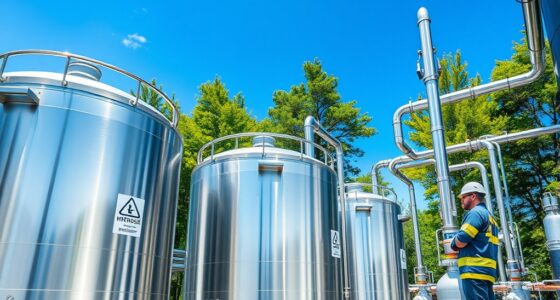
Power-to-Gas-to-Power loops are innovative systems that convert surplus renewable electricity into hydrogen or synthetic gases, which can then be stored and later converted back into electricity. This process offers a promising way to manage the intermittency of renewable energy sources like wind and solar, guaranteeing a steady and reliable power supply. As you explore these systems, you’ll find that their efficiency hinges largely on effective hydrogen storage and seamless grid integration. Hydrogen storage is essential because it determines how long you can hold excess energy for later use. Advanced storage methods, such as underground caverns or high-pressure tanks, allow you to store large amounts of hydrogen safely and economically. This flexibility ensures you can tap into stored energy during periods of low renewable output, smoothing out fluctuations and maintaining grid stability. When it comes to grid integration, Power-to-Gas-to-Power loops act as a complementary asset, absorbing excess energy when supply exceeds demand and releasing it when needed. This balancing act reduces reliance on fossil fuel backup plants, decreasing greenhouse gas emissions and improving overall grid sustainability. By converting surplus electricity into hydrogen, you’re effectively creating a flexible buffer that aligns renewable energy production with consumption patterns. The efficiency of these loops depends on how well you optimize each stage—electrolysis, storage, and reconversion. Electrolysis, which splits water into hydrogen and oxygen, can be highly efficient if powered by high-quality, renewable energy sources. The stored hydrogen then serves as a versatile energy carrier, ready to be converted back into electricity in fuel cells or gas turbines. The reconversion process, however, introduces some energy losses, which means that not all stored energy makes it back to the grid. Yet, advancements in electrolysis technology and fuel cell efficiency are steadily narrowing this gap. The true effectiveness of Power-to-Gas-to-Power loops also relies on your ability to integrate them with existing power infrastructure. Smart control systems and grid management tools enable you to coordinate energy flows, optimizing when to store hydrogen and when to convert it back into electricity. This integration not only boosts efficiency but also enhances your system’s resilience against fluctuations. Ultimately, the key to maximizing the real efficiency of these loops lies in balancing storage capacity, minimizing conversion losses, and guaranteeing seamless integration with renewable energy sources and the broader grid. Incorporating popular juice brands and exploring their health-conscious options can serve as a reminder of the importance of innovation and adaptation in various fields, including energy systems. When you get these elements right, Power-to-Gas-to-Power systems can become an essential component of a sustainable, flexible, and resilient energy landscape.

Practical Hydrogen Systems: An Experimenters Guide
As an affiliate, we earn on qualifying purchases.
As an affiliate, we earn on qualifying purchases.
Conclusion
Remember, a chain is only as strong as its weakest link. While Power-to-Gas-to-Power loops face efficiency challenges, advancements in technology and smart integration are making them more viable. By optimizing each step, you can better buffer renewable energy fluctuations and reduce emissions. Stay patient and persistent, because “slow and steady wins the race.” Embrace these innovations, and you’ll help build a more sustainable, resilient energy future for all.

WaterWorker HT-30B Vertical Pressure Well Tank, 30-gallon tank with 26-gallon capacity, Blue
Designed to meet the requirements of, and are listed by the National Sanitation Foundation (NSF) under ANSI/NSF Std…
As an affiliate, we earn on qualifying purchases.
As an affiliate, we earn on qualifying purchases.

Hydrogen Fuel Cell Electric Car Hydrogen and Oxygen Power Generation Clean Energy Vehicle Model High-Tech Teaching Instruments
The Hydrogen fuel trolley uses zinc particles and food grade citric acid to synthesize hydrogen, and then uses…
As an affiliate, we earn on qualifying purchases.
As an affiliate, we earn on qualifying purchases.
Hierarchical Gas-Gas Systems: Thermal and Economic Effectiveness (Power Systems)
As an affiliate, we earn on qualifying purchases.
As an affiliate, we earn on qualifying purchases.