When it comes to soundproofing your walls, selecting the right materials can make a significant difference. Some options block noise effectively, while others fall short. Understanding which materials offer the best results can save you time and money in the long run. But with so many choices available, how do you determine which ones truly stand out? The key lies in their properties and how they work together to reduce sound transmission—let’s explore the rankings.
Key Takeaways
- Acoustic insulation (mineral wool, fiberglass) ranks highest due to superior sound absorption and effective cavity filling.
- Mass-loaded vinyl and multiple drywall layers provide excellent sound blocking with added density.
- Foam panels and lightweight porous materials are less effective, offering minimal soundproofing benefits.
- Thin, inexpensive materials lack the mass and density needed for significant noise reduction.
- Combining dense noise barriers with acoustic insulation yields the best overall soundproofing results.
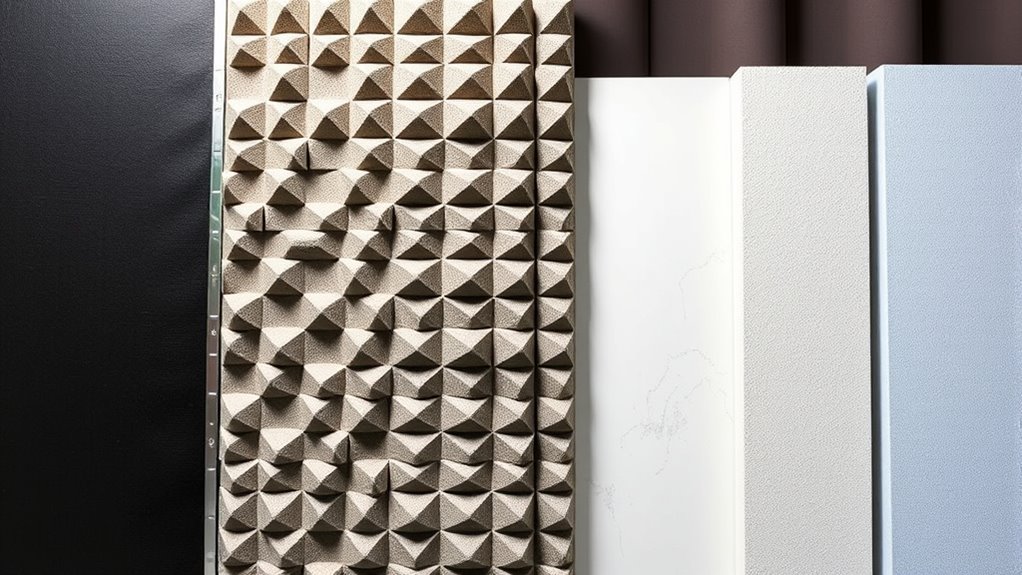
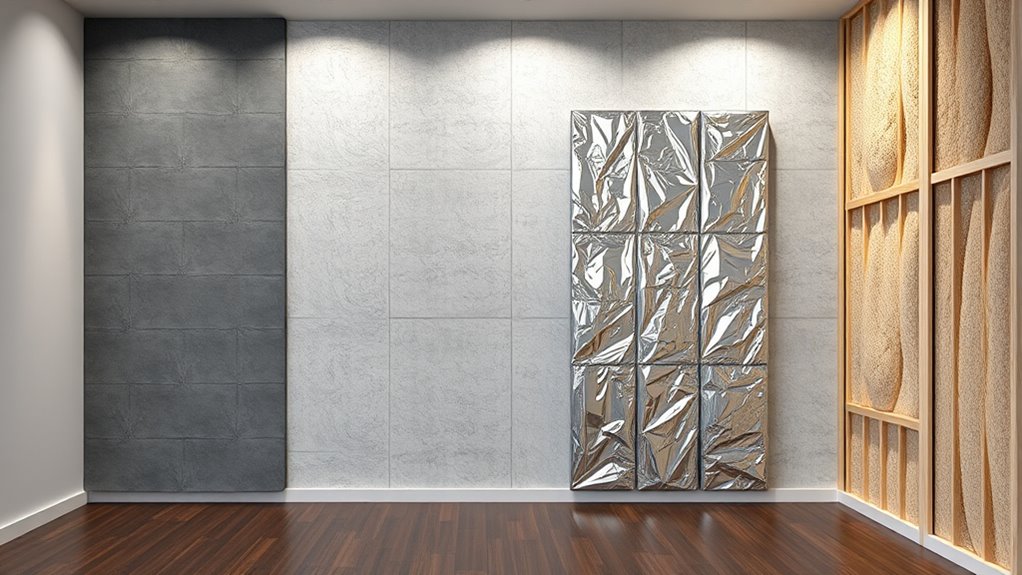
Are noisy neighbors or thin walls disrupting your peace? If so, you’re probably exploring options to soundproof your space. The first step is understanding the best materials for blocking sound, starting with acoustic insulation. Acoustic insulation is designed specifically to absorb sound waves, preventing them from traveling through walls and reducing overall noise levels. It’s highly effective when installed properly, especially in walls with gaps or thin panels. For the most part, materials like mineral wool or fiberglass insulation are top choices because of their excellent sound absorption qualities. They fill cavities within walls, creating a barrier that muffles noise from neighboring rooms or outside sources. These insulation types are often considered the most reliable because they do more than just block sound—they absorb it, making your space quieter and more peaceful.
Alongside acoustic insulation, noise barriers are essential for effective soundproofing. Noise barriers are physical structures or materials that block the transmission of sound waves. Think of them as shields that prevent noise from passing through walls, floors, or ceilings. Common noise barriers include mass-loaded vinyl, drywall, or specially designed soundproof panels that add mass to existing structures. The key is mass; heavier materials tend to block more sound because they vibrate less and transfer less noise. Installing additional drywall layers or using soundproof panels with dense, sound-absorbing cores can dramatically cut down noise infiltration. When combined with acoustic insulation inside the wall cavity, noise barriers become even more effective, creating a multi-layered defense against unwanted sound. Incorporating soundproofing techniques that utilize mass and insulation together offers a comprehensive approach to reducing noise transmission effectively.
However, not all materials are equally effective, and some are more suitable for specific situations. For example, lightweight materials like foam panels may provide some soundproofing but generally rank lower than mass-loaded vinyl or multiple layers of drywall. If you’re on a tight budget, adding a second layer of drywall with damping compounds can still considerably improve soundproofing. On the other hand, cheaper options like thin paneling or porous materials often fall short because they lack the mass or density needed to block sound effectively. Remember, the best results come from combining different materials—using acoustic insulation within walls along with robust noise barriers on the surface. This layered approach ensures you’re not just muffling sound but actively reducing the transmission of noise from outside or between rooms. With the right combination, you can restore your peace and enjoy a quieter, more comfortable environment.
Conclusion
To truly tame and tame noise, prioritize the powerful, pound-for-pound materials like dense vinyl and layered drywall. Combine these with cavity-fillers like mineral wool for maximum muffling. Remember, weaker, wimpy materials won’t work wonders. Wise choices will work wonders—weaponize your walls with weight and wonder. With careful combination and clever choices, you’ll conquer chaos and create calm, quiet spaces where sound stays out and serenity stays in.

Hi, I’m Emma. I’m the Editor in Chief of Tiny House 43, a blog all about tiny houses. While tree houses are often associated with childhood, they can be the perfect adult retreat. They offer a cozy space to relax and unwind, surrounded by nature. And since they’re typically built on stilts or raised platforms, they offer stunning views that traditional homes simply can’t match. If you’re looking for a unique and romantic getaway, a tree house tiny house might just be the perfect option.