
Imagine nurturing a garden where every drop of water holds the key to vibrant growth—because, in hydroponics, it does. When you master the nutrient solution, you control how your plants thrive without soil. But getting the right balance isn’t simple; it’s a delicate dance of chemistry and care. Curious about how to keep your plants happy and healthy with just water and nutrients? The secret lies in understanding the basics of your solution.
Key Takeaways
- Use commercial nutrient solutions or mix macro- and micronutrients according to manufacturer instructions.
- Maintain water pH between 5.5 and 6.5 for optimal nutrient availability.
- Regularly test and adjust pH to prevent nutrient imbalances and ensure plant health.
- Start with clean water and add nutrients gradually, following recommended dosages.
- Consistently monitor and modify the nutrient solution to support healthy plant growth.

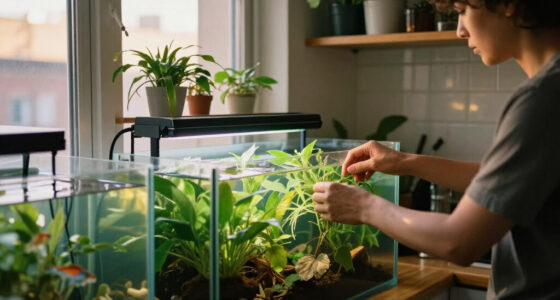
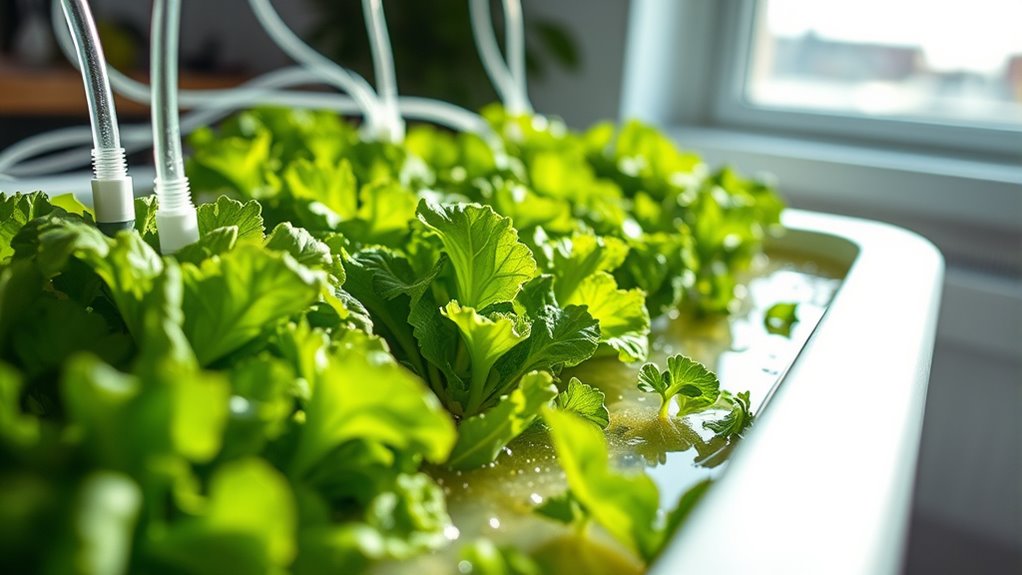
Have you ever considered growing fresh vegetables and herbs right in your own home without soil? If so, hydroponics offers an exciting way to do it. The first step is understanding how to create a healthy nutrient solution that keeps your plants thriving. This begins with choosing the right plant container options. You want containers that are durable, non-reactive, and easy to clean. Common choices include net pots, plastic or glass containers, and specially designed hydroponic trays. These containers should allow roots to grow freely while providing good drainage and aeration. Positioning your containers correctly ensures your plants receive enough light, air circulation, and access to the nutrient solution. Using specialized containers can further optimize your hydroponic setup for better growth.
Once your containers are set, the next essential aspect is water pH adjustment. Water pH directly impacts nutrient availability, so maintaining the correct pH level is critical for healthy plant growth. Most vegetables and herbs prefer a pH between 5.5 and 6.5. To achieve this, you’ll need to regularly test your water using pH testing kits or digital meters. If the water’s pH is too high or too low, you can adjust it with pH up or pH down solutions, which are readily available at hydroponic supply stores. Proper pH adjustment ensures that nutrients dissolve effectively and are absorbed efficiently by your plants’ roots.
Maintaining proper pH levels ensures optimal nutrient absorption and healthy plant growth.
Creating a balanced nutrient solution involves more than just water and pH; you also need to add the right mix of macro- and micronutrients. These nutrients are typically supplied through commercial hydroponic nutrient solutions, making it easier to maintain consistent feeding. When preparing your solution, always start with clean water, then add nutrients according to the manufacturer’s instructions. Regularly monitoring and adjusting the pH will keep your plants in ideal conditions to absorb these nutrients.
To keep your hydroponic system functioning smoothly, you should also consider how often you change or top off your nutrient solution. Regular water pH adjustment helps prevent imbalances that could hinder plant growth. Over time, the pH can drift due to factors like evaporation or nutrient uptake, so frequent testing and adjustment are necessary. Additionally, choosing the right plant container options for your space and plant types makes managing your system easier and more effective.

VIVOSUN Complete Nutrient System Starter Kit, for Indoor Growers
- Complete Nutrient System: Supports all growth stages with 6 formulas
- Balanced Nutrients: Ensures stable nutrient uptake and EC levels
- Promotes Strong Roots: Builds healthy roots and thicker stems
As an affiliate, we earn on qualifying purchases.
As an affiliate, we earn on qualifying purchases.
Conclusion
Remember, in hydroponics, patience and attention to detail make all the difference. Keep your nutrient solution balanced and your pH steady, and your plants will thrive. Regular testing and adjustments are your best tools—think of them as the secret sauce for success. As the saying goes, “A stitch in time saves nine,” so stay vigilant and nurture your system consistently. With care and dedication, your home garden will flourish beyond expectations.