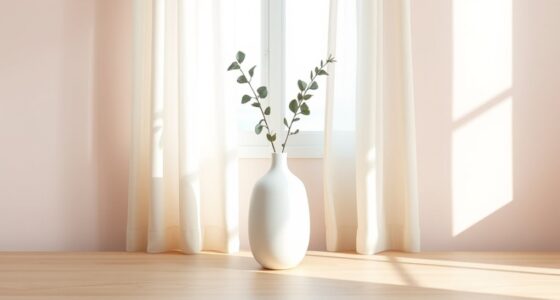
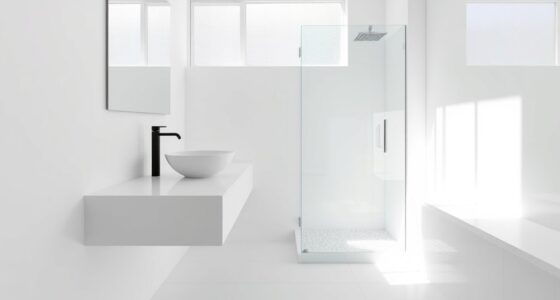
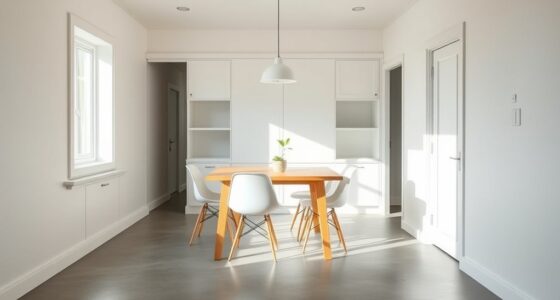
To create a minimalist color palette for tiny interiors, stick to light, neutral shades that reflect more light and make your space feel larger. Use subtle variations and textures within a single hue to add depth without clutter. Incorporate different finishes like matte or glossy surfaces to keep the look interesting. Thoughtful color choices paired with material diversity help you achieve a calm, cohesive environment. Keep exploring to discover how to best balance simplicity and style in your space.
Key Takeaways
- Use a limited, cohesive color palette to create a clean, spacious feel in tiny interiors.
- Incorporate monochrome schemes with subtle variations for depth and visual interest.
- Choose light shades to reflect more light, making small spaces appear larger and brighter.
- Add texture and material diversity to enhance dimension within a minimalist color scheme.
- Select colors that evoke calming or energizing moods to optimize the space’s atmosphere.
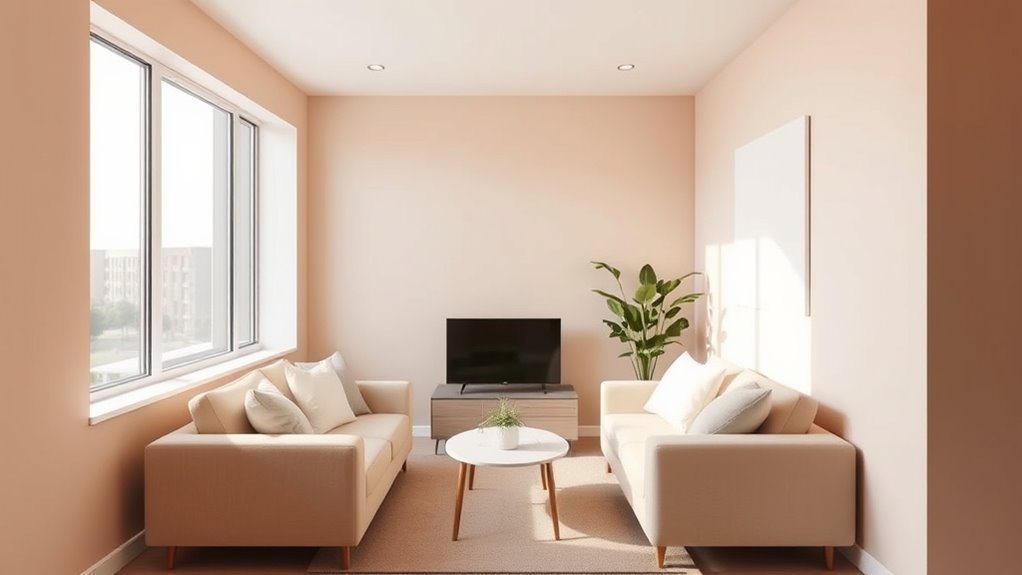
Minimalist color palettes focus on simplicity and restraint, using a limited selection of hues to create clean and impactful designs. When working with tiny interiors, this approach helps you avoid clutter and makes the space feel more open and inviting. One key aspect to contemplate is color psychology, which explores how different colors influence mood and perception. By choosing colors thoughtfully, you can create an environment that feels calming, energizing, or cozy—depending on what you desire. For small spaces, soft neutrals like beige, light gray, or muted pastels often evoke a sense of tranquility, making the area seem larger and less overwhelming. Bright accents can add personality without overcrowding the design, allowing you to highlight specific features or furnishings.
Monochrome schemes are particularly effective in minimalist tiny interiors because they use variations of a single hue to produce depth and interest while maintaining simplicity. For example, a room painted in different shades of gray can feel sophisticated and cohesive. You might opt for a darker charcoal on the walls paired with lighter gray furniture and accessories, creating visual harmony without the chaos of contrasting colors. Monochrome palettes also make it easier to balance elements, as you don’t need to worry about clashing hues or overly busy patterns. This approach streamlines the decorating process, giving you a cohesive look that feels intentional and polished.
Using monochrome schemes can also enhance the perception of space. Light-colored walls reflect more light, making the room appear bigger and brighter. You can add textures and subtle variations in tone to avoid flatness, giving your tiny interior depth without complicating the color story. When selecting your palette, think about how the shades interact under different lighting conditions—they can shift and change throughout the day, influencing the overall vibe. Keep in mind that subtle differences in hue and saturation can provide contrast and interest, even within a monochrome framework. Additionally, understanding color harmony can help you create a balanced and pleasing aesthetic within your limited space.
In addition, monochrome schemes are highly versatile, allowing you to incorporate different materials and finishes that complement the overall color. Matte, glossy, or textured surfaces add dimension and tactile appeal, helping your tiny space feel layered and dynamic. With minimalist color palettes rooted in monochrome schemes, you create a sophisticated, calm environment that maximizes your limited space. It’s about choosing the right shades, understanding how colors influence emotion and perception, and balancing simplicity with subtle complexity. This mindful approach ensures your tiny interior feels spacious, stylish, and perfectly tailored to your personal taste.
minimalist neutral wall paint
As an affiliate, we earn on qualifying purchases.
As an affiliate, we earn on qualifying purchases.
Frequently Asked Questions
How Can I Add Warmth to a Minimalist Tiny Space?
To add warmth to your minimalist tiny space, incorporate cozy textures like plush throws and soft rugs. Use natural materials such as wood or rattan for furniture and accents, which bring a sense of earthiness. Warm neutral tones, combined with these textures and materials, create a inviting atmosphere. Keep clutter minimal to maintain the clean look while making your space feel cozy and welcoming.
Are There Specific Color Combinations to Avoid in Small Rooms?
Avoid color clash in your small space, as it can turn your room into a visual congestion nightmare. Steer clear of pairing very dark shades with bright, saturated hues, and don’t mix too many bold colors, which can overwhelm. Instead, stick to neutral tones with subtle accents. Think of your tiny room as a stage; simple, harmonious combinations prevent cluttered chaos and make your space feel open and calm.
How Do I Incorporate Accents Without Clutter?
You can incorporate accents without clutter by choosing a few carefully selected decorative accessories and wall art. Opt for sleek, simple pieces that complement your minimalist palette, and place them strategically to add interest. Keep surfaces clear and avoid overloading walls. This way, your space feels curated and intentional, not crowded. Remember, less is more—selecting quality over quantity helps you achieve a balanced, stylish tiny interior.
What Lighting Choices Enhance Minimalist Color Palettes?
To enhance minimalist color palettes, you should prioritize natural sunlight and soft LED lighting. Natural sunlight brightens your space, highlighting subtle tones and creating an airy feel. Soft LED lights add gentle warmth without overwhelming your palette. Use layered lighting—ambient, task, and accent—to maintain simplicity while adding depth. This combination keeps your tiny space feeling open, calm, and visually appealing, perfectly complementing your minimalist aesthetic.
Can Bold Colors Work in Tiny Minimalist Interiors?
Yes, bold colors can work in tiny minimalist interiors if you use bold color strategies wisely. Focus on creating striking color contrast techniques, like pairing a vivid accent wall with neutral furniture, to add visual interest without overwhelming the space. Keep the bold hues limited to specific areas, and balance them with plenty of white or muted tones. This approach keeps your tiny space lively yet cohesive.
monochrome textured throw pillows
As an affiliate, we earn on qualifying purchases.
As an affiliate, we earn on qualifying purchases.
Conclusion
Embracing minimalist color palettes can transform your tiny space into a serene sanctuary. Some say fewer colors limit creativity, but evidence suggests they actually boost your mood and sense of order. By choosing simple, cohesive tones, you create a calming environment that feels larger and more inviting. So, don’t be afraid to experiment—trust the theory that less truly is more. Your small space can become a stylish, peaceful retreat with just a thoughtful splash of color.
light-reflecting matte finish furniture
As an affiliate, we earn on qualifying purchases.
As an affiliate, we earn on qualifying purchases.
small space accent lighting
As an affiliate, we earn on qualifying purchases.
As an affiliate, we earn on qualifying purchases.