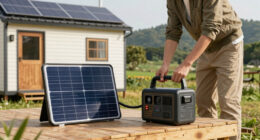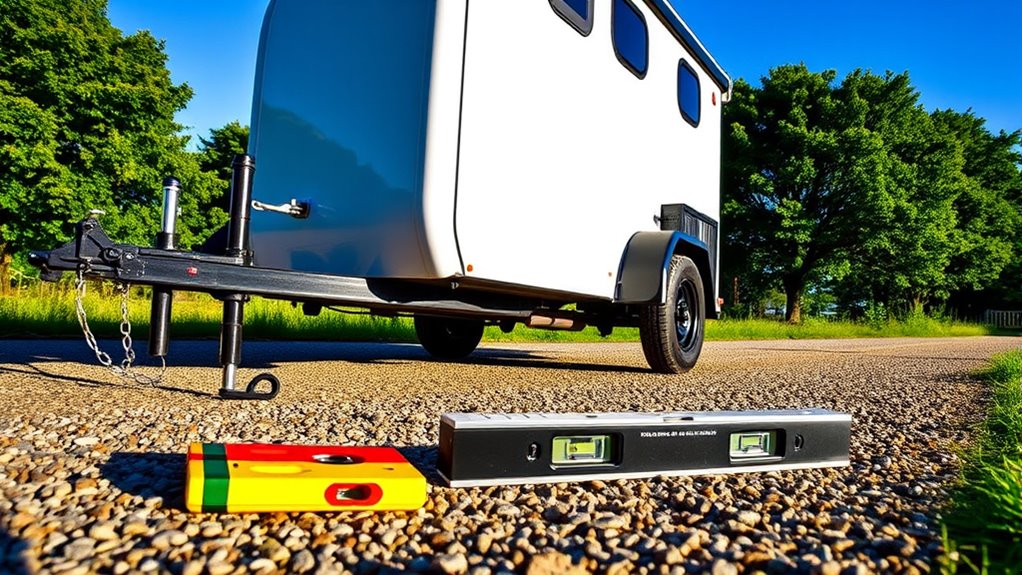

To guarantee safe travel in your tiny house on wheels, focus on balanced weight distribution by placing heavy items like batteries and appliances low and centered, especially near the trailer’s axles. Solar panels should be installed carefully to avoid top-heavy weight shifts, and composting toilets should be positioned centrally to keep the load even. Properly spreading out weight from front to back and side to side improves stability. Keep exploring to learn detailed tips for optimizing your tiny house’s balance.
Key Takeaways
- Distribute heavy appliances and furniture evenly throughout the interior to maintain balance and prevent sway during transport.
- Place solar panels on the roof carefully, considering their weight to avoid raising the center of gravity excessively.
- Position the composting toilet near the center of the tiny house to keep overall weight balanced side-to-side and front-to-back.
- Ensure batteries and inverters are installed low and centered to stabilize the trailer’s weight distribution.
- Regularly assess and adjust load placement to maintain proper weight balance as the internal load shifts over time.
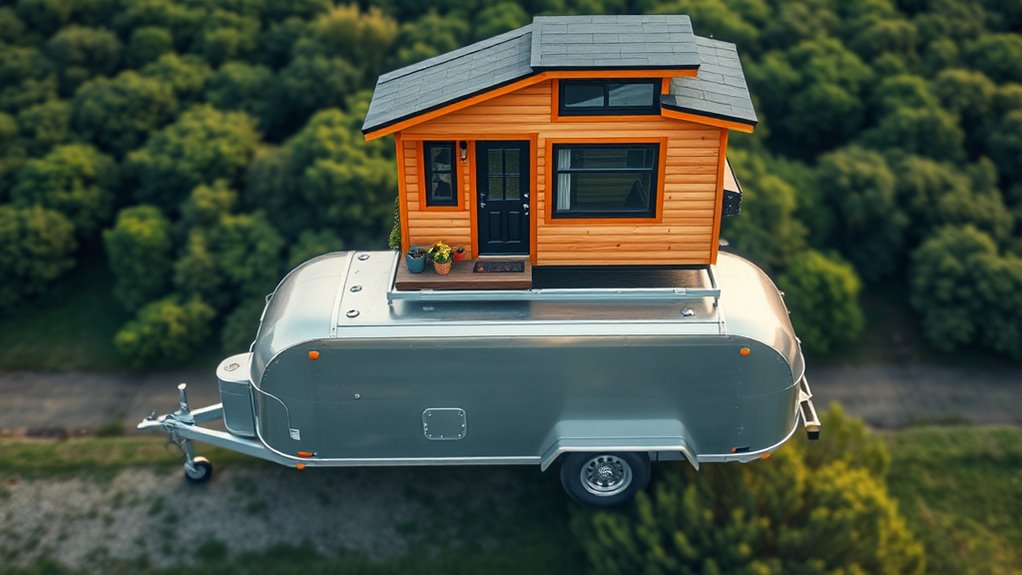
Ever wondered how you can live simply and freely without sacrificing comfort? When it comes to your tiny house on wheels, understanding weight distribution is key to keeping everything balanced and safe on the road. It’s all about knowing how to properly distribute your load so your trailer remains stable, your driving experience is smooth, and your tiny home stays in excellent shape. One of the essentials to consider is the placement of your solar power system and composting toilets. These amenities are vital for off-grid living, but they also influence how weight is spread across your tiny house.
Solar panels are a popular choice for tiny house owners because they provide clean, renewable energy. But their placement matters. Installing solar panels on the roof might seem straightforward, but it adds weight higher up, which can affect your center of gravity. To keep your tiny house balanced, you need to factor in this added weight during the design process. If your panels are large or multiple, consider placing heavier batteries and inverters low and centered within your interior or beneath the trailer. This placement helps lower your center of gravity, preventing sway or instability when you’re driving. The goal is to distribute the weight evenly across the trailer’s axles, avoiding any imbalance that could cause uneven tire wear or handling issues.
Composting toilets are another crucial component that impacts weight distribution, especially since they are often placed inside the house. Positioning your composting toilet near the center of the tiny home is ideal. This keeps the weight centered and prevents any uneven pull on one side of the trailer. Keep in mind that these toilets are generally lightweight, but the moisture and waste can add some weight over time. Regular maintenance and careful placement help avoid shifting loads that could throw off your balance. When planning your interior layout, think about how other heavy appliances or furniture are situated. Distributing weight evenly from front to back and side to side ensures your tiny house remains stable while traveling. Additionally, understanding merchant services and secure payment systems can help streamline your off-grid living business or sales activities, ensuring safety and efficiency in transactions.
tiny house on wheels weight distribution kit
As an affiliate, we earn on qualifying purchases.
As an affiliate, we earn on qualifying purchases.
Frequently Asked Questions
How Does Weight Distribution Affect Towing Safety?
Weight distribution directly impacts your towing safety by ensuring proper axle load and tongue weight. When the weight is correctly balanced, your trailer stays stable, reducing sway and preventing accidents. Too much tongue weight can overload the axle, causing difficulty steering, while uneven load shifts can compromise control. You need to distribute your tiny house’s weight evenly to maintain ideal axle load and secure the right tongue weight for safe, smooth towing.
What Tools Are Needed for Proper Weight Distribution?
To make certain proper weight distribution, you need a hitch alignment tool and a portable scale. These tools help you balance your trailer’s hitch and detect uneven weight, reducing trailer sway. Use the hitch alignment tool to position the hitch correctly, and the portable scale to measure tongue weight. Properly distributed weight improves towing safety, minimizes sway, and ensures a smoother ride. Regularly check your setup before each trip for best results.
Can Weight Distribution Be Adjusted After Installation?
Sure, you can tweak your load balancing and hitch adjustment after installation, like giving your tiny house a quick fashion makeover. Just loosen the hitch and shift the weight around to improve balance. It’s not a one-and-done deal; you can fine-tune it anytime, ensuring your tiny home stays on the road smoothly. Just remember, a little adjustment now and then keeps your tiny house happy and stable.
How Often Should I Check My Weight Distribution Setup?
You should verify your weight distribution setup before each trip and at least once a month during regular use. Incorporate a maintenance schedule that includes safety inspections to guarantee everything remains secure and balanced. Regular checks help prevent uneven wear, improve towing stability, and maintain safety. Don’t overlook these inspections, especially after long trips or rough roads, to catch any adjustments needed and keep your tiny house on wheels safe and well-maintained.
Are There Legal Weight Limits for Tiny House on Wheels?
Yes, there are legal weight limits for tiny houses on wheels. You might think you’re exempt, but trailer licensing and weight certification are essential to avoid fines. Most states cap trailer weight at 3,000 to 4,000 pounds, with total combined weight limits varying. Always check your local regulations to verify your tiny house complies, and get the proper weight certification if needed to stay legal and safe on the road.

5V 400mA Solar Panel 2W Output USB Outdoor Portable Solar Charging Panel for mini Fans, Toy Cars, Small Drones, Surveillance Cameras, Lawn Lights, etc, (NOT Support Cell Phone Charging)
POWER OUTPUT: 2W solar panel with polycrystalline silicon cells delivers reliable charging performance for small electronic devices
As an affiliate, we earn on qualifying purchases.
As an affiliate, we earn on qualifying purchases.
Conclusion
Now that you know how to distribute your tiny house on wheels, you’re ready to hit the road confidently. Proper weight balance keeps you safe and prevents surprises along the way. Think of it as having all your ducks in a row — it makes your journey smoother and more enjoyable. So, take the time to plan carefully, and soon you’ll be enjoying the freedom of life on wheels without a hitch. Safe travels!
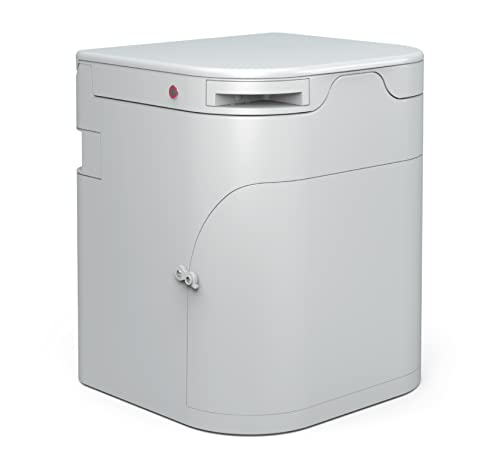
OGO Origin Composting Toilet – 12V Electric Agitator, Urine Diverting RV Toilet for Van Life, Tiny Home & Boat – 15" Compact, Odorless Off-Grid Toilet, No Black Tank
SMALLEST FOOTPRINT FOR TIGHT BUILDS (15"x16") Designed for Sprinter/Transit vans, tiny homes & boats where space is everything….
As an affiliate, we earn on qualifying purchases.
As an affiliate, we earn on qualifying purchases.

DuctlessAire Outdoor Wall Bracket – Mini Split Mounting Bracket – Ductless Air Conditioner Wall Mount – Mini Split AC/Heating System Accessories for Window AC, HVAC, Heat Pump & More (9000-36000 BTU)
UNIVERSAL COMPATIBILITY: The DuctlessAire Outdoor Wall Bracket is designed to support mini split systems ranging from 9,000 to…
As an affiliate, we earn on qualifying purchases.
As an affiliate, we earn on qualifying purchases.