To check wiring safety in your tiny house, start by inspecting all visible wiring for damage like frays or burn marks and make certain all connections are secure. Test circuit breakers and GFCIs to confirm they trip properly and verify proper grounding of outlets and appliances. Look for signs of corrosion or loose connections in your electrical panel. For a thorough assessment, consider professional help to ensure your setup meets safety standards. Keep an eye out for tips to enhance your electrical safety further.

Get compact home essentials delivered free with Prime
- Fast, free delivery on millions of items
- Prime Video, Amazon Music and more included
- Member-only deals all year
Key Takeaways
- Inspect all wiring for visible damage, frays, or burns and replace any compromised cables promptly.
- Verify proper grounding of outlets, appliances, and the electrical system according to local codes.
- Test circuit breakers and GFCIs regularly to ensure they trip correctly and provide protection.
- Use multimeters to check voltage levels and confirm consistent, safe electrical operation.
- Consult a professional electrician for comprehensive inspections and to address complex or uncertain wiring issues.
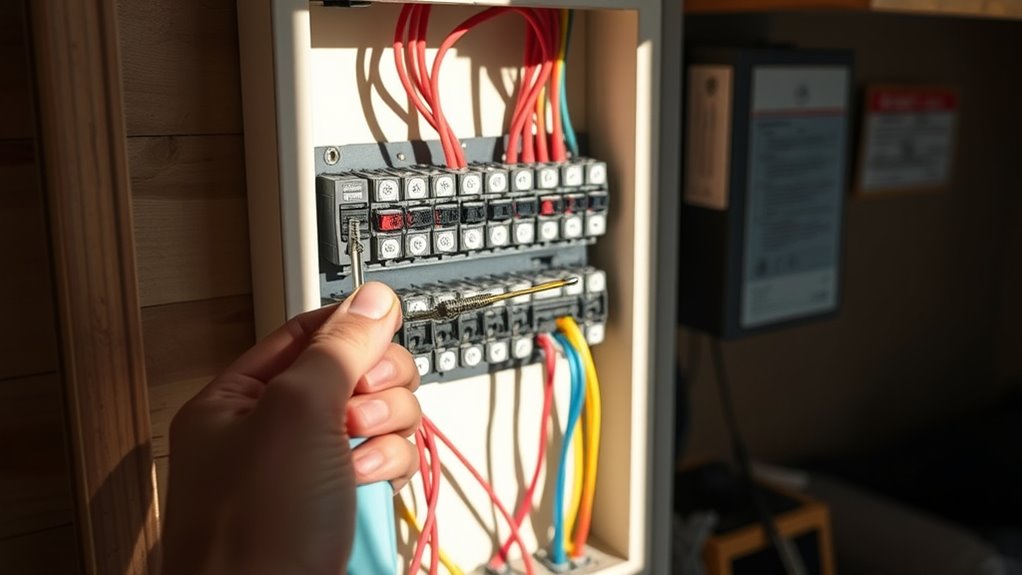
Ensuring wiring safety in tiny houses is essential to prevent electrical hazards and protect your home. One of the first steps is to verify that proper grounding practices are in place. Grounding provides a safe path for electrical faults, reducing the risk of shocks and fires. You should check that all outlets, appliances, and fixtures are properly grounded according to local electrical codes. Make sure grounding wires are securely connected to grounding rods or grounding systems installed correctly in your tiny house. If you’re unsure about the grounding setup, consider consulting a professional to confirm that your wiring meets safety standards.
Next, you need to understand your circuit breaker types and their roles in safeguarding your electrical system. Circuit breakers act as a safety net, automatically shutting off power when they detect overloads or short circuits. There are different types of circuit breakers, such as standard circuit breakers, GFCIs (Ground Fault Circuit Interrupters), and AFCIs (Arc Fault Circuit Interrupters). GFCIs are especially essential in areas prone to moisture, like kitchens and bathrooms, as they quickly cut power if they detect ground faults, protecting you from electric shocks. AFCIs help prevent fires caused by arcing faults, which can occur in damaged wiring or faulty devices. Ensuring your tiny house is equipped with the appropriate circuit breaker types is critical to maintaining electrical safety. Check that GFCIs are installed in all necessary locations and that they trip properly when tested. Similarly, verify that AFCIs are functioning correctly if you have them, and replace any outdated or damaged circuit breakers promptly.
Regular inspection of your circuit breaker panel is also necessary. Look for signs of wear, corrosion, or any loose connections, which could compromise safety. If a breaker trips frequently, don’t ignore it—investigate the cause or have a professional evaluate your system. Additionally, confirm that your wiring is free from visible damage, such as frayed wires, exposed conductors, or burn marks, which could indicate underlying issues. Use a multimeter to test outlets and switches for proper voltage and grounding, ensuring everything operates as it should. Incorporating protective devices like surge protectors can also further enhance your wiring safety by guarding against voltage spikes.
Ultimately, maintaining safe wiring in your tiny house involves a combination of proper grounding practices and selecting the right circuit breaker types. By routinely inspecting your electrical system, testing safety devices, and addressing any issues promptly, you create a safer environment for yourself and your home. Remember, when in doubt, always seek professional advice or hire a licensed electrician to carry out thorough inspections and necessary repairs. This proactive approach not only prevents potential hazards but also gives you peace of mind in your cozy, well-protected tiny house.
As an affiliate, we earn on qualifying purchases.
Frequently Asked Questions
How Often Should I Schedule Professional Wiring Inspections?
You should schedule professional wiring inspections at least once every three to five years, depending on your tiny house’s age and usage. Regular inspections guarantee your wiring’s safety assessment remains up to date, reducing risks of electrical hazards. If you notice any signs of wiring issues, like flickering lights or scorched outlets, get an inspection sooner. Consistent inspection frequency keeps your tiny house safe and helps catch potential problems early.
What Signs Indicate Electrical Problems in Tiny Houses?
You’ll notice electrical problems in your tiny house if you see flickering lights, burning smells, or outlets that don’t work. Like a warning sign on a boat, these clues point to grounding issues or overloaded circuits. If outlets feel warm or circuits trip frequently, it’s time to investigate. Addressing these signs early prevents fires and keeps your tiny home safe, just like regular maintenance keeps a vehicle running smoothly.
Can I Upgrade Wiring Myself or Should I Hire an Electrician?
You can attempt DIY upgrades if you have electrical licensing and experience, but it’s often safer to hire a professional electrician. Electrical work in tiny houses demands precise skills and adherence to safety codes. If you’re not licensed or confident in your abilities, don’t risk it—hire an electrician. They ensure the wiring upgrade is done correctly, safely, and compliant with local regulations, giving you peace of mind.
Are There Specific Wiring Codes for Tiny Houses?
Yes, tiny houses must follow specific wiring regulations and tiny house standards to guarantee safety. These standards address wire gauge, circuit breakers, and grounding to prevent electrical hazards. You should consult local building codes and wiring regulations for your area, as tiny house standards may vary. It is crucial to adhere to these rules, and when in doubt, hire a licensed electrician to ensure your wiring meets all safety requirements.
What Portable Tools Are Recommended for Checking Wiring Safety?
Think of your tiny house’s wiring like a delicate dance—you want every step to be precise. You should carry portable testers and safety meters to make sure everything’s in sync. I once checked a tiny home’s wiring with a digital multimeter, catching a hidden short before it caused a fire. These tools help you confidently verify wiring safety, giving you peace of mind to enjoy your cozy space without worries.
Conclusion
Now, picture yourself stepping into your cozy tiny house, the soft hum of safe wiring reassuring you like a gentle heartbeat. With every switch flipped and socket tested, you paint a picture of security and peace of mind. Checking wiring safety isn’t just a task—it’s the foundation that keeps your tiny home warm, bright, and inviting. When you confirm everything’s in place, you’re creating a safe haven where memories can flourish without a flicker of worry.
Halloween Picks
halloween
As an affiliate, we earn on qualifying purchases.