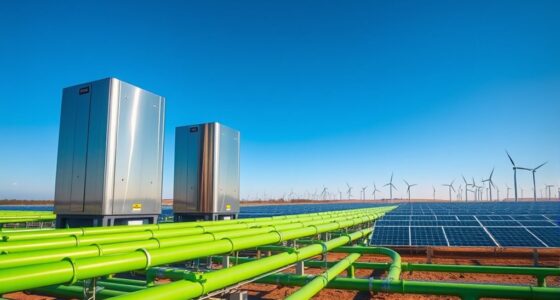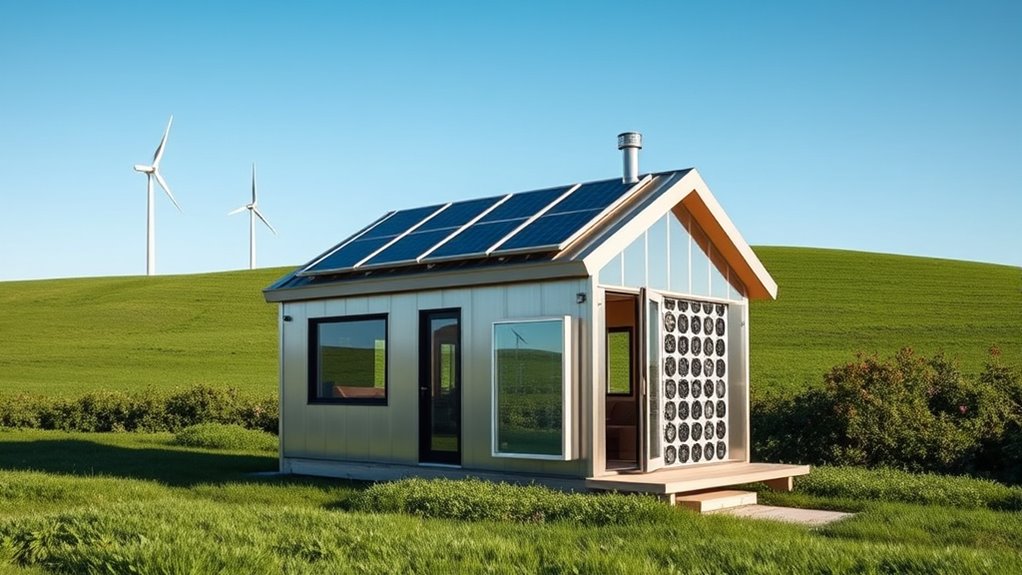

Hydrogen-powered tiny house innovations are revolutionizing sustainable living by seamlessly integrating fuel cells, solar, and wind energy into compact designs. These homes use renewable energy sources to produce hydrogen, providing reliable, eco-friendly power without noise or pollution. They are highly efficient, making off-grid living more feasible and cost-effective. If you want to discover how these cutting-edge features work together to create eco-conscious, self-sufficient homes, keep exploring what’s possible with hydrogen technology.
Key Takeaways
- Hydrogen fuel cells provide clean, efficient, and reliable energy solutions for off-grid tiny homes.
- Integration of renewable sources like solar and wind enhances hydrogen production and overall eco-friendliness.
- Space-efficient fuel cell systems and compact storage tanks optimize tiny house design and usability.
- Hydrogen-powered tiny homes support sustainable living by reducing environmental impact and energy costs.
- Innovations include seamless system controls and insulation improvements, advancing portable, renewable habitat technologies.
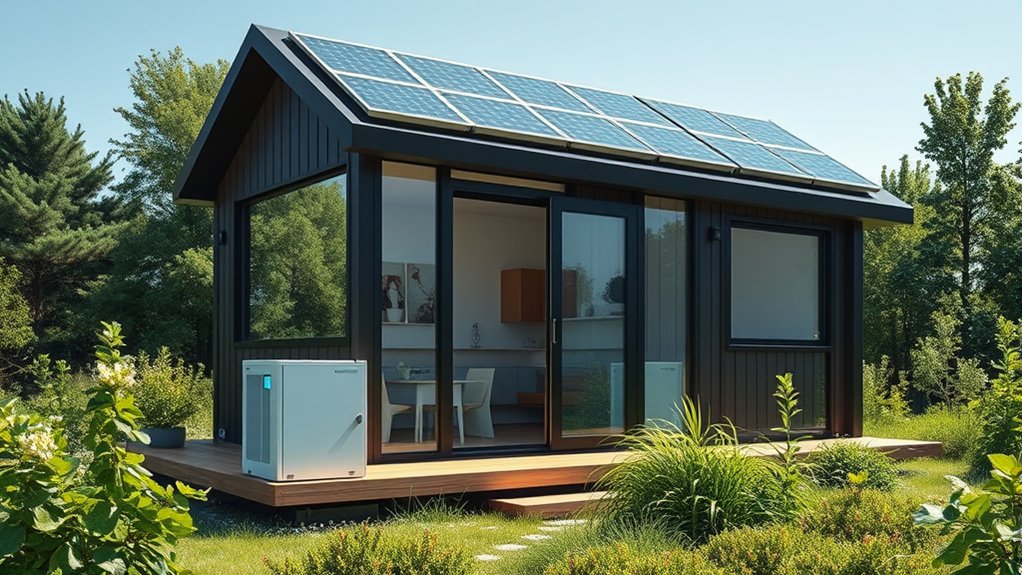
As the demand for sustainable living grows, innovative tiny house designs are increasingly turning to hydrogen power as a clean, efficient energy source. This shift signifies a broader move toward renewable energy solutions that align with eco-friendly principles. Hydrogen, when produced through renewable methods like electrolysis powered by solar or wind energy, offers a truly sustainable alternative to traditional fossil fuels. By integrating hydrogen fuel cells into tiny homes, designers and homeowners can minimize their carbon footprint while maintaining modern comfort and functionality. These tiny, efficient structures serve as ideal testing grounds for renewable energy innovations, blending sustainability with practicality. Moreover, the use of renewable energy sources in producing hydrogen further enhances the eco-friendly profile of these homes.
Incorporating hydrogen power into tiny houses isn’t just about reducing emissions; it’s about redefining sustainable design. Tiny homes inherently emphasize minimalism, resource efficiency, and reduced environmental impact, making them perfect candidates for hydrogen technology. With a compact footprint, these homes can optimize energy usage and reduce waste, while hydrogen fuel cells provide a reliable, on-demand power source without the noise and pollution associated with generators or traditional grid reliance. This synergy between tiny house architecture and renewable energy technology creates a seamless, eco-conscious living experience that appeals to those seeking independence from conventional energy systems.
You’ll find that hydrogen-powered tiny houses often feature sleek, space-saving designs that maximize every square inch. These designs incorporate integrated fuel cell systems, compact storage tanks, and user-friendly controls, allowing you to operate your home’s energy system with ease. Because hydrogen can be stored safely in small tanks, it offers flexibility for off-grid living or areas with unreliable grid access. Additionally, the efficiency of hydrogen fuel cells means you’ll generate enough electricity for daily needs—lighting, heating, cooking, and even small appliances—without relying on external power sources. This setup not only enhances sustainability but also reduces long-term energy costs, making it an attractive choice for eco-conscious homeowners.
Hydrogen fuel cells enable sleek, efficient, off-grid tiny homes with minimal environmental impact.
The push toward renewable energy and sustainable design in tiny homes also encourages innovation in insulation, water management, and waste reduction. Hydrogen-powered tiny houses often incorporate solar panels and wind turbines to produce the electricity needed for electrolysis, ensuring that the entire system remains renewable. These homes become self-sufficient, with minimal environmental impact, embodying the principles of truly sustainable living. As you explore these designs, you’ll see how hydrogen technology can be seamlessly integrated into tiny homes, creating a future where portable, eco-friendly habitats are powered by clean, renewable energy sources. This revolution in tiny house design underscores a commitment to reducing our carbon footprint while enjoying modern comforts in a compact, efficient space.

Horizon Fuel Cell Technologies Solar Hydrogen Education Kit
Horizon puts renewable energy technology into the hands of our future scientists
As an affiliate, we earn on qualifying purchases.
As an affiliate, we earn on qualifying purchases.
Frequently Asked Questions
How Long Does a Hydrogen Fuel Cell Last Before Needing Replacement?
Your hydrogen fuel cell typically lasts between 5,000 to 10,000 hours of operation, depending on usage and maintenance. Regular maintenance reduces wear and extends the fuel cell’s lifespan. You should check for leaks, clean components, and replace filters as needed. With proper care, your fuel cell can reliably power your tiny house for years before needing replacement, ensuring consistent performance and energy efficiency.
What Are the Safety Measures for Storing Hydrogen in Tiny Homes?
You should prioritize storage tank safety and hydrogen leak detection to keep your tiny home safe. Use high-quality, pressure-rated tanks designed for hydrogen, and verify they’re installed in well-ventilated areas. Regularly inspect for leaks with specialized detectors, and keep tanks away from heat sources. Properly securing your storage system minimizes risks, helping you enjoy clean energy without safety concerns.
Can Hydrogen-Powered Systems Be Integrated With Solar Energy?
Yes, hydrogen-powered systems can be integrated with solar energy, creating a strong energy synergy for your tiny home. By combining solar panels with hydrogen fuel cells, you harness renewable energy and store excess power efficiently. This integration allows you to maximize energy independence, reduce reliance on grid power, and guarantee a clean, sustainable energy supply. Proper planning and safety measures are essential to optimize solar integration and maintain safe, effective hydrogen use.
What Is the Cost Comparison Between Hydrogen and Traditional Energy Sources?
Imagine you’re choosing between hydrogen and traditional energy for your tiny house. A recent cost analysis shows hydrogen systems currently cost more upfront due to market pricing and infrastructure needs. While traditional energy remains cheaper initially, hydrogen offers long-term benefits like lower emissions. You should weigh these factors carefully, considering both initial investment and future savings, to determine which energy source aligns best with your sustainability goals and budget.
Are There Government Incentives for Adopting Hydrogen-Powered Tiny Houses?
Yes, you can benefit from government incentives for adopting hydrogen-powered tiny houses. Many programs offer government grants and tax credits to encourage clean energy adoption. These incentives can substantially reduce your initial costs and make sustainable living more affordable. Be sure to research local and federal programs, as eligibility varies. Taking advantage of these financial benefits helps you save money while reducing your carbon footprint.

Wind Turbine Generator Kit, 1200W 5 Blade Wind Generators for Home, 12V 800RPM Power Kit with Controller, Windmill Generator for Solar&Wind System
Generator: three-phase permanent magnet synchronous motor. Efficient and compact ac generator with high performance NdFeB permanent magnet. A…
As an affiliate, we earn on qualifying purchases.
As an affiliate, we earn on qualifying purchases.
Conclusion
As you step into the future with hydrogen-powered tiny houses, remember that they symbolize hope and innovation, lighting the way toward sustainable living. Just as hydrogen fuels these small homes, they remind you that even the tiniest changes can spark a larger shift toward eco-friendly habits. Embrace this movement, knowing that each innovation is a seed planted for a greener, brighter world. Your choices today become the foundation for tomorrow’s horizon.
compact hydrogen storage tank for off-grid homes
As an affiliate, we earn on qualifying purchases.
As an affiliate, we earn on qualifying purchases.

Interactive Tiny Solar Air Conditioners Model Safe ABS Construction Dollhouses and Learning for Tiny Solar Air Conditioners Model
Crafted with ABS and intricate detail, the 1 / 12 scale model showcases authentic vents, textured surfaces, and…
As an affiliate, we earn on qualifying purchases.
As an affiliate, we earn on qualifying purchases.