Did you know that over 15 years, fuel-cell backup systems often cost more upfront but can save you money in the long run? While lithium batteries are cheaper initially and easier to install, they may require multiple replacements and maintenance, increasing overall costs. Understanding these trade-offs is essential for making the best choice for your needs, yet many overlook the long-term implications. Keep exploring how these options compare over time.

Get compact home essentials delivered free with Prime
- Fast, free delivery on millions of items
- Prime Video, Amazon Music and more included
- Member-only deals all year
Key Takeaways
- Lithium batteries have lower initial costs but require multiple replacements over 15 years, increasing long-term expenses.
- Fuel cells have higher upfront costs but typically last over 15 years, reducing replacement and maintenance costs.
- Over 15 years, fuel cells often prove more cost-effective due to longer lifespan despite higher initial investment.
- Lithium batteries pose environmental concerns and disposal costs, which can add to total long-term expenses.
- Fuel cells offer environmental benefits with lower emissions, potentially reducing regulatory and ecological costs over time.
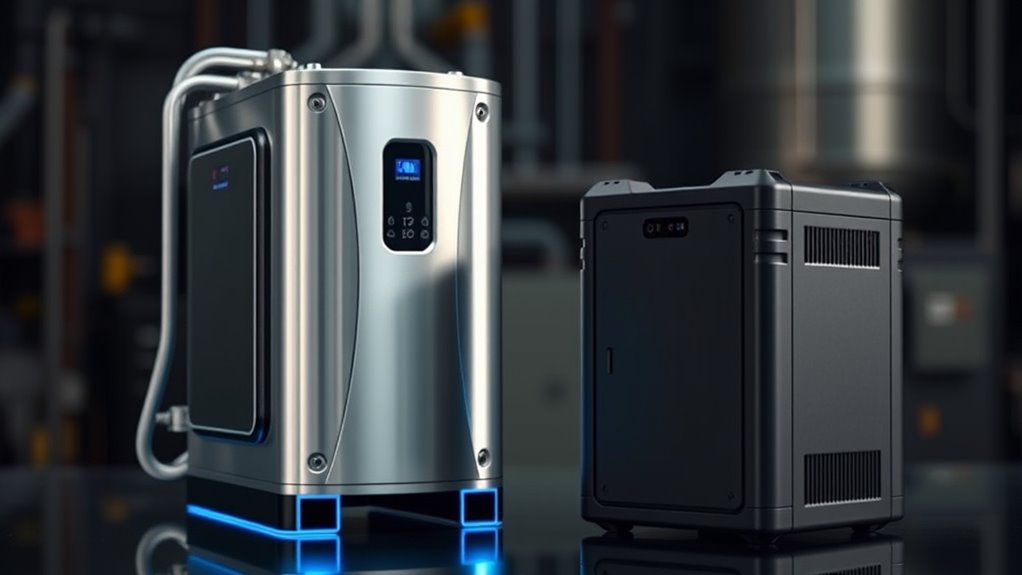
When it comes to powering backup systems, fuel-cell technology and lithium batteries each offer distinct advantages and challenges. Over a span of 15 years, understanding their long-term costs, especially in terms of cost efficiency and environmental impact, becomes essential for making the right choice. Lithium batteries have become popular due to their decreasing costs and widespread use in various applications. Their initial investment is typically lower, and with technological advancements, their cost efficiency continues to improve. Over 15 years, lithium batteries tend to be more affordable upfront, especially considering the current manufacturing scale and supply chains. However, you need to account for replacement costs, as lithium batteries have a finite lifespan—usually around 8 to 10 years—meaning multiple replacements might be necessary, raising the total cost over time. Additionally, their environmental impact is a concern; mining for lithium, cobalt, and other materials involves considerable ecological disruption, water usage, and energy consumption. Recycling options are improving but aren’t yet fully capable of mitigating the environmental footprint, which could lead to higher long-term costs if disposal and environmental regulations become stricter. Furthermore, advancements in AI-driven insights are improving the efficiency of managing battery health and predicting maintenance needs, potentially reducing operational costs over time. Fuel-cell technology, on the other hand, often comes with a higher initial investment. The setup costs for fuel-cell backup systems are generally steeper due to the complexity of fuel processing and infrastructure needs. But when you look at the long-term picture, fuel cells can be more cost-efficient in specific scenarios. They tend to have longer operational lifespans—sometimes exceeding 15 years—reducing the need for frequent replacements. This longevity can translate into lower maintenance and replacement costs over the years, balancing out the higher initial expenses. From an environmental standpoint, fuel cells powered by hydrogen produce only water as a byproduct, making them a cleaner alternative with a considerably lower environmental impact. This can be especially advantageous if you’re aiming to reduce your carbon footprint or comply with stricter environmental regulations. Ultimately, your decision hinges on weighing upfront costs against long-term benefits. Lithium batteries offer a lower initial investment and quick deployment but may incur higher replacement and disposal costs, along with environmental concerns. Fuel cells require more initial capital but can deliver greater cost efficiency over time due to their durability and cleaner emissions. When considering a 15-year horizon, both options present compelling cases, but your specific needs, environmental goals, and budget will determine which technology aligns best with your backup power strategy.
As an affiliate, we earn on qualifying purchases.
Conclusion
In the end, choosing between fuel-cell backups and lithium batteries is like picking between a sturdy, long-lasting oak and a quick-growing pine. Fuel cells may cost more upfront but pay off over time with durability and environmental benefits. Lithium batteries are easier on your initial budget but require frequent replacements. Consider your long-term goals and infrastructure to find the best fit—both options have their own strengths for your backup needs.
Fall Picks
fall essentials
As an affiliate, we earn on qualifying purchases.