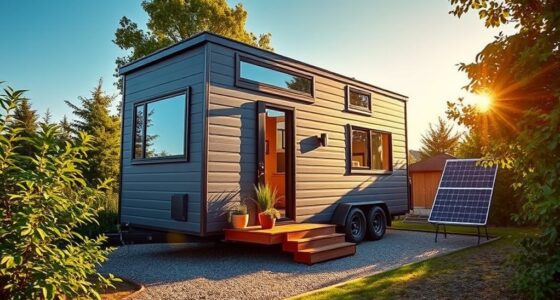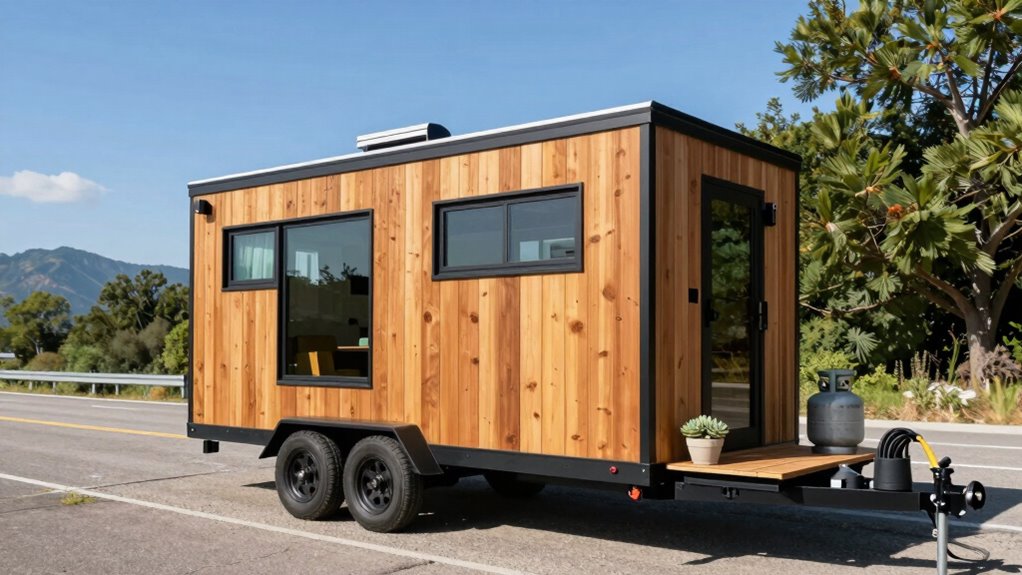
To design a tiny house for weekend moves and road trips, focus on versatile, fold-away furniture and smart storage solutions. Use lightweight, portable pieces that can be easily moved or hidden to maximize space. Incorporate efficient layouts with vertical storage and multi-purpose furnishings, along with natural lighting and cozy decor. Keep only essentials to reduce clutter and maintain flexibility. If you continue exploring, you’ll discover more ways to make your tiny house adaptable for any adventure.

Get compact home essentials delivered free — and shop member deals
- Fast, free delivery on millions of items
- Access to Prime Big Deal Days deals on October 6–7
- Prime Video, Amazon Music and more included
Key Takeaways
- Incorporate portable, collapsible furniture to easily set up and pack down for travel.
- Prioritize multi-functional pieces with built-in storage to maximize space efficiency.
- Use light, neutral color palettes to create an open, adaptable atmosphere.
- Design a flexible layout that quickly transforms for sleeping, cooking, and relaxing.
- Implement smart vertical storage solutions to keep essentials organized and accessible on the go.
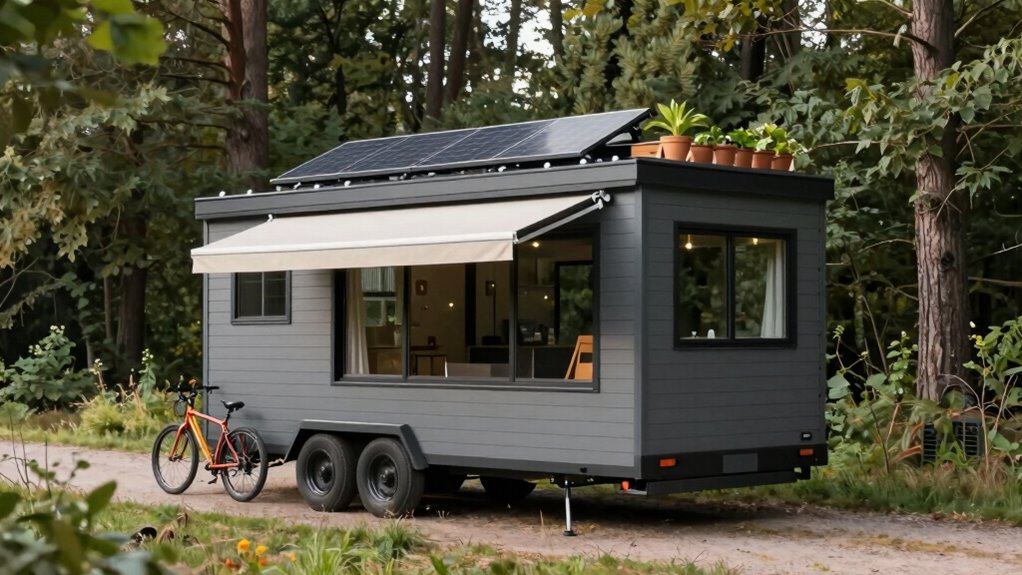
Designing a tiny house can be an exciting challenge, especially if you want to maximize space while maintaining comfort and style. When planning for weekend moves and road trips, your goal is to create a space that’s both functional and inviting, so every square inch counts. You’ll want your interior decor to reflect your personality, but it should also be adaptable for different environments. Think about versatile furniture, like fold-away beds or collapsible tables, that can serve multiple purposes and save space when not in use. Keep your color palette light and neutral to make the space feel larger, and incorporate personal touches, like artwork or cozy textiles, to add warmth and character.
Storage solutions are essential in a tiny house designed for travel. Since space is limited, you need clever ways to keep your belongings organized and accessible. Use multi-functional furniture with built-in storage compartments, such as ottomans or beds with drawers underneath. Vertical storage is your friend; install shelves high on the walls or hang hooks for gear, cookware, or clothing. Consider using under-floor compartments or hidden cabinets that can serve as extra storage without cluttering your living area. When designing your storage solutions, think about what you genuinely need to carry with you and cut down on unnecessary items. This ensures your tiny house remains manageable and easy to clean. Additionally, understanding space optimization techniques can help you make the most of every inch of your mobile home. Incorporating lightweight, portable furniture options can further enhance flexibility and ease of setup. Using smart design principles can also improve overall efficiency and comfort, especially when considering contrast ratios and their impact on interior lighting. A well-planned layout, based on efficient space utilization, can make a significant difference in how comfortable and practical your tiny house feels during travel.
In addition to maximizing storage, pay attention to your interior decor to create a cozy, home-like atmosphere on the road. Use textiles, rugs, and curtains to define different zones within your tiny house, making it feel more spacious and organized. Lighting also plays a crucial role—use a mix of natural light, task lighting, and ambient fixtures to brighten the space and create a welcoming vibe. Portable or collapsible furniture pieces can be easily stored away when not in use, giving you more room to move around during travel days or when parked. Achieving a harmonious balance between functionality and aesthetics will make your tiny house a true home on wheels.
Finally, keep the layout flexible. A well-planned interior ensures you can quickly adapt your space for different activities, whether you’re cooking, relaxing, or sleeping. When designing for travel, think about ease of setup and breakdown, so your tiny house can transform from a cozy retreat to a mobile home effortlessly. With thoughtful interior decor and smart storage solutions, you’ll enjoy a tiny house that’s as practical as it is charming, perfect for weekend escapes and road trips.
portable fold-away furniture for tiny house
As an affiliate, we earn on qualifying purchases.
As an affiliate, we earn on qualifying purchases.
Frequently Asked Questions
What Are the Legal Size Restrictions for Tiny Houses on Roads?
You need to check your local tiny house zoning and road legality regulations, as size restrictions vary by area. Generally, tiny houses on wheels should stay within 8.5 feet wide to be road legal without special permits, and length often can’t exceed 40 feet. Some regions allow taller structures, but always verify local restrictions to prevent legal issues. Staying informed guarantees your tiny house remains compliant during weekend moves and trips.
How Do I Ensure Proper Ventilation in a Small Space?
To guarantee proper ventilation in your tiny house, focus on airflow circulation by installing efficient ventilation systems like exhaust fans, vents, or windows that open easily. Use ceiling or portable fans to promote air movement and prevent stale air. Regularly open windows when parked, and consider adding vents in key areas like the bathroom and kitchen. These steps help maintain fresh air, reduce humidity, and improve overall comfort during your weekend travels.
Can I Install Solar Panels on a Tiny House?
Yes, you can install solar panels on a tiny house. Solar panel installation boosts your energy efficiency, making your tiny home more self-sufficient during weekend moves and road trips. Choose lightweight, flexible panels suited for small spaces, and position them on the roof for maximum sun exposure. Properly installed solar systems can power your essentials, reduce reliance on hookups, and help you enjoy eco-friendly, off-grid adventures.
What’s the Best Insulation for Cold-Weather Travel?
For cold-weather travels, think of insulation materials as your tiny house’s warm blanket against winter’s chill. Opt for spray foam or rigid foam boards—they’re champions in thermal efficiency, sealing every nook and cranny like a skilled artisan. These materials keep heat in and cold out, ensuring your cozy refuge on wheels stays toasty. With the right insulation, your tiny house becomes a fortress of warmth amid winter’s icy embrace.
How to Maximize Storage in a Tiny House Design?
You can maximize storage by carefully planning furniture arrangements that double as storage, like beds with drawers or fold-out couches. Incorporate multi-purpose solutions such as fold-away tables, wall-mounted shelves, and hidden compartments. Use vertical space for hanging organizers and stackable containers. Opt for compact, multifunctional furniture that saves space and keeps things organized, ensuring you have enough room for essentials during weekend trips and road adventures.
Conclusion
Designing your tiny house is like planting a seed—nurturing it with your dreams, and watching it grow into a flexible haven. Every fold and fixture becomes a branch reaching out for adventure, while the open space symbolizes endless possibilities. As you hit the road, remember your tiny house isn’t just a vehicle—it’s a vessel of freedom and discovery. With thoughtful design, you carry a home that’s as boundless as your spirit.
Fall Picks
fall essentials
As an affiliate, we earn on qualifying purchases.