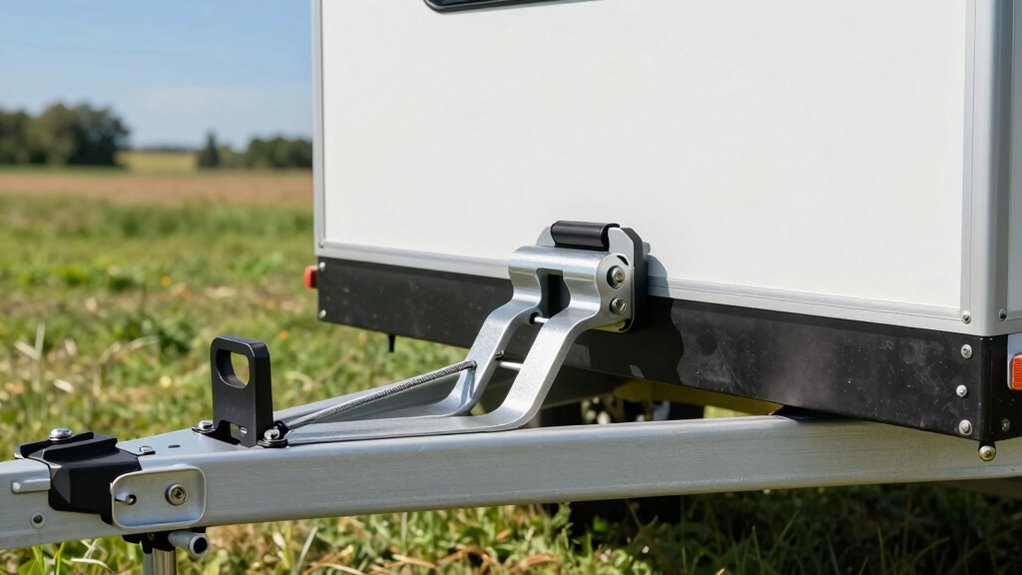

Using a weight distribution hitch is key to making your tiny house move safer and more stable. It helps distribute the tongue weight evenly across your vehicle’s axles, reducing sway and improving control. Proper setup and adjustment guarantee your trailer stays level during transit, even on uneven terrain. This not only enhances safety but also protects your tiny house from damage. Keep exploring to discover more tips on choosing and installing the right hitch for your move.
Key Takeaways
- Properly select a weight distribution hitch that matches your tiny house’s weight and tongue load for optimal safety.
- Ensure correct hitch height and level setup to prevent sway and maintain stability during transit.
- Regularly inspect and securely attach all components, including safety chains and brake lights, before driving.
- Adjust tension and spring bars properly to evenly distribute weight and reduce trailer sway.
- Follow manufacturer guidelines and use quality equipment to enhance stability and protect against accidents.
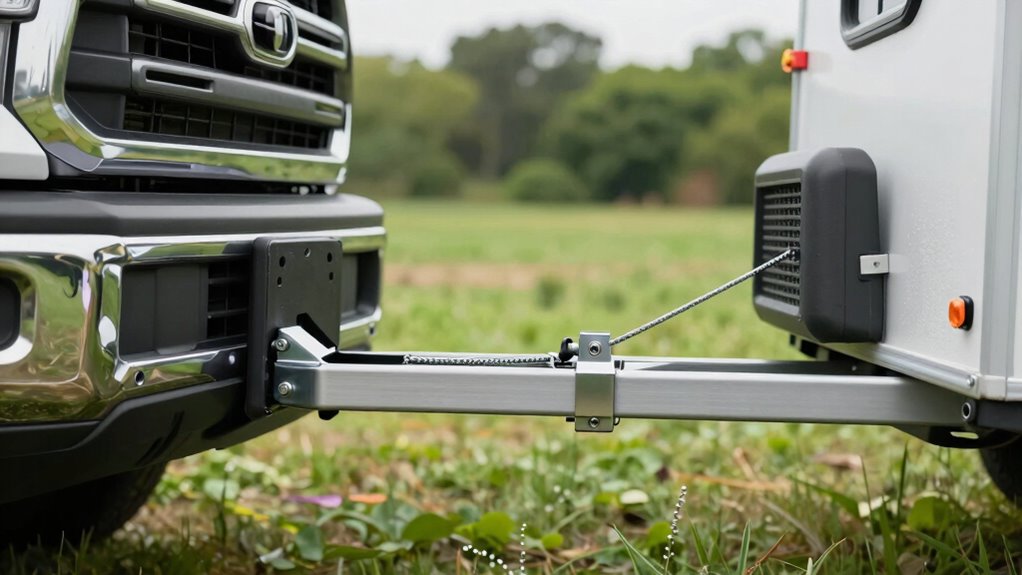
Moving a tiny house can be challenging, but using the right equipment makes the process safer and easier. One key factor in guaranteeing a smooth move is managing trailer sway, which can destabilize your tiny house during transit. Trailer sway occurs when the trailer begins to oscillate side to side behind the tow vehicle, risking loss of control or damage. To combat this, a proper hitch setup is essential. A weight distribution hitch plays a vital role in stabilizing the load by evenly distributing the tongue weight across your vehicle’s axles, reducing sway and improving handling. When you choose the right hitch setup, you’re not only preventing sway but also enhancing safety and control.
Using the right hitch setup prevents trailer sway and ensures a safer, smoother tiny house move.
A good hitch setup begins with understanding your tiny house’s weight and tongue load. Once you know these figures, you can select a weight distribution hitch designed to handle that capacity. This type of hitch uses spring bars and a hitch head to transfer weight from the trailer tongue to the front and rear axles of your tow vehicle. As a result, your vehicle maintains better traction and steering response. Properly installed, a weight distribution hitch ensures your tiny house remains stable on the road, even at higher speeds or on uneven terrain. It’s worth investing time in adjusting the tension of the spring bars and ensuring they are securely attached, as improper setup can lead to increased sway or unsafe towing conditions. Additionally, understanding the proper setup techniques can further improve your towing experience, especially when considering the importance of towing safety and proper equipment use. Ensuring your equipment is correctly installed can significantly reduce the risk of accidents during transit. Incorporating quality hitch components can also enhance overall stability and longevity of your towing system.
Equally important is the hitch setup itself—specifically, how you connect the trailer to your tow vehicle. You want to make sure the hitch ball size matches your trailer’s coupler, and that the hitch height is correctly aligned with the trailer’s coupler. An incorrectly set up hitch can cause uneven weight distribution, which contributes to trailer sway. A level hitch setup helps maintain stability, so double-check the height and alignment before hitting the road. Also, ensure your safety chains are properly connected and your brake lights and signals work correctly. Recognizing the importance of biodiversity and sustainable practices can also encourage responsible towing and transport choices that minimize environmental impact. When you prioritize a solid hitch setup and use a weight distribution hitch, your tiny house move becomes safer and more controlled. This setup minimizes trailer sway, improves steering, and distributes weight evenly, making your journey smoother. Proper equipment and correct attachment are your best defenses against accidents and damage during transit. Remember, taking the time to set up your hitch properly not only protects your tiny house but also gives you peace of mind as you navigate the road.

Fastway Connect™ Weight Distribution Hitch
- Heavy-duty steel chains: Connects hitch to trailer for load balance
- Easy adjustment system: Change chain links for quick setup
- Enhanced towing stability: Improves braking, steering, and control
As an affiliate, we earn on qualifying purchases.
As an affiliate, we earn on qualifying purchases.
Frequently Asked Questions
How Do I Choose the Right Weight Distribution Hitch for My Tiny House?
To choose the right weight distribution hitch for your tiny house, first consider your trailer’s hitch weight, which affects how much support you need. A properly matched hitch reduces trailer sway and ensures stability during towing. You should select a hitch with a weight capacity that exceeds your trailer’s hitch weight. Always check the manufacturer’s guidelines, and if unsure, consult a professional to guarantee safe, smooth towing.
Can Weight Distribution Hitches Be Used With All Trailer Types?
You can’t paint all trailers with the same brush, so weight distribution hitches aren’t one-size-fits-all. While they work well with many types, trailer safety and hitch compatibility vary. Always check your trailer’s weight capacity and hitch specifications. Some trailers, especially lighter or specialized ones, might not be suitable for a weight distribution hitch. When in doubt, consult your trailer’s manual or a professional to avoid future headaches.
What Maintenance Is Required for a Weight Distribution Hitch?
You need to regularly maintain your weight distribution hitch by inspecting it at least once a season for wear, rust, or damage. Keep the hitch lubricated, especially the moving parts like the hitch head and sway control components, to guarantee smooth operation. Check the Bolts and connection points for tightness, and replace any worn or damaged parts promptly. Proper maintenance keeps your trailer safe and your hitch functioning effectively.
How Does Hitch Height Affect Tiny House Stability?
Did you know proper hitch height improves towing safety by 30%? When you align your hitch correctly, your tiny house stays stable and maneuverable. If the hitch is too high or low, it causes uneven weight distribution, risking sway and loss of control. Ensuring the hitch height matches the trailer and tow vehicle’s level promotes better hitch alignment, which is essential for safe, smooth travels. Always double-check before hitting the road!
Are There Legal Restrictions on Tiny House Trailer Modifications?
Yes, there are legal restrictions on tiny house trailer modifications. You need to guarantee trailer safety and comply with local, state, or federal regulations to avoid fines or safety issues. Modifications like altering axles, brakes, or frame dimensions often require approval or inspections. Always check with relevant authorities before making changes, so your tiny house remains legally compliant and safe on the road.
Conclusion
By considering weight distribution hitches, you’re gently guiding your tiny house on its journey, ensuring a smoother and more confident move. Think of it as giving your setup a comforting hug, balancing the load and easing the strain on your vehicle. With this subtle touch, you’re not just transporting your home—you’re nurturing a safe and stable passage. Embrace these tools, and let your adventure unfold with peace of mind and a touch of grace.