Like the pioneering farms of old that balanced crop and livestock, you might wonder if modern technology could do the same on a smaller scale. Can you turn your backyard into a productive space that produces both food and energy? With thoughtful planning, it’s possible. But the question remains: how feasible is agrivoltaics for your own outdoor space, and what does it take to make it work effectively?
Key Takeaways
- Agrivoltaics combines crop cultivation and solar energy on the same land, making it feasible for backyard use.
- Selecting shade-tolerant crops like leafy greens ensures successful growth under panels.
- Proper panel height and adjustable setups optimize sunlight for both plants and solar efficiency.
- Careful design and layout prevent excessive shading, supporting healthy crops and energy production.
- This dual land use promotes sustainable backyard living by maximizing productivity and reducing energy costs.

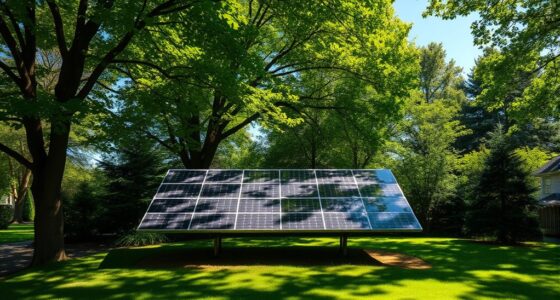
Agrivoltaics is an innovative approach that combines agriculture and solar energy production on the same land. It involves installing solar panels above crops, allowing you to generate electricity while still cultivating food. This setup can be especially appealing if you’re contemplating ways to maximize your backyard’s productivity. One of the key factors to factor in is solar efficiency, which can be affected by panel placement, height, and shading. By optimizing these elements, you guarantee the panels absorb sunlight effectively without overly shading your crops. Proper spacing and angling of the solar panels are essential to maintain high solar efficiency, especially in a smaller space like a backyard. Additionally, understanding the impact of shading on both crops and solar panels can help you design a more effective system. Crop selection plays an essential role in making agrivoltaics viable for your personal space. Not all plants thrive under partial shade or in the microclimate created by solar panels. Shade-tolerant crops, such as leafy greens, herbs, and certain vegetables like lettuce, spinach, and kale, tend to do well under the panels. These plants can handle reduced sunlight and often even prefer cooler, shadier conditions. Conversely, you might want to avoid sun-loving crops like tomatoes or peppers unless you can design your setup to allow for more direct sunlight during critical growth periods. Selecting the right crops means balancing their sunlight needs with the shade cast by the panels, ensuring both your plants and solar system operate efficiently. Designing your backyard agrivoltaic setup involves careful planning. You’ll need to factor in the height of the solar panels to avoid excessive shading, especially during the peak sun hours. Installing adjustable or movable panels can give you more control over sunlight exposure, allowing you to adapt to different seasons and crop requirements. It’s also wise to think about your garden layout—placing taller or shade-tolerant plants in areas with more shading and sun-loving ones where they can receive the most direct light. Maintaining a healthy balance between crop growth and solar energy production isn’t just about the technology; it’s about smart planning and crop choice. When done correctly, agrivoltaics can boost your backyard’s productivity, reduce your energy costs, and contribute to a more sustainable lifestyle. By paying attention to solar efficiency and crop selection, you set yourself up for success, turning your backyard into a productive, eco-friendly space that grows food and generates power simultaneously.
Conclusion
Imagine a backyard where vibrant greens thrive beneath sleek solar panels, sunlight dancing around leafy herbs, all while energy quietly powers your home. This isn’t just a dream—it’s agrivoltaics in action, blending food and power in harmony. By carefully planning your layout, you can enjoy fresh crops and clean energy side by side. It’s a garden and a solar farm in one, turning your backyard into a sustainable oasis of productivity and innovation.