If you have a tiny home or a tightly sealed building, proper air exchange systems are essential for keeping indoor air fresh and healthy. These systems, like HRVs or ERVs, maximize airflow while capturing energy from outgoing air to lower heating and cooling costs. They work quietly and efficiently, ensuring you get continuous fresh air without losing energy. To learn how to choose or install the right system, keep exploring options that suit your needs.

Get compact home essentials delivered free with Prime
- Fast, free delivery on millions of items
- Prime Video, Amazon Music and more included
- Member-only deals all year
Key Takeaways
- Proper ventilation systems are essential for maintaining indoor air quality in tight, airtight tiny homes.
- Energy Recovery Ventilators (ERVs or HRVs) improve efficiency by pre-conditioning incoming air, reducing energy costs.
- Mechanical ventilation is necessary due to limited natural airflow caused by airtight envelopes.
- Smart, adjustable systems enhance airflow and comfort while conserving energy in small, sealed spaces.
- Professional installation ensures optimal performance and maximizes the benefits of air exchange and energy recovery features.
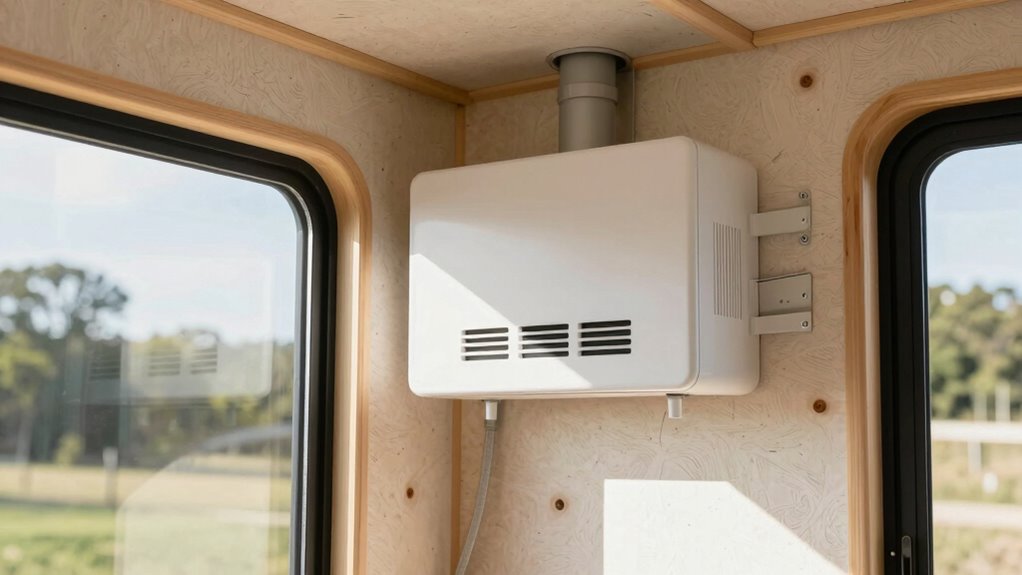
In tiny homes and tightly sealed buildings, proper air exchange is vital to maintain healthy indoor air quality. Without adequate ventilation, indoor pollutants, moisture, and odors can build up quickly, leading to discomfort and potential health issues. To combat this, you need a system that maximizes ventilation efficiency while conserving energy. That’s where advanced air exchange systems, particularly those with energy recovery features, come into play. These systems are designed to bring in fresh air from outside and exhaust stale air, all while minimizing heat loss, which is essential for maintaining your home’s energy efficiency.
A key component of effective air exchange systems is their ability to enhance ventilation efficiency. This means they can exchange air at the right rate, ensuring continuous airflow without wasting energy. Properly balanced ventilation helps control humidity and reduces indoor pollutants like VOCs, mold spores, and dust. When you select a system with high ventilation efficiency, you’re guaranteeing a steady supply of fresh air that improves air quality without markedly increasing your energy bills. This balance is especially important in tiny homes and buildings with tight envelopes, where natural airflow is limited. Additionally, integrating mechanical ventilation systems compensates for the lack of natural airflow and ensures consistent air quality.
High ventilation efficiency ensures fresh air, controls humidity, and reduces indoor pollutants without raising energy costs.
Energy recovery is another critical feature you should seek. Systems with energy recovery ventilators (ERVs) or heat recovery ventilators (HRVs) capture and reuse heat from the outgoing stale air before it’s expelled outside. This process pre-warms or pre-cools incoming air, reducing the workload on your heating and cooling systems. As a result, you get fresh air without sacrificing energy efficiency. If you’re conscious of your energy consumption, systems with energy recovery capabilities provide a notable advantage. They allow you to maintain a comfortable indoor climate while keeping your energy costs down.
Another benefit of these systems is their ability to operate quietly and seamlessly, often with smart controls that adjust airflow based on your needs. You don’t have to worry about constantly monitoring or manually adjusting the system; it works behind the scenes to guarantee ideal air quality. Proper installation is key to maximizing these benefits, so working with professionals who understand the nuances of tight envelopes can make a difference. When you choose an air exchange system with high ventilation efficiency and energy recovery features, you’re investing in a healthier, more energy-efficient home. It’s a dependable way to keep fresh air circulating, moisture levels in check, and indoor air quality high—all without sacrificing comfort or increasing your utility bills.
One important aspect to consider is the role of airtight building envelopes in limiting natural airflow, making mechanical ventilation systems even more essential.
Energy Recovery Ventilator for tiny home
As an affiliate, we earn on qualifying purchases.
As an affiliate, we earn on qualifying purchases.
Frequently Asked Questions
How Often Should Air Filters Be Replaced in Tiny Home Systems?
You should replace air filters every 1 to 3 months, depending on the air filter lifespan and your tiny home’s environment. If you notice dust buildup, mold, or decreased airflow, it’s time for a replacement. Regular maintenance guarantees your air exchange system works efficiently, improves air quality, and prolongs the filter’s effectiveness. Keep an eye on these signs to determine the best replacement frequency for your tiny home.
Can Air Exchange Systems Be Integrated With Smart Home Technology?
Yes, you can definitely integrate air exchange systems with smart home technology. With smart integration, you can automate control of your ventilation, ensuring fresh air flows when needed and saving energy. Think of it as hitting two birds with one stone—improving air quality while boosting convenience. You can sync sensors and controls through your smart hub, making adjustments effortless and maintaining best indoor comfort at all times.
What Are the Maintenance Costs for Different Air Exchange Options?
Maintenance costs vary depending on the air exchange system you choose. Heat recovery ventilators (HRVs) and energy recovery ventilators (ERVs) tend to have higher initial installation costs but offer better energy efficiency, reducing long-term expenses. Regular filter replacements and occasional system checks keep costs manageable. Exhaust fans are cheaper upfront and easier to maintain, but they might lead to higher energy bills over time. Consider your budget and efficiency goals when choosing the right system.
Are There Portable Air Exchange Systems Suitable for Tiny Homes?
Yes, portable air exchange systems are suitable for tiny homes, offering easy installation and flexibility. Did you know that portable units can improve ventilation efficiency by up to 30% compared to manual methods? These systems are compact, energy-efficient, and help maintain healthy indoor air quality. With a variety of models available, you can choose one that fits your space, budget, and ventilation needs, making your tiny home more comfortable.
How Do Climate Conditions Affect Air Exchange System Performance?
Climate conditions considerably influence your air exchange system’s performance. In cold weather, you need climate adaptation to prevent heat loss, while in humid climates, enhanced ventilation efficiency can help reduce moisture buildup. Hot, dry environments require systems that add moisture and cool the air. Understanding these factors allows you to optimize your system, ensuring fresh air circulation and maintaining indoor comfort regardless of outdoor conditions.
Conclusion
Even if you worry about the complexity or cost of air exchange systems, investing in one guarantees healthier, more comfortable living. Tiny homes and tight envelopes can trap pollutants and moisture, but a good ventilation system keeps fresh air flowing without sacrificing energy efficiency. Don’t let concerns hold you back—proper ventilation is a smart, simple upgrade that improves your home’s air quality and your well-being. Trust me, you’ll notice the difference every day.
Fall Picks
fall essentials
As an affiliate, we earn on qualifying purchases.