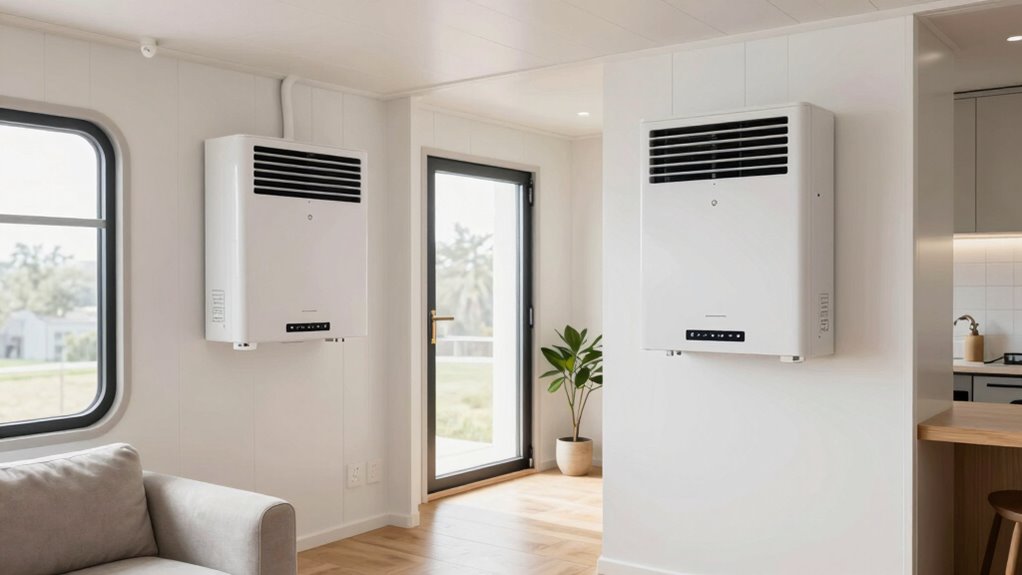

Finding the right dual zone mini split for a tiny house involves balancing size, efficiency, and ease of installation. The best overall pick, the 2 Zone 18000 BTU Mini Split Air Conditioner & Heater with WiFi, combines powerful heating and cooling with smart control. The YITAHOME 22 SEER2 18K BTU 2 Zone Mini Split stands out for its high efficiency and compatibility with Alexa, making it ideal for tech-savvy users. Meanwhile, the main challenge lies in choosing a system that fits the limited space without sacrificing performance or durability. Keep reading for a detailed comparison to help you make the best choice for your tiny home.

Get compact home essentials delivered free with Prime
- Fast, free delivery on millions of items
- Prime Video, Amazon Music and more included
- Member-only deals all year
Key Takeaways
- Top-tier systems balance cooling capacity with compact size, avoiding oversized units that waste space.
- Efficiency ratings like SEER and HSPF significantly impact long-term energy savings in tiny homes.
- Smart compatibility, such as WiFi and voice control, enhances usability but may add to upfront costs.
- Installation complexity varies; models with pre-charged refrigerants or simpler mounting tend to be more beginner-friendly.
- Price often correlates with features and build quality, but the most expensive options aren’t always necessary for small spaces.


| dual zone mini split for tiny house | Zones | Noise Level | Indoor Units | SEER2 |
|---|---|---|---|---|
| 2 Zone 18000 BTU Mini Split Ai | — | — | 2 wall-mounted units | — |
| YITAHOME 22 SEER2 18K BTU 2 Zo | 2 | below 42 dB | — | — |
| COSTWAY 18k Dual 2 Zone Mini S | 2 | as low as 30 dB | — | 24 |
| Costway 20K Dual Zone Mini Spl | 2 | 28 dB | — | — |
| Upstreman 2 Zone Mini Split wi | 2 | 28-29dB | 9K and 12K | 23 |
| ROVSUN 2 Zone 20000 BTU Mini S | 2 | — | 2 | 23 |
| Dual Zone Mini Split AC & Heat | — | — | — | 23 |
| Hykolity 20000 BTU Dual Zone W | 2 | 25-50 decibels | 2 | — |
| YITAHOME 24000 BTU Mini Split | — | 25-50 decibels | 2 | 20 |
More Details on Our Top Picks
2 Zone 18000 BTU Mini Split Air Conditioner & Heater with WiFi
This system stands out for its comprehensive dual-zone control, making it ideal for tiny house owners who want flexibility without sacrificing performance. Compared with the YITAHOME 22 SEER2 18K BTU, it offers a slightly larger capacity and includes a complete installation kit, simplifying setup. Its inverter technology ensures energy efficiency, and WiFi remote control adds convenience. However, the system’s noise level can be noticeable at higher fan speeds, and professional installation is recommended due to the power requirements. This pick makes the most sense for those seeking a reliable, all-in-one climate solution that balances ease of use with performance.
Pros:- Dual-zone independent climate control for two rooms
- Energy-efficient inverter compressor with smart operation
- WiFi remote control and customizable comfort features
- Complete installation kit included
Cons:- Requires professional installation due to electrical demands
- Can be noisy at higher fan speeds
Best for: Tiny house dwellers needing a dependable, easy-to-control dual-zone system with straightforward installation
Not ideal for: Homeowners looking for a quieter unit or those comfortable with more DIY setup for smaller spaces
- Cooling Capacity:12000+12000 BTU
- Heating Capacity:18000 BTU
- Power Supply:208-230V
- Coverage Area:up to 1500 sq. ft.
- Indoor Units:2 wall-mounted units
- Outdoor Unit:1 condenser
- Line Set Length:16 ft
Our verdict“This system suits tiny house owners who want reliable dual-zone control with added convenience and included setup support.”
YITAHOME 22 SEER2 18K BTU 2 Zone Mini Split AC/Heating System, 9000-12000 BTU Dual Zone, Wi-Fi & Alexa Compatible
The YITAHOME 22 SEER2 offers efficient heating and cooling with quiet operation, making it ideal for tiny house owners who value smart connectivity. Its low noise level below 42 decibels rivals the Costway 18k unit, but with a slightly larger coverage area of 950 sq ft. Compared to the Costway 20K, it sacrifices some capacity for enhanced energy savings and smart features like Alexa compatibility. The need for professional installation remains, and multiple packages could complicate delivery. This choice is perfect for those prioritizing smart home integration and quieter operation in a compact space.
Pros:- Energy-efficient inverter technology saves 25% on energy costs
- Wi-Fi and Alexa compatibility for smart control
- Quiet operation with noise levels below 42 decibels
- All-weather performance suitable for various climates
Cons:- Professional installation required
- Multiple packages may arrive separately
- Pre-charged refrigerant system not user-serviceable
Best for: Tiny house owners seeking a Wi-Fi-enabled, quiet system with smart voice control capabilities
Not ideal for: Buyers wanting maximum capacity for larger spaces or those preferring DIY installation
- Cooling Capacity:18,000 BTU
- Heating Capacity:18,000 BTU
- Voltage:208-230V
- Zones:2
- Coverage Area:950 sq ft
- Noise Level:below 42 dB
- Temperature Range:5°F to 118°F
- Airflow Distance:50 feet
Our verdict“Ideal for tiny house owners who want smart, quiet operation paired with dependable climate control.”
COSTWAY 18k Dual 2 Zone Mini Split Air Conditioner
The COSTWAY 18k unit excels in providing dual-zone comfort with a very low noise level, as low as 30 dB, making it suitable for sleep or work environments. Its high SEER2 of 24 indicates excellent energy efficiency, and it can operate reliably in extreme weather conditions, from -25°C to 55°C. Compared with the YITAHOME, it offers more robust weather resistance and quieter operation but comes at a higher price and requires professional installation. This system makes sense for tiny house owners who need a durable, quiet, and efficient climate solution under challenging conditions.
Pros:- Supports dual-zone temperature control
- Operates quietly at as low as 30 dB
- High SEER2 rating for energy efficiency
- Reliable in extreme weather conditions
Cons:- Requires professional installation
- Potentially higher cost than simpler models
Best for: Tiny house residents who prioritize quiet operation and weather resistance, especially in harsher climates
Not ideal for: Those seeking a budget-friendly option or willing to DIY installation
- Cooling Capacity:18000 BTU
- Zones:2
- SEER2:24
- Refrigerant:R454B
- Max Ambient Temperature:55°C / 131°F
- Min Heating Temperature:-25°C / -13°F
- Noise Level:as low as 30 dB
Our verdict“This unit is suited for tiny house owners in need of a quiet, durable system capable of handling tough weather.”
Costway 20K Dual Zone Mini Split AC/Heating System
The Costway 20K unit provides a robust 20,000 BTU capacity, making it suitable for larger tiny houses or those with demanding climate needs. Its high SEER2 rating of 23 ensures energy efficiency, and it operates smoothly across a wide temperature range from -4°F to 127°F. The quiet operation at 28 dB and smart controls compatible with Alexa and Google Assistant make it a versatile choice. Compared with the Costway 18k, this model offers more capacity with similar quietness but at a higher price point and installation complexity. It’s well-suited for tiny house owners who want reliable, multi-zone coverage in extreme conditions.
Pros:- Multi-zone design for customized comfort
- Energy-efficient with a high SEER2 rating
- Quiet operation at 28 dB
- Weather-resistant for extreme climates
Cons:- Professional installation required
- More expensive than smaller units
Best for: Tiny house owners needing a high-capacity, weather-resistant system for larger or more insulated spaces
Not ideal for: Owners with smaller spaces or those seeking a budget-friendly, straightforward unit
- Cooling Capacity:20,000 BTU
- Zones:2
- SEER2 Rating:23
- Operating Temperature Range:Cooling up to 127°F, Heating down to -4°F
- Noise Level:28 dB
- Control:WiFi, remote, Alexa, Google Assistant
- Modes:auto, cool, heat, dry, fan, ECO, sleep
- Fan Speeds:8
Our verdict“This system suits larger tiny homes demanding high capacity and reliable performance across diverse weather conditions.”
Upstreman 2 Zone Mini Split with Heat Pump, 9K+12K BTU, 23 SEER2, 230V
This system stands out for its high 23 SEER2 rating and inclusion of WiFi connectivity, making it ideal for those who want a reliable, energy-efficient setup with smart control. Compared with the YITAHOME 24000 BTU system, the Upstreman offers slightly lower capacity but excels in quiet operation and all-weather resilience. Its independent zone control provides personalized comfort, although it requires professional installation, which adds to the upfront cost. The use of R32 refrigerant improves environmental impact, and the quiet operation at around 28-29dB makes it suitable for bedrooms. However, its outdoor unit needs ample space and professional setup, limiting DIY options. This pick makes the most sense for homeowners seeking a durable, quiet, and energy-conscious solution with smart features.
Pros:- High 23 SEER2 inverter efficiency reduces energy bills
- Quiet operation at 28-29dB ideal for bedrooms and living rooms
- All-weather performance with WiFi remote access
- Independent zone control for customized comfort
Cons:- Professional installation required, increasing initial costs
- Limited to North American climate conditions
- Outdoor unit placement requires sufficient space
Best for: Homeowners who prioritize energy savings, quiet operation, and all-season performance in a dual-zone setup
Not ideal for: Small dwellings with limited outdoor space or DIY installers wary of professional installation costs
- BTU:20,000 BTU
- Zones:2
- Indoor Units:9K and 12K
- SEER2:23
- Voltage:230V
- Refrigerant:R32
- Noise Level:28-29dB
Our verdict“This is a solid choice for those seeking a high-efficiency, quiet, all-weather mini split with smart features for a tiny house setting.”
ROVSUN 2 Zone 20000 BTU Mini Split AC/Heating System, 23 SEER2, Dual Zone Ductless Wall Mounted Air Conditioner with Pre-Charged Condenser, Heat Pump & 25Ft Line Set, 208-230V
Compared with the Upstreman, the ROVSUN offers similar capacity and energy efficiency but shines in versatility, making it suitable for both residential and light commercial applications. Its pre-charged lines simplify installation, though professional setup remains recommended. The dual indoor units and 25-foot line set provide flexibility for multiple rooms, and the quiet operation at 28-45 dBa suits various environments. The inverter technology delivers up to 30% savings, but the pre-charged refrigerant system may need adjustment for different configurations. This model is better suited to users who value adaptability and easier initial setup over ultra-quiet operation. However, it may not be ideal if you prefer a system with less reliance on professional installation or need a compact outdoor unit.
Pros:- Pre-charged lines simplify installation process
- Energy savings up to 30% with inverter technology
- Quiet operation suitable for most environments
- Flexible for residential and commercial use
Cons:- Requires professional installation despite pre-charged lines
- Potential need for setup adjustments for different configurations
- Outdoor unit size and placement may vary
Best for: Homeowners or small business operators wanting a flexible, multi-room climate solution with straightforward installation
Not ideal for: DIY enthusiasts seeking a fully serviceable system or those with restricted outdoor space
- BTU:20000 BTU
- SEER2:23
- Zones:2
- Voltage:208-230V
- Line Set Length:25 feet
- Indoor Units:2
Our verdict“This unit delivers versatile performance for those needing a multi-room mini split with easier installation and good efficiency.”
Dual Zone Mini Split AC & Heating System, 23 SEER2, 20,000 BTU, 9K+9K
This system offers a straightforward dual-zone solution with 20,000 BTU capacity and a competitive 23 SEER2 rating, making it a solid entry point for those new to mini splits. Compared with the YITAHOME 24000 BTU model, this unit has slightly lower capacity but benefits from a smaller, more manageable size and easier setup for typical residential spaces. Its inverter technology ensures energy savings, while the quiet operation at 28 dB is suitable for bedrooms or quiet zones. The inclusion of comprehensive installation accessories simplifies setup, but professional installation is still recommended, and the system’s non-user serviceable refrigerant lines limit DIY flexibility. This pick is ideal for buyers willing to accept modest capacity to keep initial costs lower and ease of installation higher.
Pros:- Affordable price point for entry-level buyers
- Quiet operation at 28 dB
- Energy-efficient inverter technology
- Includes installation accessories
Cons:- Requires professional installation, additional costs apply
- Limited capacity for larger or more complex spaces
- Refrigerant lines are non-serviceable by users
Best for: First-time mini split buyers seeking an affordable, reliable dual-zone system for small to medium rooms
Not ideal for: Large households or commercial spaces requiring higher capacity or more advanced features
- Cooling Power:20000 BTU
- Heating Capacity:9000 + 9000 BTU
- SEER2:23
- Refrigerant:R-32
- Noise:28 dB
- Voltage:230V
Our verdict“A practical choice for newcomers seeking an affordable, easy-to-install dual-zone mini split for small-scale use.”
Hykolity 20000 BTU Dual Zone WiFi Enabled Mini Split Air Conditioner
Compared to the other options, the Hykolity system provides a comprehensive installation kit and WiFi control, making it appealing for those who want an all-in-one package with smart capabilities. Its 20,000 BTU capacity suits small to medium spaces, and the dual zones allow customized comfort. The WiFi feature is a major advantage over systems like the Upstreman, offering easier remote operation and scheduling. However, its need for professional installation and potentially complex setup may deter DIYers. The system’s coverage up to 900 sq. ft. makes it ideal for typical tiny house zones, but it may be less suitable for larger or multi-story dwellings. This pick is perfect for owners who prioritize smart technology and a complete setup kit above all else.
Pros:- Includes complete installation kit for convenience
- WiFi control for remote operation and scheduling
- Quiet operation with noise levels up to 50 dB
- Effective dual-zone independent control
Cons:- Requires professional installation despite full kit
- Higher initial cost due to advanced features
- Setup may be complex for non-experts
Best for: Tech-savvy homeowners wanting a fully equipped, WiFi-enabled mini split with simple remote control
Not ideal for: DIY installation enthusiasts or those with limited outdoor space for the outdoor condenser
- BTU:20000 BTU
- Zones:2
- Indoor Units:2
- Refrigerant:R32
- Noise Level:25-50 decibels
- Communication Wire Length:14.7 ft
Our verdict“Ideal for users seeking a smart, fully equipped mini split with flexible control and reliable performance.”
YITAHOME 24000 BTU Mini Split AC/Heating System 20 SEER2 (2 Units)
While not the highest efficiency choice compared to the Upstreman or ROVSUN, this YITAHOME system offers the largest capacity at 24,000 BTU, making it better suited for slightly larger tiny house zones or multi-room setups. Its dual indoor units provide independent control, but the slightly lower SEER2 rating of 20 reflects a tradeoff for higher cooling and heating power. The WiFi and Alexa compatibility add convenience, but the system’s bulkier outdoor unit and the need for professional installation could complicate setup. For buyers who need more capacity and are okay with a slightly lower energy efficiency rating, this system provides ample performance, albeit at the expense of size and initial cost.
Pros:- High 24,000 BTU capacity for larger zones
- WiFi and Alexa compatibility for smart control
- Dual indoor units for independent room control
- Relatively quiet operation for its class
Cons:- Lower SEER2 efficiency rating at 20
- Bulkier outdoor unit requiring more space
- Higher initial cost and installation complexity
Best for: Tiny house owners needing higher capacity for larger zones or multi-room control with smart features
Not ideal for: Budget-conscious buyers or those with limited outdoor space for a larger unit
- BTU:24000
- SEER2:20
- Indoor Units:2
- Refrigerant:R32
- Noise Level:25-50 decibels
- Communication Wire Length:14.7 ft
Our verdict“Best suited for those needing substantial capacity and smart control in a slightly larger tiny house or multi-room setup.”

How We Picked
These products were evaluated based on performance, energy efficiency, ease of installation, build quality, and value. Priority was given to systems that deliver reliable heating and cooling in limited spaces while maintaining straightforward setup processes. We also considered smart features and warranty coverage to ensure long-term satisfaction. The ranking reflects a balance between high performance, ease of use, and price, helping buyers find systems suited for various budgets and experience levels.| dual zone mini split for tiny house | Refrigerant |
|---|---|
| 2 Zone 18000 BTU Mini Split Ai | — |
| YITAHOME 22 SEER2 18K BTU 2 Zo | — |
| COSTWAY 18k Dual 2 Zone Mini S | R454B |
| Costway 20K Dual Zone Mini Spl | — |
| Upstreman 2 Zone Mini Split wi | R32 |
| ROVSUN 2 Zone 20000 BTU Mini S | — |
| Dual Zone Mini Split AC & Heat | R-32 |
| Hykolity 20000 BTU Dual Zone W | R32 |
| YITAHOME 24000 BTU Mini Split | R32 |
Factors to Consider When Choosing Dual Zone Mini Split For Tiny House
Choosing the right dual zone mini split for a tiny house requires understanding several critical factors beyond basic specs. It’s essential to consider how the system will fit your space, your climate, and your comfort preferences. Additional considerations like installation complexity, energy efficiency, and smart features can dramatically influence your long-term satisfaction and cost of ownership. Being aware of these broader factors helps prevent common pitfalls and ensures you select a system that truly meets your needs.Cooling and Heating Capacity
Matching the mini split’s BTU rating to your tiny house’s size is vital for effective climate control. Too large a system can cycle frequently, wasting energy and causing wear, while too small may struggle to maintain comfort. Consider your climate zone and insulation quality when choosing capacity. Dual zone systems offer flexibility, but ensure each zone’s BTU rating aligns with your space. Proper sizing ensures comfort without unnecessary energy consumption.
Energy Efficiency Ratings
Look for models with high SEER (Seasonal Energy Efficiency Ratio) and HSPF (Heating Seasonal Performance Factor) ratings. These figures indicate how efficiently the system consumes power, directly impacting your utility bills. For tiny houses, where energy use is often a concern, high-efficiency units can save money over time. However, these models typically come with a higher upfront cost, so weigh initial investment against long-term savings.
Ease of Installation
Some systems come with pre-charged refrigerant lines and simplified mounting options, making DIY installation more feasible. Others require professional setup, which adds to initial costs but may ensure optimal performance. For tiny house owners comfortable with basic tools, selecting a model with straightforward installation features is advantageous. Keep in mind that improper installation can reduce efficiency and lifespan, so weigh your skill level carefully.
Smart Features and Controls
WiFi connectivity and voice control integration, such as Alexa compatibility, can enhance convenience, especially for tiny house owners who prioritize automation. These features allow remote adjustments and scheduling, which can save energy and improve comfort. However, they often come at a premium and may require ongoing updates or app management. Decide if smart features are worth the extra cost based on your tech preferences.
Build Quality and Warranty
Durability is critical for systems exposed to variable weather conditions and limited space for repairs. Look for units with solid construction, reputable brands, and comprehensive warranties. A longer warranty often reflects confidence in the product’s longevity, which can translate into savings and peace of mind. Investing in a well-built system might cost more initially but can prevent costly replacements or repairs down the line.
Frequently Asked Questions
How do I determine the right BTU capacity for my tiny house?
Calculating the correct BTU capacity involves measuring your space’s square footage and considering insulation quality, climate, and window size. As a general rule, tiny houses typically need between 9,000 and 12,000 BTU per zone, but larger or poorly insulated structures may require more. Proper sizing prevents energy waste and ensures consistent comfort. Consulting a sizing chart or professional can help refine your choice based on your specific conditions.
Can I install a dual zone mini split system myself?
Many dual zone mini splits are designed for DIY installation, especially those with pre-charged refrigerant lines and simplified mounting brackets. However, handling refrigerants and electrical connections can be complex and potentially hazardous without proper training. If you lack experience, hiring a professional ensures correct setup, optimal performance, and warranty validity. Weigh your confidence in DIY work against the potential risks and long-term costs.
Are smart features worth the extra cost in tiny house systems?
Smart features like WiFi control and voice compatibility can add significant convenience, especially for those who like to manage climate remotely or set schedules. These features can contribute to energy savings by allowing precise control. However, they tend to increase the initial price and require ongoing software updates. If you’re tech-savvy or prioritize automation, they can be a worthwhile investment; otherwise, simpler models may suffice.
What maintenance is required for a mini split system?
Regular maintenance includes cleaning or replacing filters, inspecting outdoor units for debris, and checking refrigerant lines for leaks. Most systems also benefit from annual professional inspections to ensure optimal operation and longevity. Proper upkeep prevents efficiency losses and costly repairs. Tiny house owners should consider ease of maintenance when selecting a model, favoring those with accessible filters and straightforward cleaning routines.
How long do mini split systems typically last?
With proper maintenance, a high-quality mini split system can last 10 to 15 years, sometimes longer. Durability depends on build quality, usage patterns, and environmental exposure. Investing in reputable brands with solid warranties tends to extend the lifespan and reduce repair costs. For tiny houses, where a reliable, low-maintenance system is ideal, selecting a model known for durability can provide peace of mind over the long term.
Conclusion
For those seeking the best overall performance, the 2 Zone 18000 BTU Mini Split Air Conditioner & Heater with WiFi offers a balanced mix of power, smart features, and reliability. Budget-conscious buyers will appreciate the COSTWAY 18k Dual 2 Zone Mini Split for its affordability and decent efficiency. Tech enthusiasts may prefer the YITAHOME 22 SEER2 18K BTU for its high efficiency and Alexa compatibility. Beginners or DIYers should consider models with simpler installation, like the Hykolity 20000 BTU. For those with specific climate needs or premium expectations, the ROVSUN 2 Zone 20000 BTU provides advanced features and durability. Ultimately, your choice depends on your budget, technical comfort, and the specific heating and cooling demands of your tiny house.
As an affiliate, we earn on qualifying purchases.Columbus Day / Indigenous Peoples' Day Picks
long weekend sales