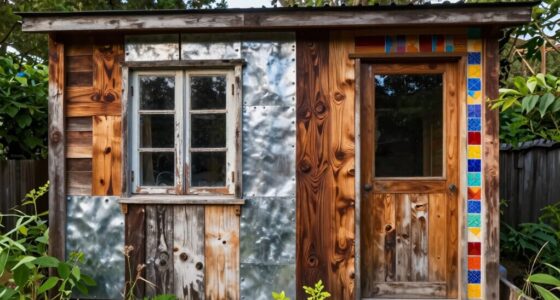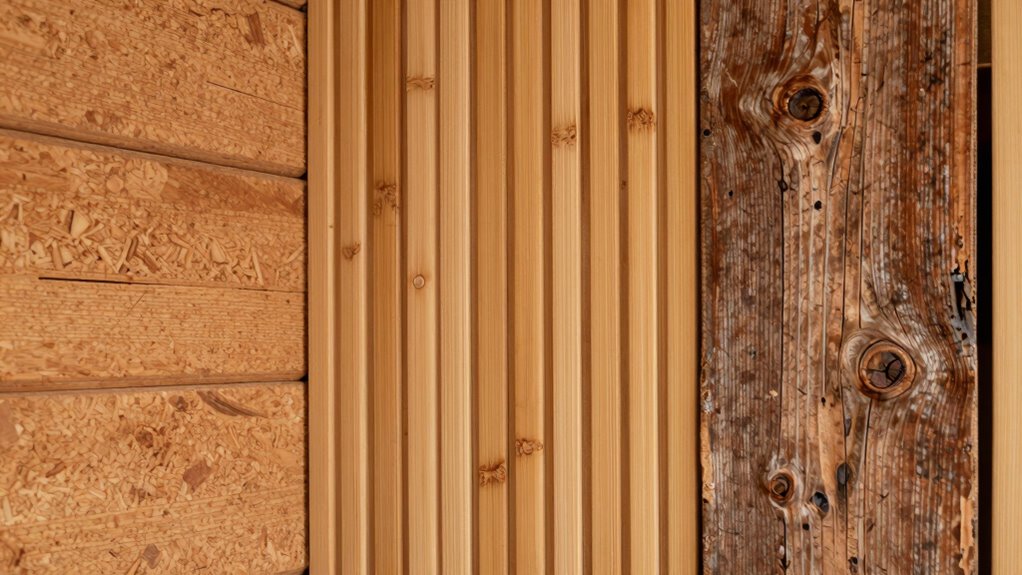

Cork, bamboo, and reclaimed wood each have unique benefits for your tiny home. Cork is eco-friendly, naturally resistant to mold, pests, and fire, providing a cozy, textured look. Bamboo is fast-growing, durable, and offers a sleek modern appearance. Reclaimed wood adds character with knots and grain, supporting sustainability and rustic charm. Exploring these options further reveals how each material can enhance your tiny home’s style, durability, and eco-consciousness.

Get compact home essentials delivered free with Prime
- Fast, free delivery on millions of items
- Prime Video, Amazon Music and more included
- Member-only deals all year
Key Takeaways
- Cork offers natural insulation, is biodegradable, and adds warmth, ideal for cozy tiny home interiors.
- Bamboo is highly renewable, strong, and modern-looking, suitable for durable flooring and furniture.
- Reclaimed wood provides rustic charm, durability, and supports waste reduction through repurposing old materials.
- All three materials are eco-friendly, promoting sustainable construction practices in tiny homes.
- The choice depends on aesthetic preference, durability needs, and environmental priorities.
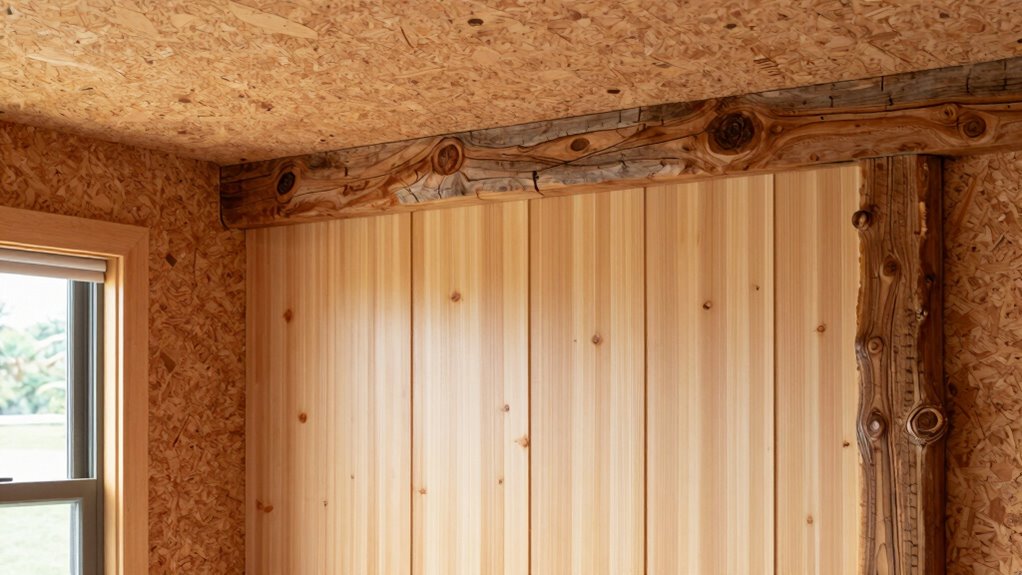
Have you ever wondered what types of wood are best suited for tiny homes? When choosing materials, you want options that not only look good but also support sustainable living. Cork, bamboo, and reclaimed wood are excellent choices, each offering unique eco-friendly benefits and aesthetic versatility. These materials are gaining popularity because they align with tiny home owners’ desire to reduce their environmental impact while maintaining style.
Cork stands out as one of the most eco-friendly options because it’s harvested from the bark of cork oak trees without cutting them down. This means the trees continue to grow and absorb carbon dioxide, making cork a renewable resource. Its eco-friendly benefits extend further, as cork is biodegradable and naturally resistant to mold, pests, and fire. Aesthetically, cork offers a warm, textured appearance that adds a natural, cozy feel to your tiny home. Its versatility allows you to use it for flooring, wall coverings, and even furniture, providing a consistent look throughout your space. Plus, cork’s soft yet durable surface creates a comfortable environment, perfect for both relaxation and active living. Additionally, cork’s biodegradable nature supports the broader goal of reducing environmental waste. Using cork can also help improve indoor air quality, as it naturally resists mold and allergens.
Bamboo is another sustainable superstar, known for its rapid growth—some species can grow several inches in a single day. This fast renewability makes bamboo highly eco-friendly, as it requires minimal resources and time to harvest. Bamboo’s eco benefits are complemented by its strength and durability, comparable to hardwoods, which means it can withstand the everyday wear and tear of tiny home life. Its aesthetic versatility shines through in its sleek, modern appearance, which can be stained or finished in various shades to suit your design preferences. Whether used for flooring, cabinetry, or decorative accents, bamboo adds a contemporary touch while supporting sustainability. Its natural grain and smooth texture can brighten up small spaces, making them feel more open and inviting. Additionally, bamboo’s renewable material status emphasizes its importance as a sustainable choice for eco-conscious homeowners. Supporting renewable resources is crucial for a sustainable future, especially in small-scale living. Using bamboo also encourages responsible harvesting practices, which are essential for maintaining healthy ecosystems.
Reclaimed wood offers a different set of advantages. It involves repurposing wood from old buildings, barns, or furniture, giving it a second life. This not only reduces waste but also minimizes the demand for new timber, making it an eco-friendly choice. Reclaimed wood boasts a rich history and character, with unique knots, grain patterns, and imperfections that add charm and warmth to your tiny home. Its aesthetic versatility is undeniable—you can incorporate it into flooring, feature walls, or furniture pieces to create a rustic or vintage vibe. Using reclaimed wood also means you’re supporting sustainable practices by giving old materials a new purpose. Its durability depends on the original use, but when properly maintained, reclaimed wood can last for generations, blending sustainability with timeless appeal. Plus, utilizing reclaimed wood helps reduce the environmental footprint associated with new timber production. Moreover, reclaimed wood’s character and uniqueness can make your tiny home stand out with a one-of-a-kind look. Incorporating reclaimed wood can also promote circular economy principles by extending the life cycle of building materials.
eco-friendly cork flooring for tiny homes
As an affiliate, we earn on qualifying purchases.
As an affiliate, we earn on qualifying purchases.
Frequently Asked Questions
How Do Cork, Bamboo, and Reclaimed Wood Compare in Cost?
Cork, bamboo, and reclaimed wood vary in cost, but generally, bamboo is the most affordable option due to its rapid growth and widespread availability. Reclaimed wood can be cost-effective if you find good sources, but it may require extra work. Cork tends to be more expensive because of its harvesting process. For material affordability, bamboo usually offers the best cost comparison, making it a popular choice for budget-conscious tiny home builders.
Are These Materials Eco-Friendly Options for Tiny Homes?
Yes, cork, bamboo, and reclaimed wood are eco-friendly options for tiny homes. They offer significant sustainability benefits, like renewability and reduced environmental impact. Cork and bamboo grow quickly, making them highly renewable, while reclaimed wood repurposes existing materials, reducing waste. Additionally, all three materials add aesthetic appeal, creating a warm, natural look that enhances your tiny home’s charm while supporting eco-conscious living.
Which Material Offers the Best Insulation Properties?
Cork offers the best insulation properties among these materials, providing excellent thermal and acoustic performance. Its natural cellular structure helps maintain interior aesthetics by reducing noise and temperature fluctuations, making your tiny home more comfortable. Bamboo and reclaimed wood also insulate well but may require additional treatments for peak acoustic performance. Overall, cork’s combination of insulation and aesthetics makes it a premier choice for eco-friendly tiny homes focused on comfort.
How Durable Is Each Material Over Time?
Think of these materials as timeless guardians of your tiny home’s soul. Cork, bamboo, and reclaimed wood each symbolize resilience, yet their durability varies. Cork’s softness may wear over time, while bamboo’s strength endures with proper maintenance, and reclaimed wood’s character deepens, enriching its aesthetic. Installation challenges may test your patience, but with care, each material reveals its lasting beauty, standing strong against the test of time.
Can These Materials Be Easily Repaired or Replaced?
You can typically repair or replace cork, bamboo, and reclaimed wood with relative ease, thanks to their material maintenance and aesthetic versatility. Cork tiles can be patched or replaced, bamboo flooring can be sanded and refinished, and reclaimed wood panels can be swapped out or refinished to match existing decor. Their versatility allows you to maintain the look and feel of your tiny home while addressing repairs efficiently.
Conclusion
When choosing between cork, bamboo, and reclaimed wood, you’re selecting sustainability, style, and strength. You want durability without sacrificing design, eco-friendliness without sacrificing affordability, and warmth without losing modern appeal. Each type offers its own unique benefits, but ultimately, it’s about finding what fits your tiny home vision. So, weigh your options, trust your instincts, and create a space that’s not just cozy but conscious, not just functional but fabulous.
Fall Picks
fall essentials
As an affiliate, we earn on qualifying purchases.