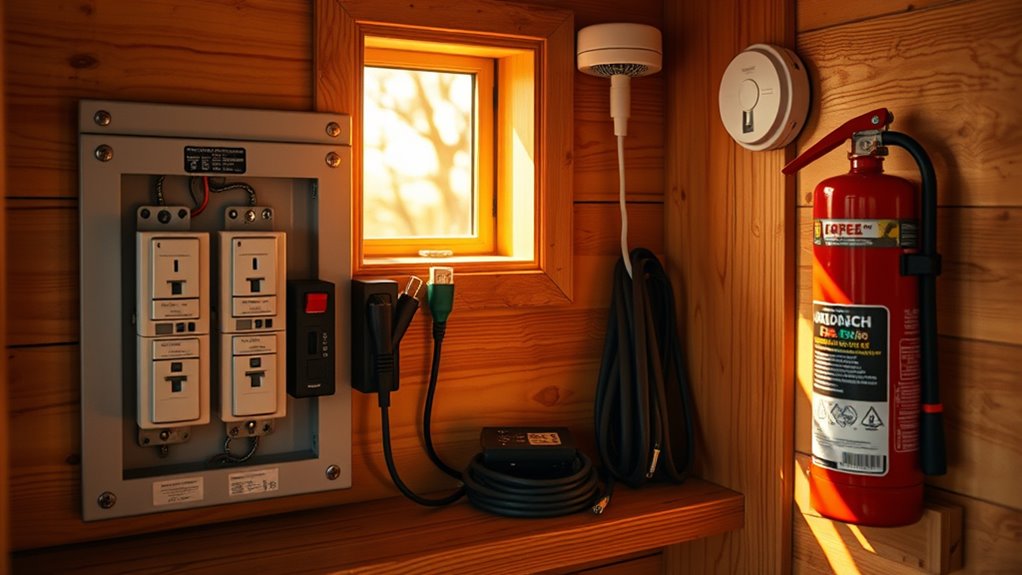

To prevent electrical fires in your tiny home, follow all manufacturer instructions and guarantee wiring is professionally installed and inspected regularly. Avoid overloading circuits by spreading out your electrical load and use dedicated circuits for high-power appliances. Keep cords organized and avoid daisy-chaining extension cords. Use UL-listed components and surge protectors, maintain proper grounding, and promptly address any signs of wear, damage, or unusual odors. Continuing with these fire safety practices can help protect your space and loved ones.
Key Takeaways
- Follow manufacturer instructions and use UL-listed components for solar and electrical systems.
- Regularly inspect wiring, outlets, and appliances for damage, wear, or corrosion.
- Install properly rated circuit breakers and avoid overloading circuits.
- Keep cords organized, avoid daisy-chaining extension cords, and use dedicated circuits for high-power devices.
- Maintain proper grounding, secure all connections, and install surge protectors to prevent faults and fires.

Tiny homes offer a cozy, efficient living space, but their compact design can increase the risk of electrical fires if you’re not careful. With limited space, every electrical component must be properly managed to prevent hazards. One of the most important steps is ensuring solar safety if you’ve installed solar panels, as these systems can pose fire risks if not correctly maintained. Always follow manufacturer instructions for your solar setup and make sure the wiring is professionally installed. Regularly check for signs of wear or damage, like frayed wires or corrosion, which can lead to sparks or shorts. Properly rated circuit protection devices, such as circuit breakers or fuses, are essential for preventing overloads that could ignite a fire. These devices automatically shut off power when they detect an excessive current, protecting your wiring and appliances from damage.
In a tiny home, space constraints mean you might be tempted to overload circuits to power multiple devices. Resist that urge, and instead, spread out your electrical load across multiple circuits. Use circuit protection wisely by installing dedicated circuits for high-power appliances like space heaters, refrigerators, or even your solar system. This way, if a fault occurs, the breaker will trip instead of risking overheating wires or causing a fire. It’s also crucial to perform regular inspections of your electrical system. Look for signs of overheating, discolored outlets, or burning smells, all of which indicate potential problems that need immediate attention. Never ignore these warning signs; prompt action can prevent a small issue from turning into a devastating fire.
If you’ve integrated solar power into your tiny home, prioritize solar safety by ensuring your system is grounded properly and that all connections are secure. Using high-quality, UL-listed components can make a significant difference in reducing fire risks. Additionally, consider installing surge protectors and monitoring systems that alert you to electrical issues before they escalate. Proper circuit protection extends beyond just installing the right breakers; it involves maintaining the entire electrical system, including wiring, outlets, and appliances. Keep cords organized and avoid daisy-chaining multiple extension cords, which can overload circuits and create fire hazards. Regularly inspecting your electrical components and understanding the importance of electrical safety measures can help prevent potential fire risks associated with small, confined living spaces.
Frequently Asked Questions
Can I Use Regular Household Wiring in My Tiny Home?
You generally shouldn’t use regular household wiring in your tiny home without checking wiring compatibility and adhering to the electrical code. Tiny homes have specific electrical needs, and using the wrong wiring can cause fire hazards. Always consult a licensed electrician to ensure your wiring complies with local electrical code standards. This way, you keep your tiny home safe, compliant, and protected against electrical fires.
What Are the Signs of Faulty Electrical Wiring?
Like spotting a hidden gremlin, faulty wiring signs are subtle but important. You might notice wiring corrosion, which looks like rust or discoloration on wires or connections. Frequent circuit trips are also a red flag, indicating overloads or short circuits. Other signs include flickering lights, burning smells, or warm outlets. Keep a vigilant eye to avoid potential hazards, and don’t ignore these warning signals—they’re your tiny home’s way of warning you.
Is It Safe to DIY Electrical Repairs in a Tiny Home?
It’s generally not safe to DIY electrical repairs in your tiny home unless you have solid electrical knowledge and experience. DIY safety is essential because improper fixes can lead to fires or shocks. If you’re unsure, it’s best to hire a licensed electrician. They understand the complexities of tiny home wiring and guarantee repairs meet safety codes, protecting you and your property from electrical hazards.
How Often Should I Have My Electrical System Inspected?
Think of your electrical system as the heart of your tiny home—regular check-ups keep it beating strong. You should get a professional assessment and electrical inspection every 1 to 3 years, depending on usage and age. Frequent inspections help detect issues early, preventing fires and electrical failures. Staying proactive with inspection frequency guarantees your tiny home remains safe, giving you peace of mind on every adventure.
Are Surge Protectors Necessary for Tiny Home Electrical Safety?
Surge protectors are crucial for your tiny home’s electrical safety because they guard your appliances and wiring from power surges. The importance of surge protectors can’t be overstated—they help prevent damage caused by electrical spikes, reducing fire risks. Incorporate these essential electrical safety devices into your system to guarantee consistent protection. Always choose high-quality surge protectors and install them correctly to keep your tiny home safe and prevent costly repairs.
Conclusion
By staying vigilant and maintaining your tiny home’s electrical system, you safeguard your sanctuary from the silent threat of fire. Remember, like Icarus flying too close to the sun, overconfidence can lead to disaster. Treat your electrical setup with respect and caution, regularly inspecting and updating as needed. With mindful care, you guarantee your cozy haven remains a place of comfort and safety, allowing you to enjoy your tiny home’s freedom without fear of flames.