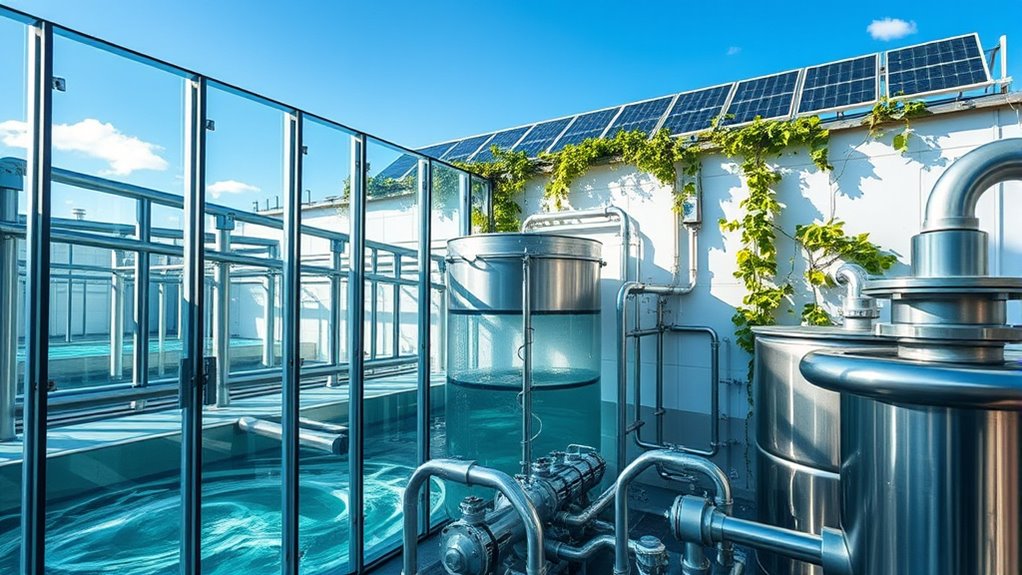

To design energy-efficient water systems, choose sustainable piping materials like corrosion-resistant composites that reduce leaks and maintenance. Incorporate smart control systems with sensors and automation to monitor and adjust flow in real-time, cutting energy use and water waste. Combining these elements creates a resilient infrastructure that optimizes resource use and minimizes environmental impact. If you keep exploring, you’ll discover how to implement these strategies effectively for lasting efficiency.
Key Takeaways
- Utilize sustainable, corrosion-resistant piping materials with smooth interiors to reduce friction and minimize leaks.
- Incorporate smart control systems with sensors and automation for real-time monitoring and demand-based flow adjustments.
- Optimize pipe network design to prevent unnecessary distances and pressure losses, enhancing overall efficiency.
- Implement energy-efficient pumps with variable speed drives to adapt to actual water demand and reduce power consumption.
- Conduct regular maintenance and leak detection to prevent water and energy waste, ensuring system longevity and efficiency.
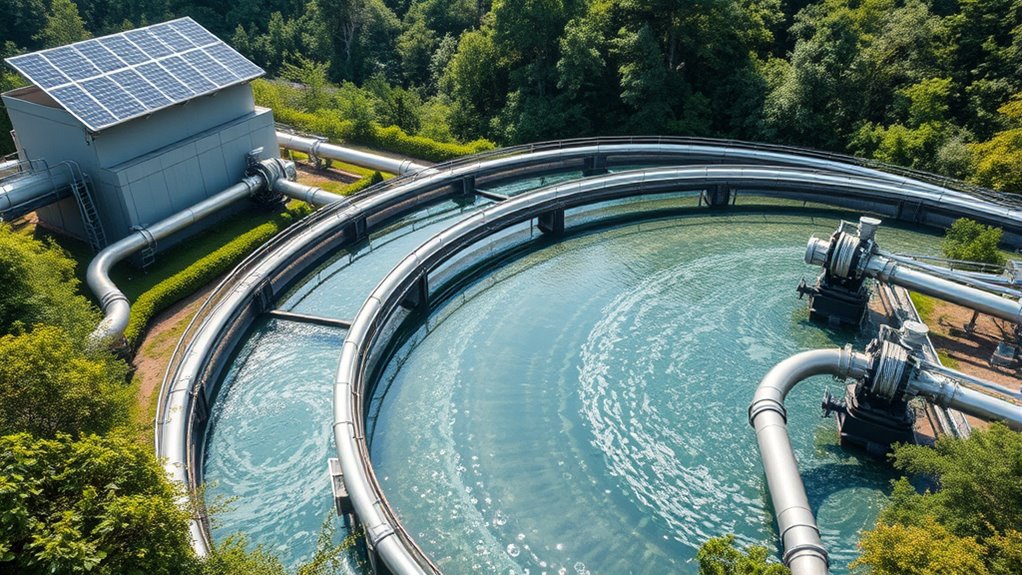
Have you ever wondered how water systems are designed to supply clean, reliable water? It all starts with planning a system that’s not only efficient but also sustainable. One key element in achieving this is implementing sustainable piping. Unlike traditional piping, which often relies on materials that are prone to leaks and require frequent repairs, sustainable piping uses eco-friendly, durable materials that reduce waste and energy consumption. By choosing pipes made from corrosion-resistant composites or recycled materials, you minimize the need for replacements and maintenance. This approach guarantees your water system remains operational longer, conserving resources and lowering overall energy use. Plus, sustainable piping often has smoother interior surfaces, which reduces friction and allows water to flow more freely, saving pump energy and decreasing operational costs.
Alongside piping choices, integrating smart control systems plays a pivotal role in optimizing water system efficiency. Smart control involves using sensors, automation, and data analytics to monitor and regulate water flow, pressure, and quality in real time. With smart control, you can quickly detect leaks or pressure drops, allowing for rapid response and minimizing water loss. This technology also helps in adjusting flow rates based on demand, preventing over-pumping and reducing energy consumption. For example, during low-demand periods, smart controls can reduce pump speeds, saving electricity without compromising water delivery. These systems can be programmed to optimize operations around peak usage times, ensuring energy is only used when necessary. Additionally, mindfulness practices can support the mental clarity needed to oversee complex water system operations effectively.
Combining sustainable piping with smart control creates a synergistic effect that markedly enhances energy efficiency. Sustainable piping lessens the physical waste and energy needed for maintenance, while smart control minimizes operational energy by fine-tuning water movement. Together, they form a resilient, eco-friendly infrastructure capable of meeting today’s water needs without excessive environmental impact. As you design or upgrade a water system, it’s essential to prioritize these elements—selecting durable, eco-friendly pipes and installing intelligent controls—to guarantee your system operates at peak efficiency. Doing so not only conserves energy and reduces costs but also promotes long-term sustainability. By adopting these practices, you’re supporting a water infrastructure that’s smarter, greener, and more reliable for years to come.

Variable Speed Pool Pump, 1.5HP, 5040GPH, 230V, Hmax 50ft, In/Above Pool Pump, Energy Efficient, Variable Frequency Swimming Pool Pumps with Filter Basket and 1.5" Pipe Fittings
ENERGY EFFICIENT – Variable speed drive allows you to customize speeds from 750-3500RPM, saving up to 96% energy…
As an affiliate, we earn on qualifying purchases.
As an affiliate, we earn on qualifying purchases.
Frequently Asked Questions
How Can Smart Sensors Optimize Water Flow in Energy-Efficient Systems?
Smart sensors enhance water flow by continuously monitoring system performance and detecting leaks or inefficiencies. You should calibrate sensors regularly to guarantee accurate data collection. Then, leverage data analytics to analyze flow patterns and identify areas for improvement. This approach enables you to adjust water distribution proactively, reducing energy use and waste. By integrating calibration and analytics, your system becomes more efficient, saving energy and costs while maintaining ideal water flow.
What Are the Latest Materials Used for Sustainable Water Pipeline Construction?
Imagine your pipeline as a living vein, pulsating with sustainable energy. You’ll find innovative pipe materials like high-density polyethylene and composite plastics leading the way, offering durability and eco-friendliness. Pair these with eco-friendly sealing techniques, such as bio-based sealants, to minimize environmental impact. These advanced materials and methods guarantee your water system remains resilient, efficient, and gentle on the planet, turning your infrastructure into a symbol of sustainable progress.
How Do Climate Change Impacts Influence Water System Design?
Climate change impacts influence your water system design by requiring climate adaptation strategies that address increasing water scarcity. You need to take into account more resilient materials and flexible infrastructure to handle unpredictable weather patterns and droughts. Incorporating sustainable solutions, like rainwater harvesting and efficient distribution, helps ensure reliable water access. By proactively adapting your system, you can mitigate future risks and sustain supply despite the challenges posed by changing climate conditions.
What Are Cost-Effective Methods for Retrofitting Existing Water Infrastructure?
You can save money by upgrading pipelines, installing energy-efficient pumps, and adding smart control systems. These retrofits reduce energy use, cut costs, and improve system reliability. Take advantage of financial incentives offered by government programs or utility companies, which help offset the initial expenses. Prioritize pipeline upgrades and smart controls to create a more sustainable, cost-effective water infrastructure that meets modern demands while minimizing environmental impact.
How Can Renewable Energy Sources Be Integrated Into Water Treatment Facilities?
You can integrate renewable energy into water treatment facilities by installing solar desalination systems, which use sunlight to purify water efficiently. Additionally, implementing wind-powered pumping reduces reliance on grid electricity, lowering costs and emissions. Combining these technologies with existing infrastructure enhances sustainability and resilience, allowing your water system to operate more sustainably while cutting energy expenses. This approach guarantees cleaner water and a greener future for your community.

Moen Flo 3/4-inch Smart Water Shut Off Valve, Smart Home Water Monitor Leak Detector, Wifi Connected, App Enabled Flow Meter and Shutoff, 900-001
AUTOMATIC SHUTOFF: Learns your home’s water usage patterns to identify abnormalities like running water or small leaks and…
As an affiliate, we earn on qualifying purchases.
As an affiliate, we earn on qualifying purchases.
Conclusion
By embracing innovative strategies and mindful planning, you transform water systems into the veins of a well-orchestrated organism, pulsating with efficiency. Every pipe and pump becomes a stroke of art, harmonizing with nature’s rhythm. Your efforts weave a tapestry of sustainability, ensuring that water flows freely yet wisely, nurturing both the environment and future generations. In this dance of design, you hold the brush—painting a legacy of conservation and ingenuity that echoes long after the last drop.

Mechanical and Corrosion-Resistant Properties of Plastics and Elastomers
As an affiliate, we earn on qualifying purchases.
As an affiliate, we earn on qualifying purchases.

Water Leakage Detection, Wall Pipe Leak Listen Detector Underground Monitor High Sensitive Sound Intensifier Ear Listening Device with Earphone for Home Bedrooms Basement Kitchen Bathroom Laundry
Advanced Leak Detection: Adjust the volume until it is appropriate to avoid excessive volume irritating the eardrum. High…
As an affiliate, we earn on qualifying purchases.
As an affiliate, we earn on qualifying purchases.