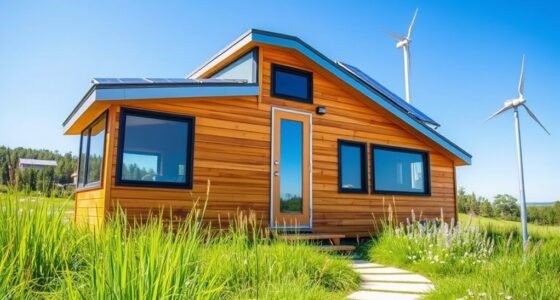
To design an energy-neutral tiny house, you should combine efficient solar panels with passive strategies like proper orientation, insulation, and shading to minimize energy needs. Use high-quality windows for natural light, incorporate natural ventilation, and choose reflective roofing materials to reduce heat gain. Properly sizing your solar system and storage guarantees self-sufficiency, while strategic design boosts comfort year-round. Keep exploring to reveal more tips on creating a truly sustainable, self-powered tiny home.
Key Takeaways
- Integrate high-efficiency solar panels with appropriate sizing and battery storage based on energy needs.
- Orient the tiny house to maximize winter sunlight and incorporate shading for summer cooling.
- Use effective insulation and natural ventilation to reduce heating and cooling demands.
- Select reflective roofing materials and strategic window placement to optimize natural light and temperature regulation.
- Minimize external energy reliance by combining passive design strategies with renewable energy systems.
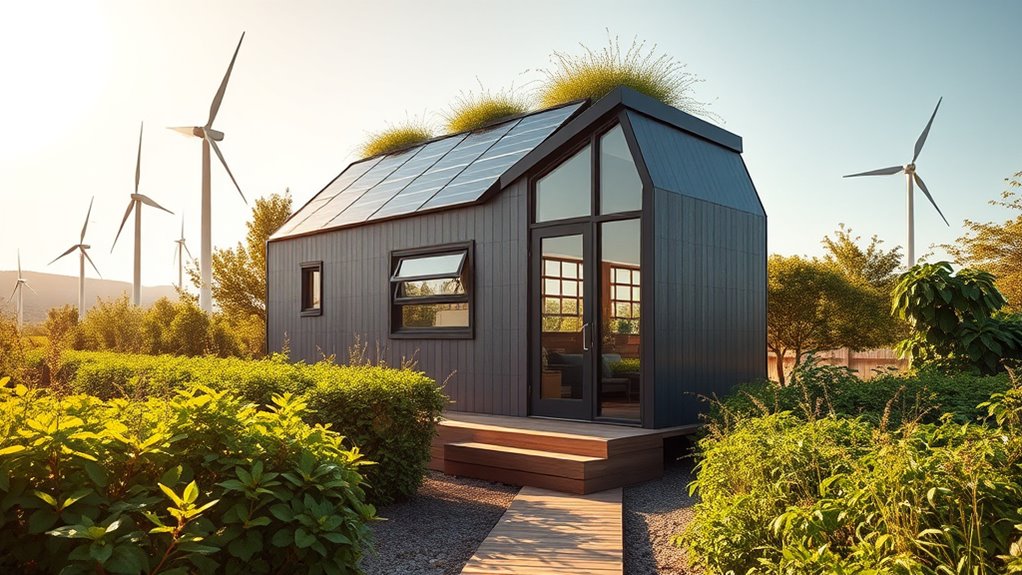
As more people seek sustainable living options, energy-neutral tiny houses have gained popularity for their minimal environmental impact. You’re drawn to these compact homes because they combine efficiency with eco-friendliness, helping reduce your carbon footprint. To achieve this, you need to consider smart design strategies that maximize energy savings. Two key elements in designing energy-neutral tiny houses are solar integration and passive design. These techniques work together to minimize your reliance on external power sources and keep your home comfortable year-round.
Solar integration is essential for generating your own clean energy. You’ll want to install high-efficiency solar panels on your tiny house’s roof, ensuring they’re positioned to capture maximum sunlight throughout the day. Because tiny houses are small, you can often get away with fewer panels to meet your energy needs, but it’s crucial to size them correctly based on your energy consumption. Incorporate a battery storage system to store excess energy generated during sunny days, so you have power during cloudy weather or at night. This setup allows your tiny house to operate independently of the grid, making it truly energy-neutral. When planning your solar system, consider local sunlight exposure, shading from nearby trees or structures, and your typical energy usage patterns. Proper wiring and inverter choices are also vital to optimize energy efficiency. Additionally, understanding the contrast ratio of your home’s windows and insulation can significantly impact your energy needs by reducing heat transfer and improving overall comfort.
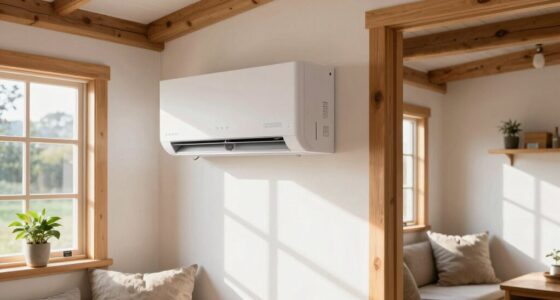
Passive design plays a pivotal role in reducing your tiny house’s energy requirements. It involves designing your home to naturally regulate temperature, lighting, and airflow without relying heavily on mechanical systems. For instance, orient your tiny house to maximize sunlight during winter months, using large south-facing windows to absorb warmth. During summer, incorporate shading devices like overhangs or window awnings to prevent overheating. Use natural ventilation by strategically placing windows and vents to encourage airflow, reducing the need for air conditioning. Insulating your walls, roof, and floors is equally important to maintain steady indoor temperatures and cut down on heating and cooling needs. Light-colored or reflective roofing materials can also help keep the house cool in hot weather. Passive design principles essentially harness natural elements—sunlight, wind, and insulation—to keep your home comfortable and energy-efficient.
Top picks for "design energy neutral"
Open Amazon search results for this keyword.
As an affiliate, we earn on qualifying purchases.
Frequently Asked Questions
What Is the Average Cost of Building an Energy-Neutral Tiny House?
The average cost of building an energy-neutral tiny house ranges from $30,000 to $80,000, depending on size, location, and materials. You should focus on accurate cost estimation and budget planning early in your project to avoid surprises. Consider integrating solar panels, energy-efficient appliances, and sustainable materials, which may increase costs upfront but save you money long-term. Proper planning helps you balance features and affordability effectively.
How Long Does It Take to Design and Construct One?
The design process for an energy-neutral tiny house typically takes 4 to 8 weeks, depending on your project’s complexity. Once you finalize your plans, the construction timeline usually spans 2 to 4 months, but it can vary based on factors like materials and permits. You should allocate ample time for planning and approvals to guarantee a smooth construction process and an efficient journey from concept to completion.
Are There Specific Zoning Laws for Tiny Houses in Different Regions?
You’ll find that zoning restrictions and building codes vary widely across regions, so it’s essential to verify local regulations before building your tiny house. Some areas have specific rules for size, foundation, or placement, while others may have more lenient policies. Researching these laws early helps you avoid delays and ensures your tiny house complies with all requirements, making the process smoother and more predictable.
What Maintenance Is Required for Renewable Energy Systems in Tiny Homes?
You need to regularly check your solar panel longevity by cleaning the panels and inspecting for damage. Keep batteries in good shape with simple maintenance tips like avoiding deep discharges, maintaining proper charge levels, and ensuring connections are secure. Monitoring system performance helps catch issues early, ensuring your renewable energy system runs efficiently. With proper upkeep, your tiny house’s solar and battery systems will serve you reliably for years.
Can Tiny Houses Be Easily Relocated After Construction?
You might think tiny houses are hard to move, but with portable mobility and foundation flexibility, they’re surprisingly easy to relocate. Many tiny homes are built on wheels or trailers, allowing you to transport them without disassembly. This makes moving a breeze, whether for a new view or a change in location. Just guarantee the foundation is designed for flexibility, so your tiny house remains sturdy and safe during the move.
Conclusion
By embracing energy-neutral tiny houses, you’re opening the door to a sustainable future where your home breathes in harmony with the environment. Think of these homes as tiny beacons of hope, shining brightly with eco-friendly innovation. With smart design and renewable energy, you can reduce your carbon footprint and live more consciously. It’s like planting seeds today for a greener, healthier tomorrow—tiny homes, big impact!