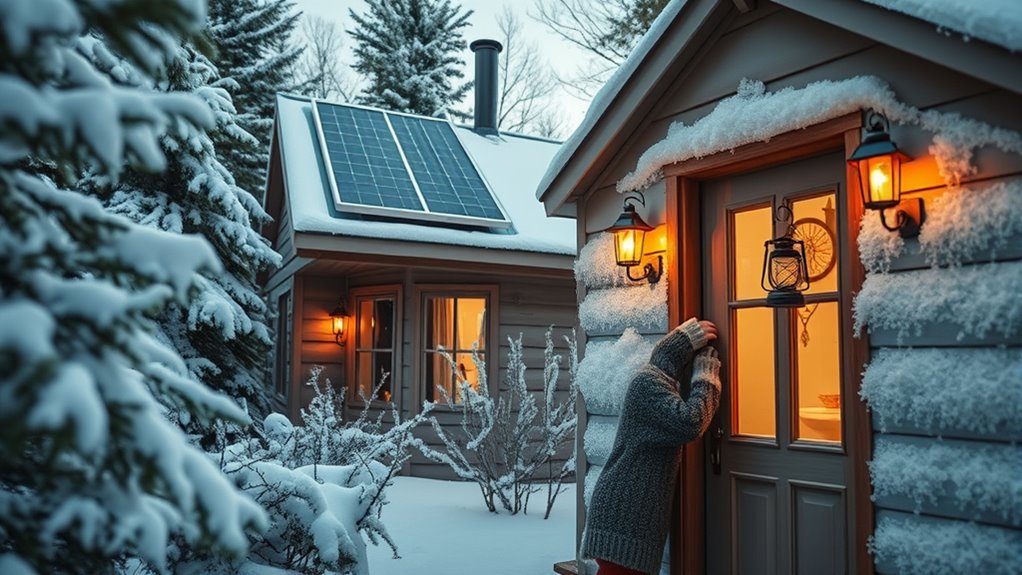

To save energy during winter in your tiny home, focus on adding insulation, sealing gaps, and using thermal curtains to trap heat. Keep your thermostat steady around 68°F and layer up instead of increasing the heat. Maximize natural warmth by opening curtains during sunny days and closing them at night. Regularly maintain your heating system for maximum efficiency. Staying cozy doesn’t have to boost costs—discover more simple, effective tips ahead.
Key Takeaways
- Improve insulation by sealing gaps and adding thermal curtains to retain heat and reduce energy use.
- Use programmable thermostats to maintain consistent temperatures and lower settings when away or sleeping.
- Maximize natural heat by opening curtains during sunny days and closing them at night to trap warmth.
- Regularly maintain heating systems and filters to ensure efficient operation and lower energy consumption.
- Use draft stoppers and space heaters wisely to prevent cold air infiltration and target heat where needed.
Living in a tiny space during winter can be cozy, but it also means every bit of energy savings counts. To keep warm without draining your wallet, focusing on insulation upgrades is a smart move. Proper insulation helps trap heat inside your small space, reducing the workload on your heating system. You’ll notice your home stays warmer longer, which means you won’t need to crank the heat as high. Check your walls, floors, and ceilings for gaps or thin spots and seal them with weatherstripping or caulk. Adding insulation to windows or investing in thermal curtains can also make a noticeable difference. When your space is better insulated, your heating efficiency improves, allowing you to stay warm more comfortably and cut down on energy waste.
Next, consider adjusting your heating habits to maximize efficiency. Instead of setting the thermostat high, keep it at a comfortable, steady temperature—around 68°F (20°C)—and avoid constant fluctuations. Using a programmable thermostat can help maintain consistent warmth without extra effort. Additionally, setting your heat to lower when you’re asleep or away can make a big difference in energy consumption. Layering clothing indoors and using cozy blankets can help you feel warm without turning up the heat excessively. Also, make sure vents and radiators aren’t blocked by furniture or curtains, as this can hinder heat distribution. Proper airflow ensures your heating system works efficiently, heating your tiny space evenly and reducing wasted energy.
Another tip is to take advantage of heat generated naturally. During the day, open curtains on sunny windows to let sunlight naturally warm your space. When the sun sets, close the curtains to retain that heat. This simple step reduces the need for artificial heating and enhances your overall heating efficiency. It’s also wise to use space heaters wisely—only in the rooms you spend time in—and turn them off when you leave. Using draft stoppers on doors and windows prevents cold air from sneaking in, which can considerably lower your heating costs. Small adjustments like these add up over time, making your tiny home more energy-efficient during winter.
Additionally, regular maintenance of your heating system, including checking and replacing filters and consulting professionals for tune-ups, can improve efficiency. When your heater is well-maintained, it consumes less energy and provides more consistent warmth. Incorporating filtration and pump protection strategies ensures your system remains free of clogs and functions optimally. Combining these insulation upgrades, smart heating habits, and maintenance routines ensures your tiny space stays warm without wasting energy. You’ll enjoy winter comfort while keeping your energy bills in check, making your small home a cozy haven even in the coldest months.
Frequently Asked Questions
How Can I Prevent Heat Loss Through Windows?
You can prevent heat loss through windows by draft-proofing drafts around the frames, sealing any gaps with weatherstripping or caulk. Use thick window coverings like thermal curtains or blinds to insulate your windows further. Keep them closed during cold nights and sunny days to retain warmth. Additionally, placing draft stoppers at the bottom of windows can block cold air, making your tiny space cozier and more energy-efficient.
What Are Cost-Effective Ways to Insulate a Tiny Home?
To insulate your tiny home cost-effectively, start with affordable insulation materials like foam board or recycled denim. Seal gaps around windows, doors, and vents using weatherstripping and caulk to prevent drafts. You can also add DIY window insulation kits or heavy curtains to boost heat retention. These sealing techniques and insulation materials are budget-friendly, easy to install, and considerably improve your home’s warmth during winter.
How Can I Reduce Heating Costs Without Sacrificing Comfort?
A stitch in time saves nine, so start by installing smart thermostats to precisely control your heating and avoid waste. Use draft stoppers on doors and windows to keep warmth in. You can also layer your clothing and use cozy blankets to stay comfortable without turning up the heat. These simple steps help cut costs while maintaining a warm, inviting space during winter.
Are There Eco-Friendly Heating Options Suitable for Small Spaces?
Yes, eco-friendly heating options like solar panels and heat pumps are perfect for small spaces. Solar panels can harness sunlight to generate electricity, reducing reliance on grid power and lowering your carbon footprint. Heat pumps efficiently transfer heat from outside to inside, providing warmth with less energy. Together, these options help you stay cozy while being environmentally responsible, and they can substantially cut your heating costs over time.
How Can I Maximize Natural Sunlight for Warmth?
You can maximize natural sunlight for warmth by strategically placing your solar panels near south-facing windows to capture more sun. Use window treatment options like thermal curtains or reflective blinds to retain heat during colder days and let sunlight in when it’s sunny. Keep your windows clean to improve light entry, and consider using mirrors to reflect sunlight deeper into your space, helping to naturally warm your tiny home.
Conclusion
Living tiny in winter is like wrapping yourself in a cozy blanket—warm and efficient. By applying these energy-saving tips, you’ll not only cut costs but also reduce your environmental footprint. Every small change, from sealing drafts to using smart thermostats, adds up to a big difference. Keep your space snug and eco-friendly, and enjoy the season without the chills or bill shocks. Embrace these habits, and winter living becomes comfortable and sustainable, just like a warm hug on a cold day.