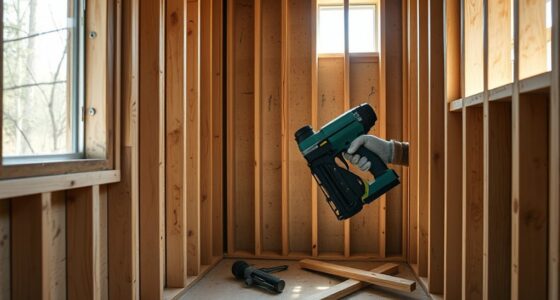
When framing a tiny bathroom, focus on a smart layout that maximizes space and guarantees safety. Plan for proper ventilation with ductwork and exhaust fans early on, and align plumbing fixtures precisely to avoid reroutes. Use lightweight, sturdy materials and incorporate built-in niches for storage. Make sure your framing meets local codes and leaves access panels for future repairs. Paying attention to these details now helps create a safe, efficient bathroom—continue to explore how each step can make a difference.

Get compact home essentials delivered free — and shop member deals
- Fast, free delivery on millions of items
- Access to Prime Big Deal Days deals on October 6–7
- Prime Video, Amazon Music and more included
Key Takeaways
- Plan a functional layout that maximizes space and incorporates built-in niches for efficient storage.
- Address ventilation early by installing exhaust fans and venting systems near wet areas.
- Precisely locate plumbing fixtures and ensure framing accommodates pipes and vent stacks properly.
- Use lightweight, sturdy materials to support fixtures while maintaining ease of modification.
- Double-check measurements and adhere to local building codes for safety and future access.

Have you ever wondered how to maximize space and create a functional layout in a tiny bathroom? When framing such a small area, careful planning makes all the difference. You need to think about ventilation options early in the process to prevent moisture buildup and mold, which can quickly become a problem in confined spaces. Installing an exhaust fan or venting system during framing ensures proper airflow, keeping the bathroom dry and comfortable. Consider the placement of vents near the shower or bathtub, and make sure your framing allows for the ductwork to run efficiently without sacrificing space. Proper ventilation isn’t just about comfort; it’s essential for preserving the integrity of your walls and avoiding costly repairs down the line. Utilizing sizing and load‑planning tools can help determine the best placement for vents and fixtures to optimize space and function.
Plumbing considerations are equally critical when framing a tiny bathroom. Before you start putting up studs, you should plan out the exact location of all plumbing fixtures—sink, toilet, shower or tub—and ensure your framing can accommodate them. This means double-checking the placement of water supply lines, drain pipes, and vent stacks. You might need to modify standard framing techniques to create space for larger pipes or additional fittings, especially in tight quarters. If you’re working with existing plumbing, verify that your new layout will align with the current setup to avoid costly rerouting. Incorporating access panels or cleanouts into your framing can save time and hassle later, giving you easy access for maintenance or repairs. Remember, precise measurements and careful planning now will prevent headaches when it’s time to connect the fixtures.
When framing a tiny bathroom, every inch counts. You want to ensure that your walls are sturdy enough to support fixtures and finishes but also leave enough room for movement and storage. Use lightweight materials where possible to keep the structure manageable, and consider built-in niches or shelves to maximize storage without clutter. Keep in mind that framing isn’t just about creating walls; it’s about creating a foundation for a well-functioning, comfortable space. Don’t forget to leave space for electrical wiring if you plan on adding lighting or outlets, and ensure your framing adheres to local building codes for safety and durability.
bathroom exhaust fan with ducting
As an affiliate, we earn on qualifying purchases.
As an affiliate, we earn on qualifying purchases.
Frequently Asked Questions
What Tools Are Essential for Framing a Tiny Bathroom?
You need essential tools like a tape measure, speed square, level, and a saw to handle framing techniques efficiently. A power drill helps with fast assembly, while a hammer is vital for nailing. Don’t forget to have insulation options like foam or fiberglass batt cutters. These tools allow you to accurately measure, cut, and secure framing materials, ensuring your tiny bathroom is safely and efficiently framed with proper insulation for moisture control.
How Do I Choose the Best Framing Materials?
Choosing the right framing materials is like picking a sturdy foundation for your cozy space. You want materials that prioritize bathroom safety, resist moisture, and are easy to work with. Opt for treated lumber or metal studs, which stand up to humidity and provide long-lasting support. Make certain your materials meet local building codes and are compatible with your design. This way, your tiny bathroom stays safe, durable, and stress-free to build.
What Safety Precautions Should I Take During Framing?
You should always wear personal protective equipment like gloves, goggles, and a dust mask to protect yourself. Make certain your work environment is secure by keeping tools organized, securing loose boards, and stabilizing framing materials. Use proper ladders and scaffolding, and be cautious of electrical wiring. Regularly check your surroundings, stay alert, and follow safety guidelines to prevent accidents and injuries during framing your tiny bathroom.
How Do I Handle Plumbing and Electrical Considerations?
You should first check local plumbing codes and verify your plumbing setup complies with them before installing fixtures. For electrical wiring, follow the National Electrical Code, using proper grounding and GFCI outlets in the bathroom. Plan your wiring route carefully to avoid damage during framing. Always turn off power before working on electrical systems, and consider consulting professionals for complex plumbing or wiring tasks to ensure safety and code compliance.
What Are Common Mistakes to Avoid When Framing Small Bathrooms?
Think of framing your tiny bathroom like building a puzzle—you want each piece to fit perfectly. Avoid common mistakes like overusing framing techniques that waste space or ignoring bathroom space optimization. Don’t forget to measure twice and cut once, or you might end up with awkward angles. Keep your framing straight and level, ensuring your walls are sturdy and functional. Proper planning makes your small bathroom feel spacious and well-designed.
Conclusion
Framing your tiny bathroom might seem challenging, but with careful planning and precise measurements, you can maximize every inch. Don’t worry about making it look cramped—you’ll create a cozy, functional space that feels open. Picture installing narrow shelves or a compact vanity, and see how smart framing allows for easy movement. With attention to detail, you’ll craft a bathroom that’s both safe and efficient, proving even small spaces can be beautifully designed and well-organized.
Fall Picks
fall essentials
As an affiliate, we earn on qualifying purchases.