As you consider ways to create sustainable, self-sufficient tiny communities, hydrogen emerges as a key player. It offers a clean energy storage solution and can power everything from local transportation to power generation. But how exactly does hydrogen fit into the larger picture of achieving net-zero goals? Exploring this connection could reveal new opportunities for resilience and independence that you might not have yet imagined.
Key Takeaways
- Hydrogen enables energy storage, balancing renewable supply and demand in tiny communities striving for net-zero emissions.
- It supports local energy independence by providing clean fuel for transportation and electricity generation.
- Hydrogen infrastructure fosters economic growth and job creation within small communities transitioning to green energy.
- Integrating hydrogen reduces reliance on fossil fuels, helping tiny communities achieve sustainable, environmentally friendly lifestyles.
- Hydrogen acts as a versatile energy carrier, facilitating export opportunities and enhancing resilience of net-zero tiny communities.
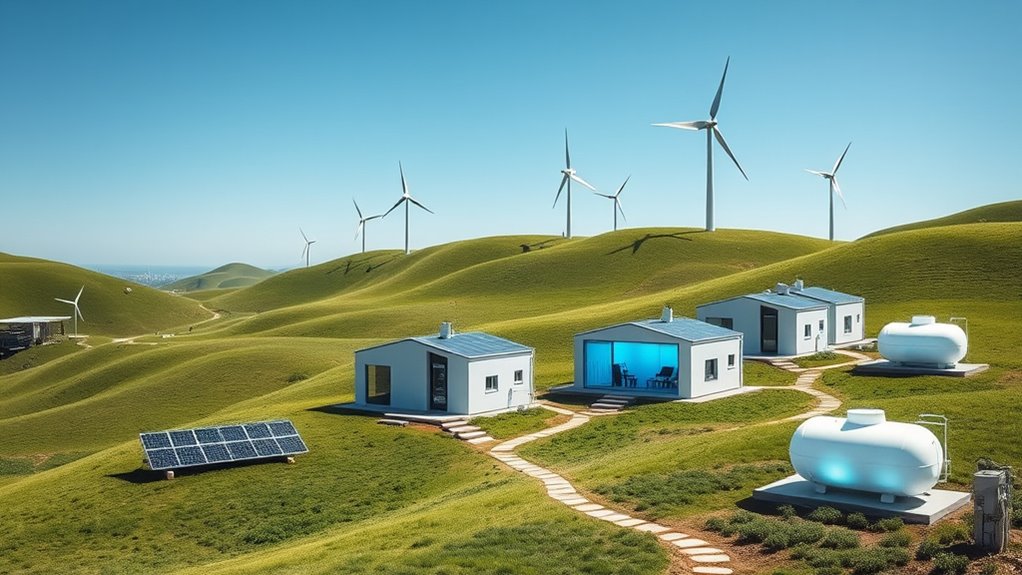
Have you ever wondered how hydrogen can play a pivotal role in creating truly net-zero communities? It’s a compelling question, especially as tiny communities look for innovative ways to reduce their carbon footprint. One of the key factors is hydrogen storage, which allows these communities to harness and utilize hydrogen efficiently. By storing hydrogen safely and effectively, small communities can create a steady supply of clean energy that’s not dependent on intermittent sources like wind or solar. This storage capability makes hydrogen a reliable energy carrier, bridging gaps when renewable generation is low. It also enables communities to build a localized hydrogen economy—where hydrogen isn’t just a fuel but a cornerstone of their energy infrastructure. This community hydrogen economy can power everything from heating systems to transportation, substantially lowering greenhouse gas emissions.
Think about the advantages of having a dedicated hydrogen storage system in your community. It provides flexibility, allowing surplus renewable energy to be converted into hydrogen via electrolysis and stored for later use. During periods of high energy demand or low renewable generation, this stored hydrogen can be tapped into, ensuring a consistent energy supply without relying on external grids or fossil fuels. This autonomy boosts resilience and energy independence, which are vital for tiny communities aiming to become net-zero. Additionally, hydrogen storage can be scaled to match the community’s needs, whether it’s a small neighborhood or a cluster of tiny homes. It’s about creating a self-sufficient energy ecosystem that’s clean, reliable, and sustainable.
Hydrogen storage offers communities flexibility, resilience, and scalable, clean energy independence.
Building a community hydrogen economy isn’t just about storage; it’s about integrating hydrogen into everyday life. Small communities can develop local fueling stations for hydrogen vehicles or use hydrogen to generate electricity on-site. This reduces transportation emissions and cuts reliance on fossil fuels. As infrastructure develops, the community can even explore opportunities for exporting excess hydrogen to neighboring areas, turning their efforts into a local green energy hub. The shift to a hydrogen-based energy system also opens doors for job creation and economic growth within the community, supporting local businesses and fostering innovation.
In essence, hydrogen storage and a community hydrogen economy can transform tiny communities into models of sustainability. They enable these communities to produce, store, and use hydrogen efficiently, aligning with their goal of achieving net-zero emissions. By leveraging hydrogen’s potential, small communities can take control of their energy future—becoming more resilient, self-sufficient, and environmentally friendly. It’s a promising path forward for creating truly sustainable, net-zero tiny communities that can thrive while protecting the planet.
Conclusion
As you embrace hydrogen in your tiny community, you’re steering toward a future where clean energy powers every corner—no need for a DeLorean time machine here. By converting surplus renewables into hydrogen, you’ll boost resilience, cut emissions, and foster local growth. It’s like having your own secret recipe for sustainability, blending innovation with tradition. Keep pushing forward, and you’ll create a self-sufficient, green haven that’s truly ahead of its time.

Hi, I’m Emma. I’m the Editor in Chief of Tiny House 43, a blog all about tiny houses. While tree houses are often associated with childhood, they can be the perfect adult retreat. They offer a cozy space to relax and unwind, surrounded by nature. And since they’re typically built on stilts or raised platforms, they offer stunning views that traditional homes simply can’t match. If you’re looking for a unique and romantic getaway, a tree house tiny house might just be the perfect option.