
Did you know that insulated concrete forms (ICFs) can start saving you money almost immediately after installation? Their high-performance insulation reduces energy costs from day one, often allowing the initial investment to pay for itself within a few years. But how long does it really take for ICFs to deliver a positive return on your investment? Understanding this timeline can help you decide if they’re the right choice for your home’s efficiency and long-term savings.
Key Takeaways
- Energy payback for ICFs typically occurs within 1 to 5 years due to substantial energy savings.
- The timeline depends on local climate, building design, and energy consumption patterns.
- ICFs’ superior insulation reduces heating and cooling energy use, accelerating payback period.
- Longer-term energy savings continue to offset the initial construction energy investment.
- Overall, ICFs offer a rapid energy payback, making them a cost-effective sustainable building choice.

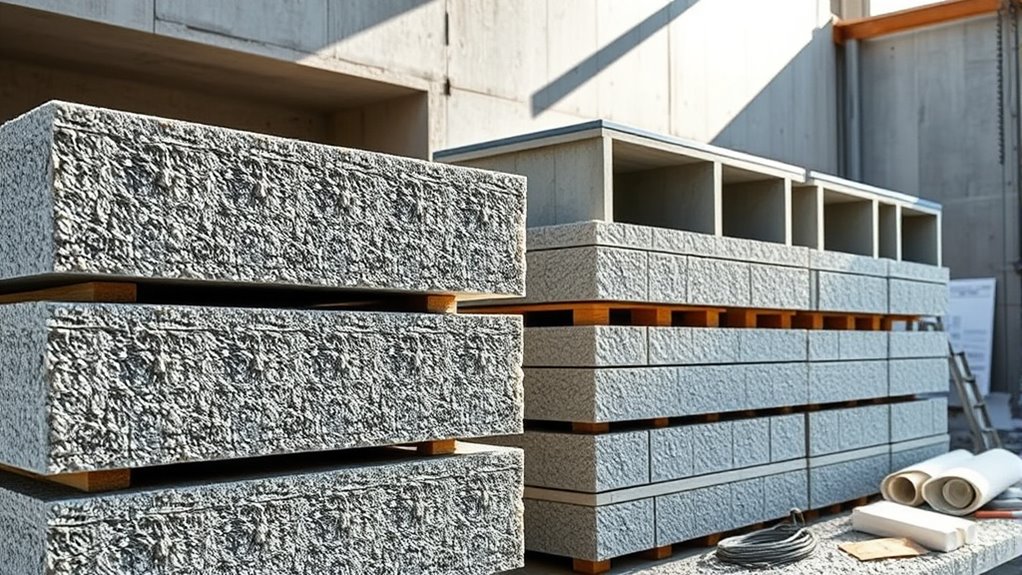
Have you ever wondered how to build a home that’s both energy-efficient and durable? Using Insulated Concrete Forms (ICFs) can be a game-changer in achieving those goals. ICFs are hollow foam blocks or panels filled with reinforced concrete, providing excellent thermal insulation and enhancing your home’s construction durability. When you choose ICFs, you’re investing in a building method that offers considerable long-term benefits. The thermal insulation they deliver is one of their standout features, creating a tight building envelope that minimizes heat transfer. This means your home stays cooler in the summer and warmer in the winter, reducing reliance on heating and cooling systems. Over time, these energy savings add up, making ICF construction not just environmentally friendly but also cost-effective. Additionally, the protective qualities of ICFs contribute significantly to their longevity and low maintenance requirements.
Conclusion
Think of Insulated Concrete Forms as a sturdy, energy-saving fortress. From the moment you build, they begin to pay you back like a wise investment, shielding you from rising utility costs. Over time, they stand strong and resilient, just like an unbreakable castle, delivering ongoing savings and sustainability. By choosing ICFs, you’re planting the seeds for a future where comfort and efficiency grow together—making your home not just a shelter, but a smart, lasting fortress.