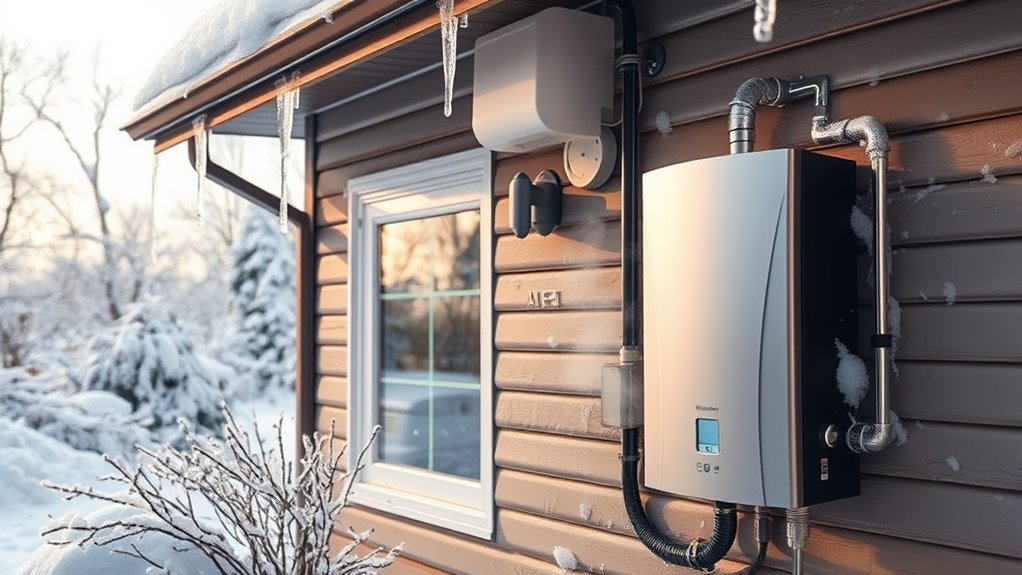

Considering a switch to a tankless water heater in a cold climate? While the initial investment can seem steep, the potential savings on energy bills and increased durability might make it worthwhile. But to truly understand the return on investment, you’ll need to look at how these units perform over time and how well they match your household’s needs. There’s more to this decision than just upfront costs—let’s explore what makes tankless systems a smart choice in harsher environments.

Get compact home essentials delivered free with Prime
- Fast, free delivery on millions of items
- Prime Video, Amazon Music and more included
- Member-only deals all year
Key Takeaways
- Proper sizing and installation in cold climates maximize energy savings and hot water supply, boosting ROI.
- Reduced standby heat loss leads to lower utility bills, improving long-term cost-effectiveness.
- Higher initial costs are offset over time by energy savings and increased durability in harsh conditions.
- Multiple units or larger systems may increase upfront costs but enhance performance and ROI in cold regions.
- Local energy prices and household water usage patterns significantly influence the payback period and overall ROI.
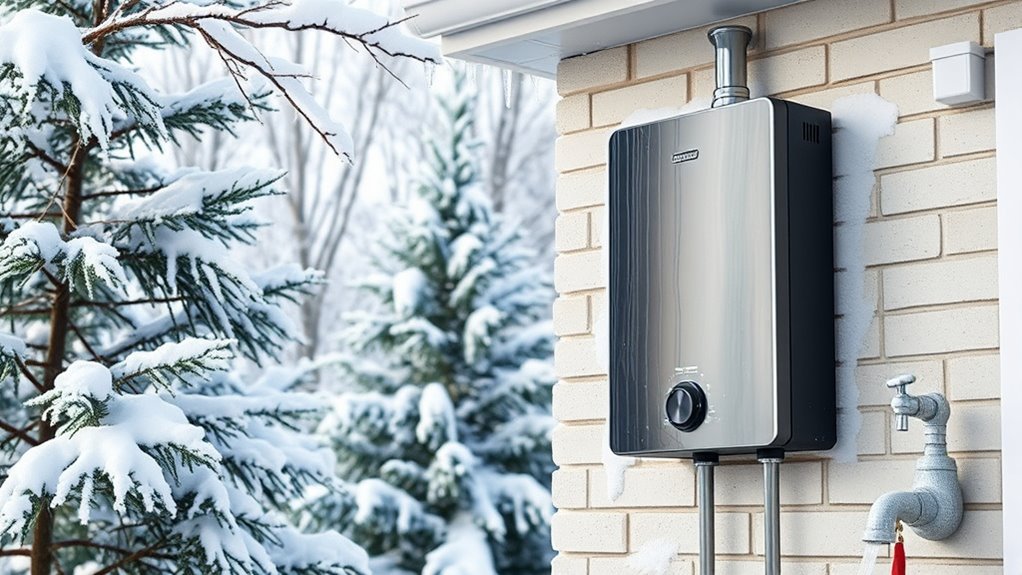
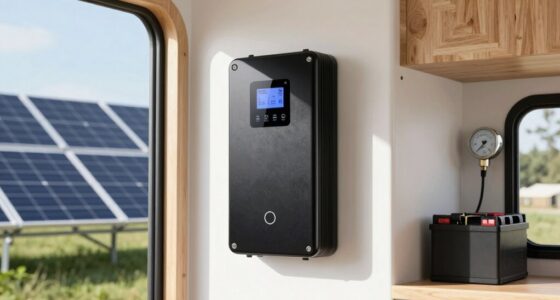
Tankless water heaters are increasingly popular choices for homeowners looking to save money and energy. If you live in a cold climate, you might wonder whether investing in one is worth it, especially given the upfront costs. The truth is, tankless models can provide notable energy savings over traditional tank-style heaters, even in colder regions. Unlike conventional units that heat and reheat a large tank of water continuously, tankless heaters only activate when you turn on a faucet or appliance. This on-demand operation markedly reduces standby heat loss, which is especially beneficial in colder climates where maintaining hot water in a tank can lead to higher energy consumption. Over time, this reduction in energy use can lead to lower utility bills, making the initial investment more attractive.
However, it’s important to contemplate the installation costs associated with a tankless system, which tend to be higher than those for traditional water heaters. These costs include purchasing the unit itself, which is often more expensive, plus potential upgrades to your home’s electrical or gas systems to handle the demand of a tankless heater. In cold climates, larger units or multiple units may be necessary to meet your household’s hot water needs, further increasing installation expenses. While these upfront costs can seem overwhelming, they’re often offset by the long-term savings on energy bills. Additionally, modern tankless heaters are designed to handle variable water demands, which can be advantageous in colder regions where hot water needs fluctuate. Still, it’s wise to evaluate whether your household’s hot water consumption justifies the investment, especially in colder areas where the heater might need to work harder to supply enough hot water.
In terms of ROI, the benefits depend on factors like your household size, water usage habits, and local energy prices. If you’re someone who consistently uses a lot of hot water, or if your current system is inefficient, a tankless heater can offer a quick return on investment through energy savings. Additionally, in cold climates, the durability and efficiency of modern tankless units mean they can last longer and perform better, providing ongoing energy and cost savings over their lifespan. The key is to weigh the initial installation costs against the expected reduction in energy bills. With proper sizing and installation, many homeowners in colder regions find that the savings, comfort, and reliability make the investment worthwhile, delivering a solid ROI over time.
tankless water heater for cold climates
As an affiliate, we earn on qualifying purchases.
As an affiliate, we earn on qualifying purchases.
Conclusion
Thinking about upgrading to a tankless water heater in a cold climate? With lower energy bills, fewer standby losses, and long-lasting durability, it’s a smart investment that pays off over time. Sure, the initial cost might seem high, but can you really afford to ignore the comfort of endless hot water and energy savings? When you weigh the long-term benefits, isn’t it worth making that warm, reliable choice?
Halloween Picks
halloween
As an affiliate, we earn on qualifying purchases.