
Before expanding your solar setup, check your batteries’ capacity and condition to guarantee they can handle extra load. Inspect wiring for corrosion or damage, and confirm all connections are secure. Verify that your inverter and charge controllers can manage increased input from additional panels. Assess your mounting structures for stability and shading impacts. Regular system monitoring helps identify potential issues early. Keep these points in mind—there’s more to contemplate for a safe and efficient upgrade.

Get compact home essentials delivered free — and shop member deals
- Fast, free delivery on millions of items
- Access to Prime Big Deal Days deals on October 6–7
- Prime Video, Amazon Music and more included
Key Takeaways
- Assess current battery capacity and performance to ensure suitability for expansion demands.
- Inspect wiring for wear, corrosion, and secure connections to support increased system load.
- Verify inverter and charge controller capacities to handle additional panels and higher input.
- Check mounting structures and shading conditions for stability and optimal panel placement.
- Monitor system diagnostics and performance metrics to identify potential issues before expansion.
Expanding your solar setup can boost energy production and save you money, but before making any changes, it’s crucial to thoroughly inspect your existing system. One of the first aspects to assess is your current battery capacity. If you’re planning to add more panels or increase your energy load, you need to guarantee your batteries can handle the additional charge and storage demands. Check how much capacity remains in your existing batteries by reviewing their specifications and performance history. If your batteries are nearing their end of life or already operating at a reduced capacity, upgrading or replacing them should be a priority before adding more panels. This step prevents overloading your system and guarantees your expanded setup functions reliably and efficiently.
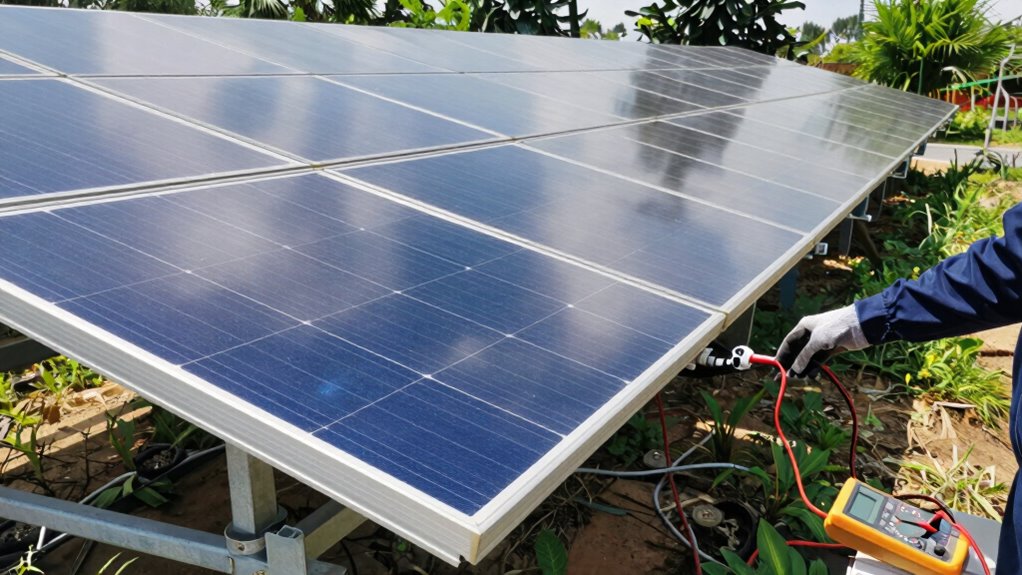
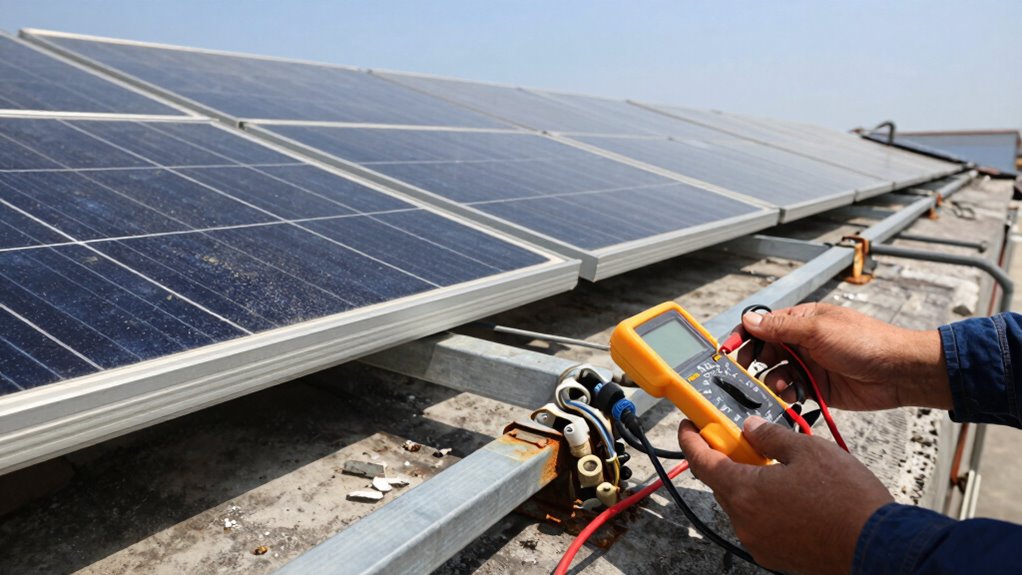
Next, you should examine the wiring integrity of your current system. Proper wiring is critical for safety, efficiency, and longevity. Look for signs of wear, corrosion, or damage in your wiring and connections. Loose or frayed wires can cause power losses, increase fire risks, or lead to system failures. Make sure all connections are secure and free from corrosion, especially at junction points and terminals. If you notice any damaged wiring, replace it before expanding your setup. Upgrading your wiring to thicker gauge cables might also be necessary if you’re increasing the system’s capacity, to prevent voltage drops and guarantee optimal power flow. Additionally, inspecting your system’s performance metrics can help identify any underlying issues before expansion. Regularly monitoring system performance can provide valuable insights into potential weak points that need addressing prior to scaling up. Incorporating system diagnostics can further enhance your ability to detect hidden problems early. Furthermore, it’s advisable to verify the system’s components for compatibility and efficiency to ensure seamless operation during expansion.
Regularly inspect wiring for wear, corrosion, and damage to ensure safety and optimal system performance.
Beyond batteries and wiring, it’s important to inspect your inverter, charge controllers, and the overall system layout. Confirm that your inverter can handle the increased input from additional panels. If it’s near its maximum capacity, you might need a more powerful inverter to accommodate the expansion. Similarly, check your charge controllers to ensure they can manage higher voltages and currents. An undersized charge controller can limit system performance or cause damage over time. Also, reviewing the contrast ratio of your system components can help ensure optimal image quality if you’re integrating visual monitoring or display systems into your setup.
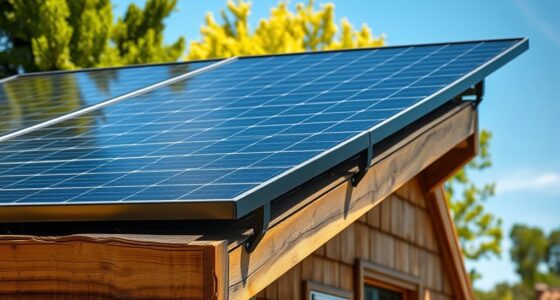
Finally, review your system’s overall physical setup. Make sure your mounting structures are secure and capable of supporting additional panels. Verify that shading isn’t affecting existing panels, as new panels could be similarly impacted. Keeping these elements in check helps maximize the efficiency of your expansion and protects your investment. Properly assessing all these components ensures a safe, efficient, and effective expansion of your solar energy system.
As an affiliate, we earn on qualifying purchases.
Frequently Asked Questions
How Do Weather Patterns Affect Solar Expansion Plans?
Weather patterns considerably impact your solar expansion plans. Climate change can cause unpredictable weather, reducing your system’s efficiency during storms or cloudy days. Seasonal variations, like shorter winter days or heavy snowfall, also affect energy production. You should assess these patterns to optimize panel placement, storage, and backup options, ensuring your system remains reliable year-round despite changing weather conditions. Planning around these factors helps maximize your solar investment.
Can Existing Wiring Support Additional Solar Panels?
Think of your wiring system as a highway—if it’s already busy, adding more panels is like trying to squeeze in more cars. You need to check wiring compatibility to guarantee it can handle increased current, and assess panel capacity to see if your current system can support the extra load. If these aren’t up to speed, you risk overloads or inefficiency, so upgrading might be necessary before expanding.
What Are the Local Regulations for Expanding Solar Systems?
You need to check local regulations for expanding your solar system, including regulatory permits and zoning restrictions. Contact your city or county planning department to understand permit requirements and whether zoning laws limit the size or placement of additional panels. Failing to follow these rules can cause delays or fines. Always make certain your expansion complies with local codes to avoid future legal or safety issues.
How Does Shading Impact Expanded Solar Array Efficiency?
Imagine adding new panels to your existing system, only to find they’re shaded by nearby trees. Shade analysis helps identify these problem spots, ensuring the best panel placement. Shading drastically reduces efficiency because even a small shadow can cut power output considerably. By conducting a thorough shade analysis beforehand, you can position your expanded array to avoid shading, maximizing energy production and ensuring your investment pays off.
What Is the Typical Timeline for a Solar Expansion Project?
The typical timeline for a solar expansion project ranges from 4 to 8 weeks. You start with a thorough cost analysis to determine your budget. Next, you select a reputable contractor, ensuring they have experience with similar projects. Once the contract is signed, your team will handle permits and system design, with installation following. Keep in mind, factors like permit approval can influence the overall schedule.
Conclusion
Before expanding your solar setup, don’t skip thorough inspections—checking your roof’s condition, the inverter capacity, and system compatibility. Some might worry it’s too complex or costly, but proper inspection guarantees your investment pays off and maximizes efficiency. Taking these steps now can prevent costly surprises later, saving you time and money. Remember, a well-planned expansion is key to a reliable, sustainable energy future—so stay proactive and confident in your solar journey.
Fall Picks
fall essentials
As an affiliate, we earn on qualifying purchases.