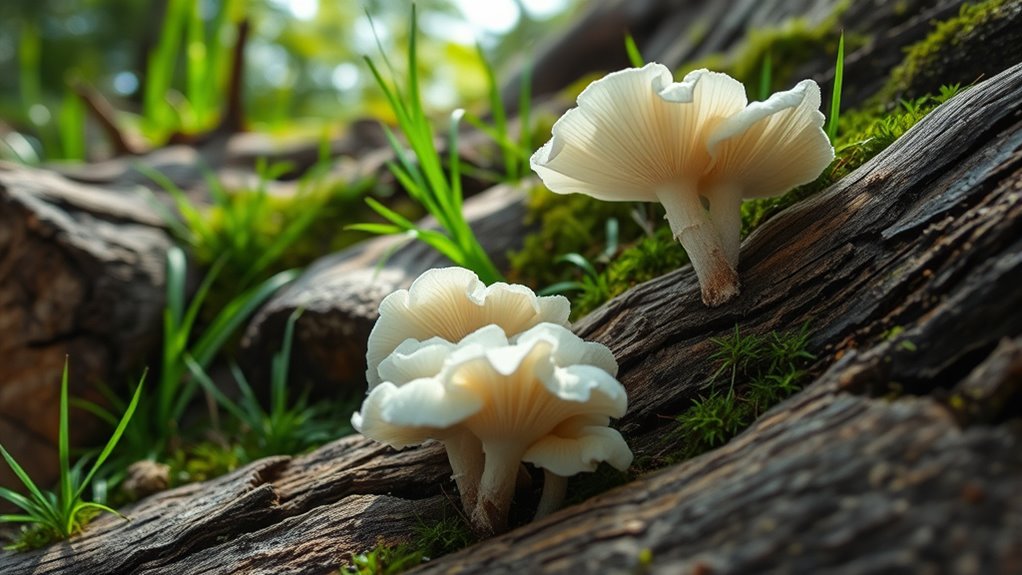
Growing gourmet fungi outdoors using mushroom logs offers a sustainable way to enjoy fresh mushrooms right from your yard. By inoculating logs with mushroom spawn, you set the stage for mycelium to develop and eventually produce fruiting bodies. This natural process can take months, but it’s worth the wait for the flavor and satisfaction it provides. Curious about how to start your own mushroom log setup and what it takes to succeed?
Key Takeaways
- Use inoculated logs with mushroom spawn to establish a natural substrate for outdoor fungi growth.
- Maintain proper moisture, protection from pests, and suitable environmental conditions for successful fruiting.
- Select hardwood logs like oak or maple, which support a variety of gourmet mushroom species.
- Allow 6-12 months for mycelium colonization before mushrooms begin to fruit outdoors.
- Harvest mushrooms at peak maturity to ensure optimal flavor and promote healthy spore dispersal for future growth.

Mushroom logs are a simple and effective way to grow your own gourmet fungi at home. When you start, you’re tapping into the fascinating process rooted in the fungi lifecycle, which begins with spore dispersal. Unlike plants that grow from seeds, fungi reproduce through spores, tiny reproductive units that travel through the air or are carried by animals. When you inoculate a log with mushroom spawn, you’re fundamentally introducing the next generation of fungi into their ideal environment. These spores will eventually land on the log’s surface, germinate, and develop into mycelium, the network of thread-like structures that make up the main body of fungi beneath the surface. Understanding this process helps you appreciate how mushrooms grow and why your logs are a perfect substrate for them.
Mushroom logs introduce fungi spores, kickstarting their lifecycle and promoting healthy, homegrown mushroom growth.
As the fungi lifecycle progresses, the mycelium colonizes the log’s interior, feeding on the wood and establishing a robust network. This stage can take several weeks to months, depending on the mushroom species and environmental conditions. During this period, you might see the mycelium as white, thread-like growth spreading through the log. Once fully colonized, the fungi are ready to produce fruiting bodies—those familiar mushroom caps. When the conditions are right—warm, humid, and with fresh air—these fruiting bodies emerge. This is the mushroom’s way of spreading spores again, completing the cycle. Your role is to provide the ideal environment, guaranteeing the spores can disperse effectively when mushrooms fruit, which then leads to another round of spore dispersal and fungal growth.
Growing mushrooms on logs is a sustainable and natural method to cultivate gourmet fungi outdoors. The logs act as a permanent substrate, offering a sturdy, nutrient-rich base for the fungi lifecycle to unfold naturally. Once inoculated, you need to maintain appropriate moisture levels and protect the logs from extreme weather or pests, encouraging healthy spore dispersal and mycelial growth. As mushrooms mature, they’ll appear in clusters, ready for harvest. Harvesting at the right time guarantees the fungi are at their peak flavor and texture, and it allows new spores to disperse into the environment, continuing the fungi lifecycle.
In essence, using mushroom logs connects you directly with nature’s cycles. You observe how spores travel, germinate, and develop into mature fungi, completing the beautiful, ongoing process of fungi growth. This method offers a hands-on way to enjoy fresh, homegrown mushrooms while learning about the intricate biological dance that sustains fungi in the wild. By understanding spore dispersal and the fungi lifecycle, you can better manage your logs for ongoing harvests, turning your outdoor space into a self-sustaining fungi farm.

North Spore Organic Shiitake Outdoor Mushroom Log Growing Kit | Includes 100 ct. Bag of Plug Spawn | Complete Log Starter Kit with Instructions | Handmade in Maine, USA
THE IDEAL STARTER KIT FOR GROWING ON LOGS: These kits were designed with everything you need to start…
As an affiliate, we earn on qualifying purchases.
As an affiliate, we earn on qualifying purchases.
Conclusion
Growing mushrooms on logs is a rewarding, eco-friendly way to enjoy fresh, gourmet fungi right in your backyard. Imagine you inoculate oak logs with shiitake spawn, and after a few months, you’re harvesting delicious mushrooms for meals. Just like a hobbyist in Oregon who transformed fallen logs into a thriving mushroom farm, you can create your own sustainable food source. With patience and care, your mushroom logs will produce bountiful, tasty harvests for years to come.

North Spore Organic Lion's Mane (100 ct) Mushroom Plugs for Logs | Premium Quality Mushroom Plug Spawn | Handmade in Maine, USA | Grow Gourmet Mushrooms Outdoors on Logs
GROW MUSHROOMS ON LOGS & TOTEMS: Mushroom plugs work best for small to medium projects. 100 count packs…
As an affiliate, we earn on qualifying purchases.
As an affiliate, we earn on qualifying purchases.

Back to the Roots Organic Mini Mushroom Grow Kit, Harvest Gourmet Oyster Mushrooms In 10 days, Top Gardening Gift, Holiday Gift, & Unique Gift
100% ORGANIC AND NON-GMO: There's no need to worry about intoxicants that may hinder your plant's growth because…
As an affiliate, we earn on qualifying purchases.
As an affiliate, we earn on qualifying purchases.

Trio of Mushroom Log Inoculation Tools for Sawdust Spawn | Anti-Slip Thumb-Press Tool, Drill Bit & Angle Grinder Adapter | Mushroom Growing Supplies | North Spore
FOR USE WITH SAWDUST SPAWN: Our trio of tools is perfect for any log project that uses sawdust…
As an affiliate, we earn on qualifying purchases.
As an affiliate, we earn on qualifying purchases.