
TL;DR

Get compact home essentials delivered free with Prime
- Fast, free delivery on millions of items
- Prime Video, Amazon Music and more included
- Member-only deals all year
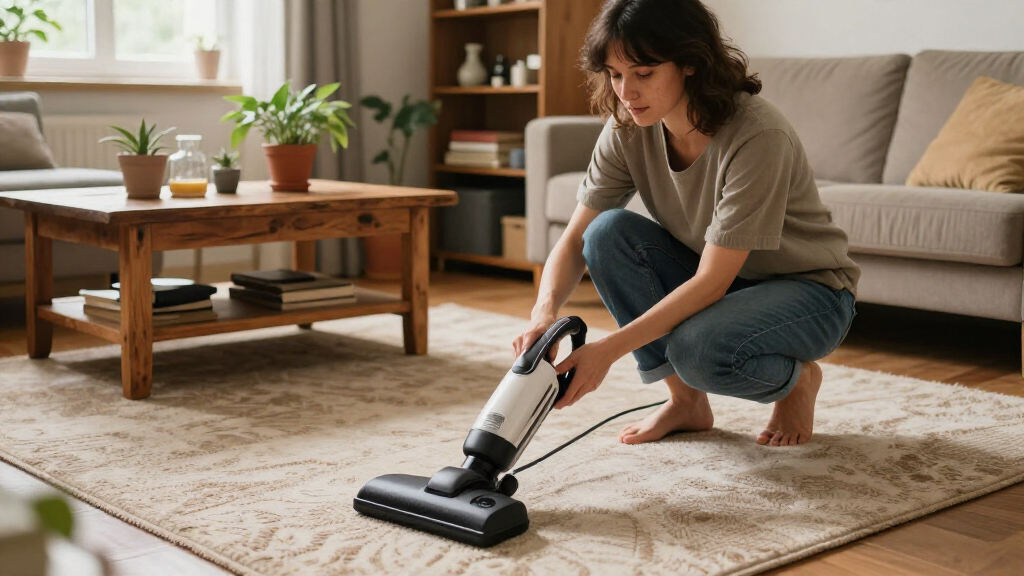
A woman’s mother shared a vacuuming trick called the “postage stamp” method, which involves overlapping small sections for efficient cleaning. The technique is still used today for quick, effective vacuuming.
A simple vacuuming trick known as the “postage stamp” method, taught by a mother decades ago, remains a popular and effective cleaning technique today. This method involves overlapping small sections of carpet or flooring to ensure thorough cleaning without missing spots. The technique’s longevity highlights its practicality and ease of use, making it a staple in many households.
The “postage stamp” vacuuming method was shared by a woman’s mother in her youth and has persisted as a go-to strategy for quick and comprehensive cleaning. It involves dividing the area into small, manageable sections, similar to how one would stamp postage, and vacuuming each section thoroughly before moving on to the next. This approach minimizes missed spots and reduces the need for multiple passes, saving time and effort.
According to the woman, she learned the technique from her mother many years ago, and it has become a staple in her own cleaning routine. She emphasizes that the method is especially useful for those with busy schedules or for quick touch-ups, as it guarantees a more consistent clean with less back-and-forth. The technique’s simplicity and effectiveness have kept it relevant, even amid modern robotic vacuums and advanced cleaning gadgets.
While the “postage stamp” method is not backed by scientific studies, many cleaning experts agree that dividing larger areas into smaller sections can improve thoroughness. Some professional cleaners also endorse similar approaches for detailed cleaning tasks, though they may use different terminology or tools. The technique’s popularity has been reinforced by online sharing and word-of-mouth recommendations over the years.
Why the “Postage Stamp” Technique Endures in Home Cleaning
This technique’s continued use demonstrates that simple, practical methods often outperform complex or high-tech solutions for everyday tasks. It highlights the importance of effective time management and thoroughness in household chores. For many, it offers a reliable way to ensure no spots are missed during vacuuming, especially in high-traffic or cluttered areas. The method’s longevity also underscores the value of traditional knowledge passed through generations, which remains relevant despite technological advances in cleaning devices.
vacuum cleaner with adjustable suction
As an affiliate, we earn on qualifying purchases.
As an affiliate, we earn on qualifying purchases.
Origins and Spread of the “Postage Stamp” Vacuuming Method
The “postage stamp” vacuuming technique originated in households where efficient cleaning was essential, often shared informally among family members. The method gained popularity through anecdotal sharing, with many parents teaching children to clean in small sections to save time and improve results. Over the years, it has been passed down through families and shared on social media, reinforcing its place as a practical household tip.
While there is no formal record of its origin, the concept mirrors traditional cleaning advice that emphasizes dividing tasks into manageable parts. The technique gained renewed attention as people looked for simple, effective ways to maintain cleanliness during busy schedules, especially during periods of increased home occupancy.
Today, many cleaning experts and homemakers continue to recommend this approach, citing its efficiency and ease. It remains a common tip among older generations and has been adopted by newer audiences through online platforms, ensuring its survival as a household staple.
“The postage stamp method makes vacuuming quicker and more thorough. I still use it today, especially when I need a fast clean-up.”
— the woman who shared her mother’s technique
Unclear Aspects of the Technique’s Origin and Modern Adoption
While the technique’s effectiveness is widely acknowledged anecdotally, there is no formal research or historical documentation confirming its precise origin. Its popularity appears to be largely based on personal and familial sharing, with some online communities advocating for its continued use. Additionally, it is unclear how the technique compares in effectiveness to modern robotic vacuums or advanced cleaning tools, which may or may not incorporate similar principles.
It is also uncertain whether the method is universally applicable across different types of flooring or carpet pile, or if modifications are recommended for specific surfaces. More research or expert consensus would clarify these points.
Potential for Broader Adoption and Modern Adaptations
As more people seek simple, effective cleaning strategies, the “postage stamp” method may see renewed interest, especially through social media sharing. Home cleaning experts or companies might develop tutorials or products that incorporate this approach, emphasizing its efficiency. Additionally, further exploration into its effectiveness compared to modern methods could lead to formal endorsements or adaptations for specific flooring types.
In the near term, households may continue to adopt this technique informally, while cleaning professionals and researchers might evaluate its benefits in controlled studies. Its enduring popularity suggests it will remain a part of household cleaning advice for years to come.
Key Questions
Is the “postage stamp” vacuuming method suitable for all types of flooring?
The technique generally works well for carpets and rugs, but may require adjustments for hard floors or delicate surfaces. It’s best to vacuum in overlapping small sections suited to your flooring type.
Does this method save time compared to traditional vacuuming?
Yes, dividing the area into small sections often results in quicker, more thorough cleaning, especially for high-traffic areas or when doing quick touch-ups.
Can this technique be used with robotic vacuum cleaners?
Most robotic vacuums operate independently, but understanding this method can help in manually guiding or supplementing robotic cleaning for better coverage.
Is there scientific evidence supporting this vacuuming approach?
There is limited scientific research specifically on this technique, but it aligns with general principles of dividing tasks into manageable parts for better results.
How did this technique originate?
It was shared informally within families, often passed from mothers to children, and has persisted as a practical household tip over decades.
Source: rss
Halloween Picks
halloween
As an affiliate, we earn on qualifying purchases.