Many off-grid stories highlight how people embrace self-sufficiency by harnessing solar power, collecting rainwater, and managing resources carefully. You might find themselves living in remote cabins, relying on renewable energy, and conserving water daily. These experiences reveal resilience, independence, and harmony with nature. If you want to discover real-life examples of how others create sustainable, eco-friendly lifestyles far from urban life, there’s more to explore just ahead.
Key Takeaways
- Many off-grid dwellers share stories of overcoming challenges with renewable energy and water conservation.
- Personal accounts highlight the peace and self-sufficiency gained from living close to nature.
- Stories often detail resource management strategies, like rainwater harvesting and solar power use.
- Off-grid residents describe the lifestyle shift towards sustainability and reduced environmental impact.
- Experiences emphasize patience, resilience, and the deep connection to natural rhythms and ecosystems.
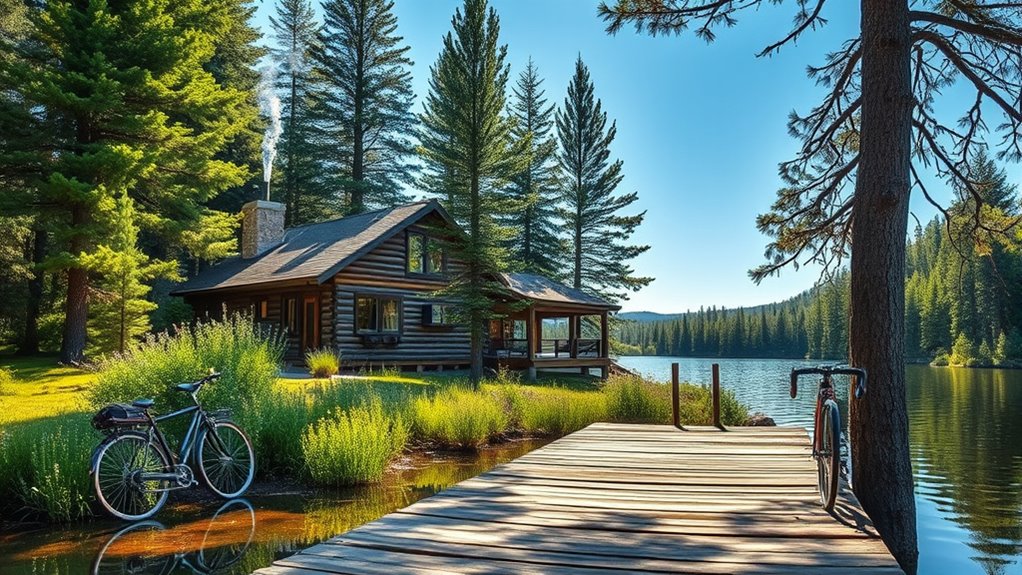
Have you ever wondered what it’s like to live completely off the grid? Imagine waking up in a cozy cabin nestled deep in the woods, where sunlight streams through your windows and the only sounds are birdsong and rustling leaves. Living off-grid means relying on renewable resources like solar power to meet your energy needs. You install solar panels on your roof, capturing the sun’s rays to generate electricity for lights, appliances, and even small gadgets. It’s empowering to know that you’re harnessing a free, renewable source instead of depending on the grid. But managing your water supply becomes just as vital as generating power. Water conservation isn’t just a buzzword here; it’s a way of life. You learn early on to be mindful about every drop. You might collect rainwater in large barrels, filtering it for drinking and cooking, and use gray water for watering your garden. Every day, you’re conscious of reducing waste and making your water last longer. This often means taking shorter showers, fixing leaks promptly, and installing low-flow fixtures. It’s a simple shift that makes a significant difference, especially when resources are limited. Living off-grid pushes you to develop a close relationship with your environment—your water and energy sources are finite, so you become more resourceful. You plan your energy use around sunlight hours, turning off unnecessary appliances and conserving power during cloudy days. Solar power doesn’t just keep your lights on; it teaches you patience and respect for nature’s rhythms. Similarly, water conservation extends beyond just saving water; it’s about understanding the delicate balance of your ecosystem. You learn to anticipate your needs, collecting enough rainwater during the rainy season to last through the dry spells. Additionally, understanding newborn safety guidelines and monitoring your environment can help ensure a safe living space. When you’re off-grid, everyday choices take on new significance. You’re not just living sustainably; you’re becoming more connected to the natural world, realizing the importance of every resource. Your reliance on solar power and water conservation becomes a daily practice, fostering self-sufficiency and resilience. It’s challenging at times, but the rewards far outweigh the inconveniences. You gain a sense of independence and peace, knowing you’re minimizing your environmental footprint. Over time, these habits become second nature, shaping a lifestyle that’s simple yet deeply fulfilling. Living off-grid with solar power and water conservation isn’t just about survival—it’s about embracing a way of life that’s respectful of the planet and liberating in its own right.
Frequently Asked Questions
How Do Off-Grid Homes Handle Emergency Services?
In off-grid homes, you handle emergency services by preparing for solar emergencies and communication challenges. You install backup power sources like generators or solar batteries to keep systems running. You also use satellite phones or radio communication for reliable contact when cell service fails. By planning ahead, you guarantee quick access to emergency services despite the limited connectivity, keeping you safe and connected during unexpected situations.
What Are the Legal Requirements for Off-Grid Living?
You need to check local zoning restrictions and building permit requirements before living off-grid. These laws vary widely and may restrict certain structures or water and sewage systems. You might need special permits or variances to legally establish your off-grid home. Always consult your local authorities to confirm compliance, as failure to meet these legal requirements could result in fines or orders to dismantle your setup.
How Do Off-Grid Residents Access Healthcare?
You might think off-grid residents are cut off from healthcare, but they often access medical supplies through local stores or online orders. Telemedicine options are increasingly popular, allowing you to consult with doctors remotely via internet or phone. You’ll need to plan ahead for emergencies by having a well-stocked first aid kit and knowing local clinics or emergency services, ensuring you get care when you need it most.
What Are the Long-Term Financial Costs Involved?
You’ll face long-term costs like maintaining renewable energy systems, water sources, and emergency supplies. Sustainable investments in solar panels or wind turbines can reduce ongoing expenses, but initial setup costs might be high. Keep an eye on renewable incentives, which can help offset these costs over time. Regular upkeep and upgrades are essential, so plan for these ongoing expenses to make sure your off-grid living remains financially sustainable in the long run.
How Do Off-Gridders Maintain Social Connections?
You stay connected by engaging in community building through local events or online groups, despite living off-grid. While you might be miles from neighbors, outdoor activities like hiking or communal projects help forge bonds. You share skills, swap stories around campfires, and participate in local gatherings, creating a sense of belonging. These efforts make it easier to maintain social connections, blending solitude with the warmth of a close-knit community.
Conclusion
Living off-grid is like tending a tiny, wild garden—you nurture it with care, patience, and resilience. Each challenge is a weed you pull, each success a blossom you cherish. As you carve out your own space away from the chaos, you grow stronger and more self-reliant. Remember, this journey isn’t about perfection; it’s about crafting a life that blooms in harmony with nature’s rhythm. Keep tending your unique garden—you’re creating something truly beautiful.