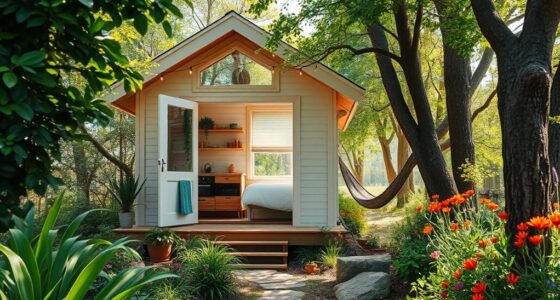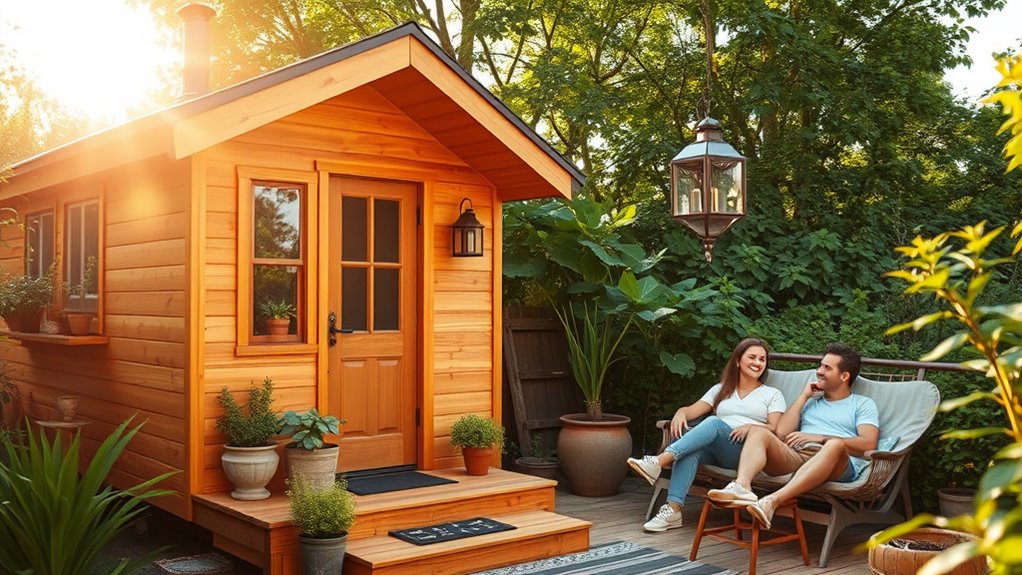

Living in a tiny house teaches you to prioritize what truly matters, helping you embrace minimalism and intentional living. You’ll learn to use space creatively, making every inch count while reducing clutter and stress. This lifestyle encourages you to focus on experiences and relationships over possessions, fostering mental clarity and contentment. By adopting this approach, you’ll discover that less truly can be more, leading to a more fulfilling and freeing life. Keep exploring for more insights.

Get compact home essentials delivered free — and shop member deals
- Fast, free delivery on millions of items
- Access to Prime Big Deal Days deals on October 6–7
- Prime Video, Amazon Music and more included
Key Takeaways
- Prioritizing experiences over possessions fosters greater happiness and fulfillment.
- Efficient use of space encourages creativity and resourcefulness in daily living.
- Minimalism promotes mental clarity, reducing clutter for improved well-being.
- Deliberate choices about belongings lead to a more intentional, purpose-driven lifestyle.
- Embracing simplicity cultivates freedom, contentment, and ongoing personal growth.
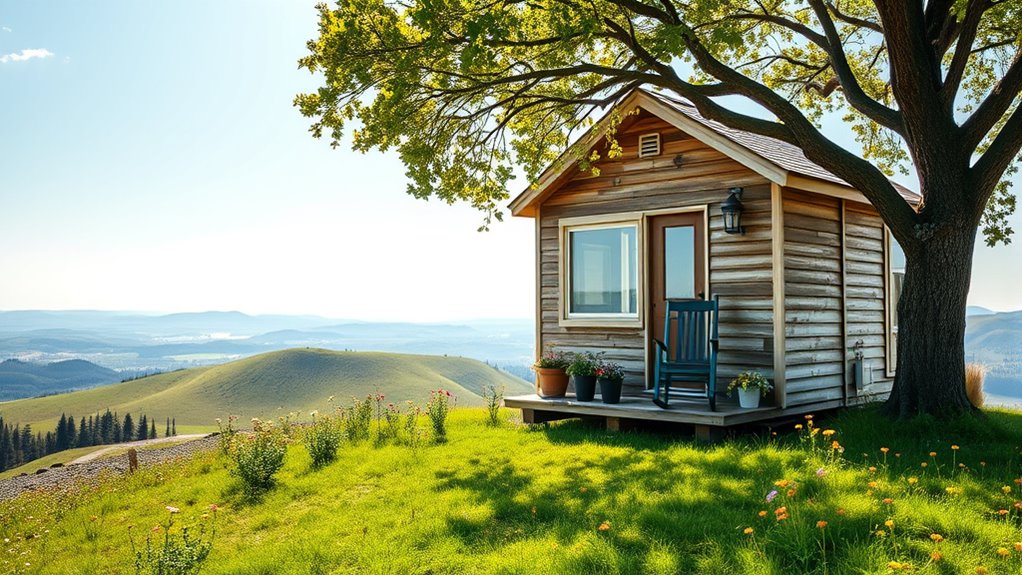
Living full-time in a tiny house can teach you more than just how to maximize limited space; it challenges you to rethink what you really need and how you prioritize your life. When you live in a space where every square foot counts, you quickly learn the importance of space efficiency. You start to see that clutter doesn’t just take up physical room—it also drains mental energy. With less space to store unnecessary belongings, you develop a minimalist mindset, focusing on quality over quantity and only holding onto items that truly add value to your life. This shift isn’t just about decluttering; it’s about redefining your relationship with possessions and understanding that happiness doesn’t come from accumulating things.
Living tiny teaches you to value space, prioritize essentials, and find happiness beyond possessions.
As you adapt to a tiny house, you become more intentional with your choices. You think twice before bringing something new into your space, considering whether it’s practical, meaningful, or just a fleeting desire. This intentionality translates into other areas of your life, encouraging you to prioritize experiences over possessions. You might find yourself spending more time outdoors, engaging in hobbies, or simply enjoying quiet moments without the clutter of excess. Living tiny compels you to strip away the non-essential, helping you focus on what truly matters.
The need for space efficiency also fosters creativity. You learn to make the most of multifunctional furniture, clever storage solutions, and creative layouts. Every item is carefully selected to serve multiple purposes, and you become resourceful in finding ways to optimize your environment. This mindset of making every inch count extends beyond your home—it influences how you plan your days, manage your time, and set your priorities. You discover that living with less can lead to a richer, more fulfilling life, free from the burdens of excess.
Moreover, embracing a minimalist mindset isn’t just about physical space; it’s a mental shift. You become more mindful of your consumption habits, recognizing that true contentment comes from within rather than from material possessions. Living tiny teaches you that simplicity can bring clarity, peace, and freedom. It’s about valuing experiences and relationships over possessions, and understanding that the freedom to live intentionally is one of the greatest lessons of tiny living. Recognizing the importance of space efficiency can inspire you to continually seek better ways to simplify and enrich your life, both physically and mentally.
multi-functional furniture for small spaces
As an affiliate, we earn on qualifying purchases.
As an affiliate, we earn on qualifying purchases.
Frequently Asked Questions
How Do Tiny House Dwellers Handle Emergency Situations?
When an emergency happens, you rely on solid safety protocols and emergency preparedness. You keep a well-stocked emergency kit, know your escape routes, and stay alert to local alerts. You also communicate plans with others, ensuring everyone knows what to do. By practicing safety protocols regularly, you handle emergencies swiftly and calmly, minimizing risks. Staying prepared helps you protect yourself and your belongings, no matter what surprises come your way.
What Are the Most Common Challenges Faced Full-Time Tiny House Residents?
You’ll find that storage solutions and utility management are top challenges for full-time tiny house residents. About 60% struggle with limited space, making organization essential. You need clever storage ideas to maximize every inch and efficient utility management to handle water, electricity, and waste. These challenges require creativity and planning, but overcoming them helps you enjoy the freedom and simplicity that come with tiny house living.
How Do Tiny House Dwellers Manage Privacy and Personal Space?
You manage privacy boundaries and personal space by setting clear rules for yourself and your household. Use multi-functional furniture, curtains, or screens to create designated zones, making your space feel more private. Communicate openly with housemates or visitors about boundaries, and respect theirs too. Establish routines that help you carve out personal time, ensuring you feel comfortable and secure within your tiny home.
What Are the Legal and Zoning Issues for Tiny House Living?
You need to navigate zoning restrictions and obtain the necessary legal permits to live in a tiny house legally. Zoning laws vary by location and may restrict tiny houses on wheels or limit their placement. Always research local regulations, apply for permits, and check if your property zoning allows for tiny house living. Staying informed and compliant helps you avoid fines or legal issues, making your tiny home lifestyle smoother.
How Do Tiny House Dwellers Sustain Social Connections and Community?
You can sustain social connections by actively participating in community building and social activities. Attend local events, join tiny house groups online, or organize meet-ups with neighbors. Volunteering and sharing resources foster bonds, while regular gatherings create a sense of belonging. By engaging with others and taking initiative in social activities, you build meaningful relationships that support your tiny house lifestyle and enrich your everyday experience.
Conclusion
Living in a tiny house teaches you that life isn’t about having more space, but about making room for what truly matters. Like a skilled gardener tending a small but vibrant plot, you learn to nurture what’s essential and let go of the rest. Embrace simplicity, adaptability, and intentional living—these lessons help you cultivate happiness in the smallest spaces. Remember, sometimes the most meaningful growth happens in the tiniest of gardens.
Fall Picks
fall essentials
As an affiliate, we earn on qualifying purchases.