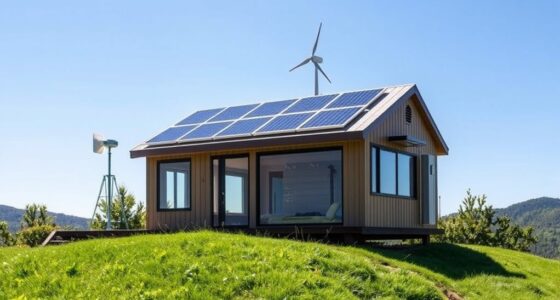
To optimize passive solar tiny home design, focus on orienting your home toward the winter sun to maximize sunlight and warmth. Avoid strong cold winds by positioning your home to minimize exposure or using natural windbreaks like trees or structures. Balancing sun exposure with wind protection is key to comfort and efficiency. A well-thought-out orientation harnesses solar gain while shielding against harsh gusts. Keep exploring to discover how site features and landscape elements can further improve your tiny home’s energy performance.

Get compact home essentials delivered free — and shop member deals
- Fast, free delivery on millions of items
- Access to Prime Big Deal Days deals on October 6–7
- Prime Video, Amazon Music and more included
Key Takeaways
- Facing the home toward the sun maximizes winter solar gain for natural heating.
- Slightly angled or offset orientation balances solar exposure and wind protection.
- Site features like trees and hills influence optimal orientation for solar and wind benefits.
- Proper orientation minimizes wind exposure, reducing heat loss and increasing energy efficiency.
- Balancing solar gain with wind protection creates a comfortable, energy-efficient tiny home environment.

However, solar gain isn’t the only factor at play. Wind exposure also plays an essential role in your tiny home’s comfort and energy efficiency. If your house faces strong prevailing winds, it can lead to heat loss, reducing the benefits of passive solar gain. Consequently, positioning your tiny house to minimize wind exposure is vital. You might choose a site where natural windbreaks, such as trees, hills, or existing structures, shield your home from harsh gusts. This reduces the need for additional heating and preserves the warmth gained through solar orientation. Additionally, understanding Free Floating design principles can help you adapt your site layout to better suit natural elements like wind and sunlight. While maximizing solar gain often means facing your home toward the sun, it’s equally important to take into account local wind patterns. For example, incorporating landscape features that serve as windbreaks can significantly improve energy efficiency by blocking cold drafts. In areas with strong, cold winds, you may want to orient your tiny house to block prevailing winds or incorporate landscape features that serve as windbreaks. This strategic placement helps maintain a stable indoor temperature and reduces energy consumption for heating. Additionally, the microclimate of your site influences how you should orient your tiny home. If your property is on a slope, near water, or surrounded by dense vegetation, these elements can impact sunlight and wind flow. You might need to adjust your house’s orientation accordingly to optimize solar gain and reduce wind exposure. Considering local topography can further refine your site planning and orientation choices. Sometimes, a slightly angled or offset orientation can provide the best balance, capturing the winter sun while avoiding cold drafts from prevailing winds. Recognizing local climate factors can further refine your site planning and orientation choices. Moreover, understanding the thermal mass of nearby natural features can help you harness or mitigate heat transfer to benefit your home’s energy efficiency. In essence, the most vital orientation for passive solar tiny design balances maximizing solar gain with minimizing wind exposure. It’s about finding that sweet spot where your home receives ample sunlight during winter, stays cool enough in summer, and stays protected from harsh winds year-round. By carefully considering these factors, you create a cozy, energy-efficient tiny home that harnesses natural elements to your advantage.
passive solar tiny house windows
As an affiliate, we earn on qualifying purchases.
As an affiliate, we earn on qualifying purchases.
Frequently Asked Questions
How Does Local Climate Influence Optimal Passive Solar Orientation?
You should consider your local climate because it influences the solar path and shading strategies. In colder climates, orient your tiny home to maximize southern sun exposure, capturing warmth during winter. In warmer areas, position the building to minimize direct sunlight and reduce cooling needs. Understanding the solar path helps you plan effective shading strategies, like overhangs or shading devices, ensuring your passive solar design stays energy-efficient and comfortable year-round.
Can Orientation Adjustments Improve Energy Efficiency in Existing Tiny Homes?
Like a master sculptor refining their masterpiece, you can improve your tiny home’s energy efficiency through orientation adjustments. By adding roof shading to block unwanted heat and optimizing window placement for solar gain, you enhance passive solar benefits. Even after construction, these tweaks help harness the sun’s power more effectively, reducing energy use. Small changes in orientation can make a significant difference, turning your tiny house into an energy-efficient sanctuary.
What Are Common Mistakes When Choosing Passive Solar Orientation?
A common mistake is ignoring solar gain potential by not aligning your tiny home to maximize sunlight during winter while minimizing overheating in summer. You might also overlook shading strategies that prevent excessive heat, which can reduce energy efficiency. Failing to take into account seasonal variations in sun angles can lead to poor passive solar performance. Focus on optimizing orientation to enhance solar gain in winter and incorporate shading to keep your tiny home comfortable year-round.
How Does Surrounding Landscape Affect Passive Solar Design?
Your surrounding landscape considerably impacts passive solar design by influencing landscape features and shading patterns. Tall trees, hills, or buildings can create shade, reducing solar gain, while open spaces allow more sunlight. Properly analyzing these features helps you optimize window placement and shading devices, ensuring your tiny home captures maximum solar energy in winter and minimizes overheating in summer. Adjusting your design based on landscape features enhances comfort and energy efficiency year-round.
Is Orientation More Important Than Insulation in Passive Solar Tiny Homes?
Orientation is more important than insulation because it directly influences solar panel placement and interior layout, maximizing passive solar gains. Properly orienting your tiny home ensures sunlight warms your space naturally, reducing energy needs. While insulation helps retain heat, the right orientation guarantees sunlight exposure and shading, improving overall efficiency. Focus on facing your home toward the sun to enhance natural heating and lighting, making your tiny home more sustainable and comfortable.
Conclusion
Just like the wise owl knows the best perch, choosing the right orientation for your tiny home guides the sun’s warmth and light exactly where you need it. Remember, your home’s positioning isn’t just about luck — it’s about harnessing nature’s power, much like the ancient mariner reads the stars. By paying attention to orientation, you turn your tiny space into a sanctuary of comfort and efficiency, proving that sometimes, the simplest choices make the biggest difference.
Halloween Picks
halloween
As an affiliate, we earn on qualifying purchases.