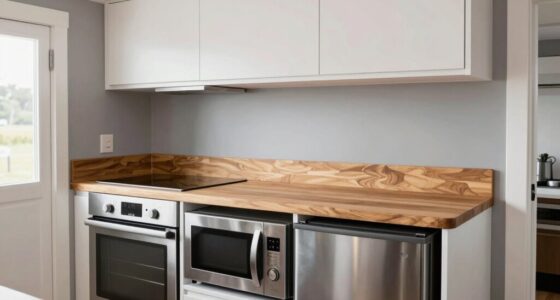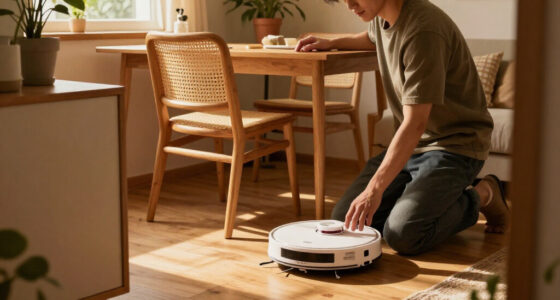

To minimize appliance noise in your tiny house, strategically position noisy devices away from living and sleeping areas, such as placing dishwashers and laundry machines in insulated, separate zones. Use buffer zones, like storage or shelving, between appliances and quiet spaces. Install soundproof panels, acoustic foam, or vibration pads to reduce sound transmission. Sealing gaps and weatherstripping doors also prevents noise leakage. Continue exploring how these techniques can help create a peaceful, functional layout for your tiny home.

Get compact home essentials delivered free — and shop member deals
- Fast, free delivery on millions of items
- Access to Prime Big Deal Days deals on October 6–7
- Prime Video, Amazon Music and more included
Key Takeaways
- Position noisy appliances in separate, insulated zones or utility closets to contain sound.
- Use soundproofing materials like acoustic panels or foam near appliances to absorb vibrations.
- Place appliances on rubber pads or mats to minimize vibration transfer to walls and floors.
- Create buffer zones with storage or shelving between noisy appliances and living or sleeping areas.
- Design the layout to maximize distance between appliances and quiet zones for effective noise control.
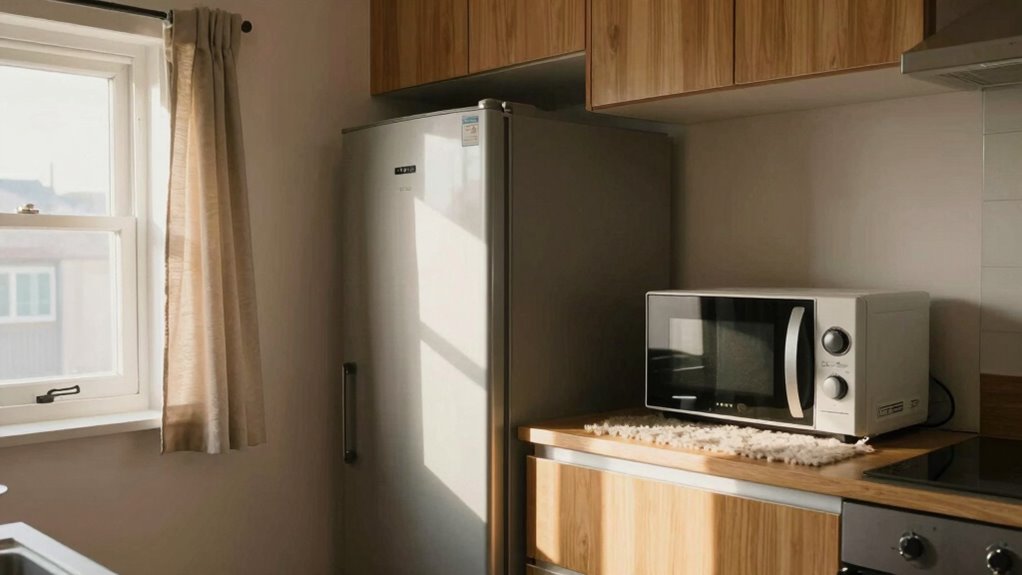
Have you ever worried that appliance noise might disrupt your tiny house’s tranquility? If so, you’re not alone. Creating a peaceful living space in a small home means managing sound carefully. One of the most effective ways to do this is by using soundproofing techniques and thoughtful appliance placement. These strategies help keep noise contained and prevent it from spreading throughout your space, allowing you to enjoy quiet moments even when appliances are running. Incorporating vehicle protection accessories such as soundproof covers can also be a helpful addition to further reduce noise transmission.
Soundproofing techniques are essential in a tiny house because space is limited, and sound can easily travel. Start by adding insulation within walls, floors, and ceilings to absorb sound vibrations. Use soundproof panels or acoustic foam in walls adjacent to noisy appliances, especially in areas like the kitchen or laundry zone. Weatherstripping doors and sealing gaps around windows can also prevent sound from leaking out. Additionally, consider installing a floating floor or adding mass-loaded vinyl beneath flooring to dampen vibrations. These measures don’t require much space but remarkably improve the overall noise environment.
Appliance placement is equally critical. Position noisy appliances away from main living areas and bedrooms. For example, locate the washing machine and dishwasher in a utility closet or bathroom to minimize their impact on your relaxing space. If that’s not possible, create a buffer zone with storage or shelving between the appliance and the living zone. Also, try to place appliances on rubber pads or mats to reduce vibration transfer. When installing the refrigerator, choose a spot that’s not directly against a shared wall with your sleeping area. This simple adjustment can make a noticeable difference in maintaining a peaceful atmosphere.
Combining soundproofing techniques with strategic appliance placement maximizes noise control. For instance, placing the dishwasher in a corner with insulated walls and adding acoustic panels nearby can drastically cut down the noise. Similarly, situating the laundry area in a separate room or pocket that’s well-insulated can prevent vibrations from traveling into your living space. Remember, the goal is to create a layout that isolates noisy appliances while keeping your daily routines smooth and unobtrusive.
soundproof panels for appliances
As an affiliate, we earn on qualifying purchases.
As an affiliate, we earn on qualifying purchases.
Frequently Asked Questions
How Can I Measure Appliance Noise Levels Before Installation?
To measure appliance noise levels before installation, you can use a decibel meter, which provides precise readings. Place the meter near the appliance’s intended location during testing. Consider vibration dampening pads to reduce noise transmission and acoustic barriers to block sound. These tools help you assess potential noise, ensuring your tiny house remains a peaceful space. Always compare measurements to local noise regulations for ideal planning.
Are There Specific Appliances Known for Quieter Operation?
Yes, some appliances are known for quieter operation, especially those with noise-canceling features. Look for dishwashers, refrigerators, and washing machines designed with sound-dampening technology. When planning your tiny house layout, place noisy appliances away from sleeping or relaxing areas. Proper appliance placement, combined with models featuring noise-canceling features, helps reduce disruptions. Choosing quieter appliances ensures a peaceful environment without sacrificing functionality.
What Are Cost-Effective Soundproofing Options for Tiny Houses?
Soundproofing your tiny house is like giving it a quiet shield—cost-effective options include strategic appliance placement and simple acoustic treatments. Position noisy appliances away from sleeping areas, and use DIY solutions like weatherstripping, rugs, or wall panels to absorb sound. These affordable measures reduce noise effectively, making your tiny house a peaceful retreat without breaking the bank. Embrace these steps to create a cozy, quiet sanctuary.
How Does Insulation Impact Appliance Noise in Small Spaces?
Insulation plays a key role in reducing appliance noise in your tiny house by enhancing soundproofing. Using soundproof materials, like foam panels or mineral wool, absorbs noise effectively, preventing it from traveling through walls and floors. Proper insulation creates a barrier that boosts noise absorption, making your living space quieter. Focus on installing quality insulation around appliances to minimize disruption and improve overall comfort in your small space.
Can Smart Technology Reduce Appliance Noise Disruptions?
Yes, smart technology can reduce appliance noise disruptions effectively. You can use smart sensors to detect noise levels and automatically activate noise cancellation features, creating a quieter environment. While some might worry about setup complexity, many systems are user-friendly and customizable. Imagine a tiny house where appliances work seamlessly, and smart sensors keep noise at bay, ensuring peaceful living even during busy kitchen moments.
Conclusion
Planning around appliance noise in your tiny house might seem tricky, but it’s definitely doable. By thoughtfully placing noisy appliances away from sleeping or relaxing areas and choosing quieter models, you can create a peaceful retreat. Some might worry about sacrificing space or style—yet, with clever design, you can balance comfort and functionality. Remember, a little extra planning now guarantees a cozy, quiet home that truly feels like your sanctuary, free from unwanted noise disturbances.
Halloween Picks
halloween
As an affiliate, we earn on qualifying purchases.