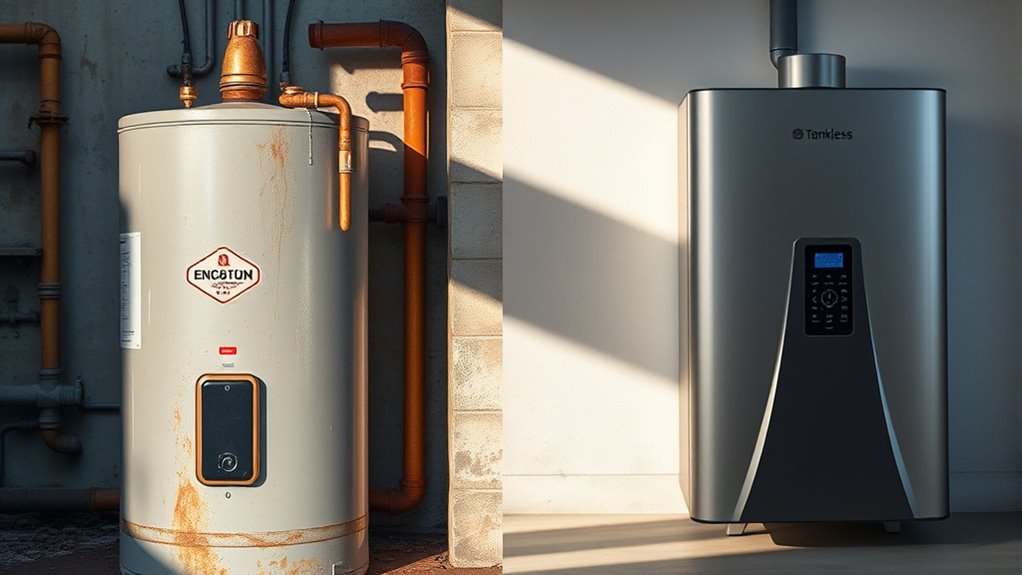

Imagine choosing between two paths in a forest, each promising different benefits and consequences; your decision can shape your home’s environmental footprint. Tank and tankless water heaters present such a crossroads, with their own impacts on energy use and sustainability. As you weigh your options, understanding how each system affects the environment can help you make a more informed choice—one that aligns with your values and long-term goals.

Get compact home essentials delivered free with Prime
- Fast, free delivery on millions of items
- Prime Video, Amazon Music and more included
- Member-only deals all year
Key Takeaways
- Tankless water heaters reduce energy consumption by heating water on demand, lowering greenhouse gas emissions.
- Traditional tanks continuously heat water, leading to higher standby energy loss and environmental impact.
- Tankless units have a longer lifespan and produce less waste, decreasing landfill contribution.
- Initial installation of tankless systems may require infrastructure upgrades, impacting overall environmental benefits.
- For high water demand households, multiple tankless units optimize efficiency but may increase environmental footprint during setup.
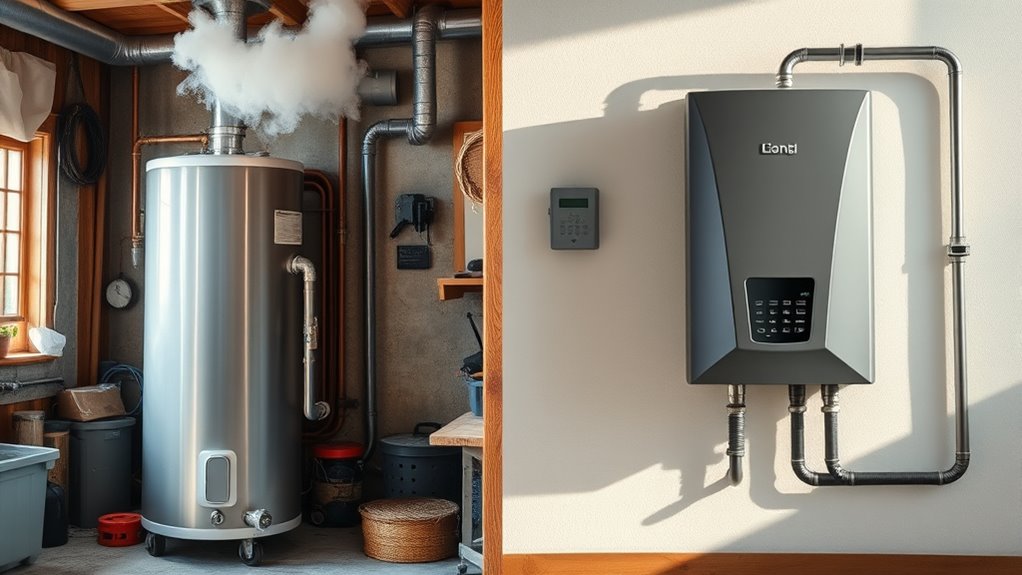
Are you trying to decide between a tank and a tankless water heater? When it comes to environmental impact, understanding the differences in energy efficiency and installation costs can help you make an informed choice. Tankless water heaters are generally more energy-efficient because they only heat water on demand, which means there’s less standby energy loss compared to traditional tank models that constantly keep a large volume of water heated. This efficiency translates into lower energy bills over time and reduces your carbon footprint, making tankless units a greener option. However, the initial investment can be higher due to installation costs, especially if your home needs upgrades to support the newer technology. Some homes require larger gas lines or upgraded electrical systems for tankless units, which can add to the upfront expense. Despite the higher installation costs, many homeowners find the long-term savings and environmental benefits outweigh the initial outlay.
Tankless water heaters save energy and reduce your carbon footprint despite higher installation costs.
On the other hand, traditional tank water heaters tend to have lower installation costs upfront because they are simpler to install in most homes. They come in standard sizes and don’t require significant modifications to your existing plumbing or electrical systems. However, their energy efficiency suffers because they heat and reheat water constantly, even when you’re not using it. This continuous energy consumption leads to higher operating costs and increased environmental impact over time. If you’re looking for a more eco-friendly option with a smaller initial investment, a tank model might seem appealing. But keep in mind, the ongoing energy expenses will likely be higher, and you’ll be contributing more to greenhouse gas emissions.
Choosing between these two options also depends on your household’s hot water demand. If you have a large family or use a lot of hot water at once, a tankless heater might struggle to keep up unless you install multiple units, which increases costs. Conversely, a tank heater can store enough hot water for multiple simultaneous uses but at the expense of higher energy consumption. When evaluating environmental impact, consider that tankless heaters typically have a longer lifespan and fewer parts prone to wear and tear, reducing waste and replacement frequency. Meanwhile, traditional tanks may need more frequent replacements, contributing to landfill waste.
Ultimately, your decision should weigh the initial installation costs against long-term energy efficiency and environmental benefits. If you’re aiming to minimize your carbon footprint and save on energy bills, a tankless water heater is likely the better choice. But if budget constraints are tight and your water needs are modest, a traditional tank heater might suffice. Regardless of your choice, understanding these factors helps you select a system that aligns with your environmental values and financial situation.
tankless water heater energy efficient
As an affiliate, we earn on qualifying purchases.
As an affiliate, we earn on qualifying purchases.
Conclusion
Choosing between tank and tankless water heaters isn’t just about cost—it’s about your impact on the environment. Will you stick with the traditional, steady energy drain, or embrace the on-demand efficiency that could change your home’s footprint? The decision you make today could shape a greener tomorrow. So, what’s your move? The future of sustainable living may depend on the choice you make now—are you ready to take the leap?
Halloween Picks
halloween
As an affiliate, we earn on qualifying purchases.