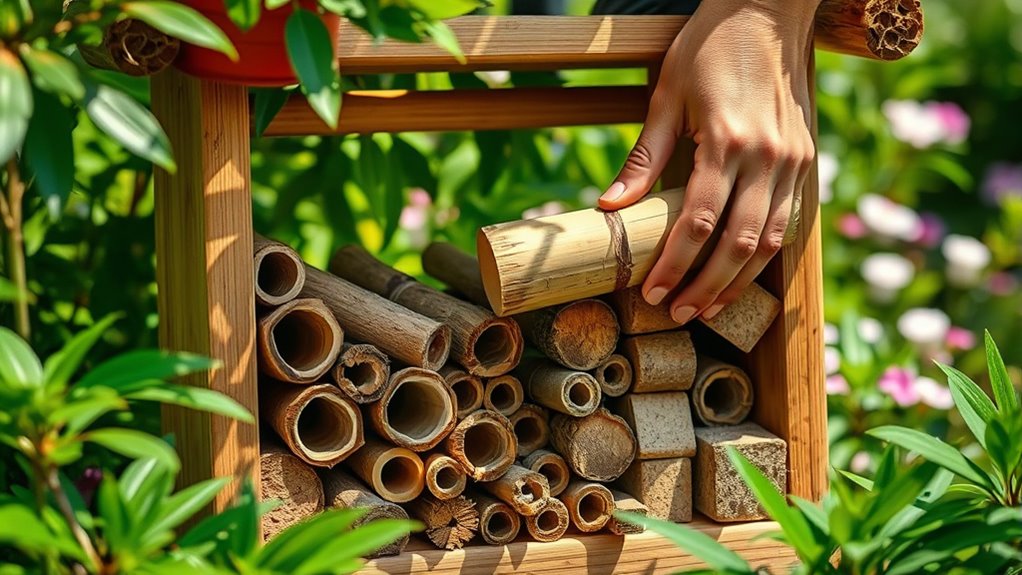

Did you know that creating a designated shelter for pollinators can considerably boost the health of your garden? Many people overlook how simple it is to build a pollinator hotel that attracts beneficial insects like bees and butterflies. Proper placement, materials, and maintenance are key, but many don’t realize all the considerations involved. If you want to support local pollinators effectively, understanding these steps can make a real difference—so, let’s explore how to build one together.

Get compact home essentials delivered free with Prime
- Fast, free delivery on millions of items
- Prime Video, Amazon Music and more included
- Member-only deals all year
Key Takeaways
- Select a sunny, sheltered location with good exposure to flowering plants and minimal disturbance.
- Construct a weather-resistant box using untreated wood, filled with hollow stems or drilled wood blocks of various sizes.
- Mount the hotel 3–5 feet high on a sturdy post, ensuring stability and protection from predators and moisture.
- Incorporate native plants that bloom throughout the season to attract and support pollinators.
- Regularly clean and maintain the hotel, replacing nesting materials and removing debris to promote healthy pollinator populations.

Creating a pollinator hotel is a simple yet effective way to support local bees, butterflies, and other beneficial insects. By providing a safe space for native bees and other pollinators, you help sustain healthy ecosystems and promote sustainable gardening practices. These habitats are especially important because many native bee populations are declining due to habitat loss and pesticide use. Building a pollinator hotel is an accessible project that can be customized to fit your space and climate, offering essential shelter for these critical creatures.
Start by choosing a suitable location for your hotel. Aim for a spot that gets plenty of sunlight, ideally facing south or southeast, to encourage pollinator activity. It should be sheltered from strong winds and rain, perhaps near flowering plants that bloom throughout the growing season. Avoid placing it near pesticides or heavily trafficked areas that might disturb the insects. Once you’ve selected a site, gather your materials, including untreated wood, bamboo, and natural materials that mimic native bee habitats. The goal is to create a variety of nesting options so different species can find suitable spots.
Constructing the hotel involves assembling a box or frame from sturdy, weather-resistant wood. Fill this with different nesting materials, such as hollow stems, bundles of bamboo, or drilled holes in wood blocks. The key is to provide a range of hole sizes—typically between 1/8 inch and 1/2 inch in diameter—to accommodate various native bee species. Mount the hotel on a sturdy post or structure, ensuring it’s elevated about 3 to 5 feet off the ground to keep it safe from predators and moisture. Position it in a way that it won’t be shaded by trees or buildings, maximizing sun exposure during the day.
To support sustainable gardening, incorporate native plants around your hotel that bloom at different times of the year. These plants will attract pollinators to your garden and provide additional nectar and pollen sources. Regularly clean and maintain the hotel by removing debris and replacing nesting materials if necessary, but avoid disturbing active nests during the season. By creating a welcoming environment for native bees and other pollinators, you help preserve biodiversity and foster a resilient, thriving garden ecosystem. This simple project not only benefits pollinators but also enriches your garden, making it more vibrant and productive year-round.
As an affiliate, we earn on qualifying purchases.
Conclusion
Now that you’ve assembled your pollinator hotel, the real magic begins. Watch as buzzing visitors arrive, transforming your garden into a thriving haven. But remember, this is just the start—your hotel’s success depends on ongoing care and observation. Will your efforts attract the diverse pollinators needed to sustain your garden’s health? The journey to a vibrant, balanced ecosystem is unfolding. Stay attentive, and let nature surprise you in ways you never expected.
Halloween Picks
halloween
As an affiliate, we earn on qualifying purchases.