
To choose smart appliances for your eco-home, prioritize models with ENERGY STAR labels that use less power without sacrificing performance. Opt for devices with smart technology that allows you to monitor and manage energy use remotely, helping to cut down waste. Make sure they integrate well with your existing home system for seamless automation, and look for features like energy consumption tracking to identify further savings. Keep exploring to discover how these optimizations can boost your sustainability efforts.
Key Takeaways
- Prioritize ENERGY STAR-certified appliances to ensure optimal energy efficiency and eco-friendly performance.
- Select smart devices with energy consumption tracking to monitor and optimize household energy use.
- Ensure compatibility with existing smart home systems for seamless automation and enhanced efficiency.
- Choose appliances with built-in automation features that adapt to your household schedule to reduce waste.
- Opt for models with remote control and voice integration for convenient energy management and reduced unnecessary usage.
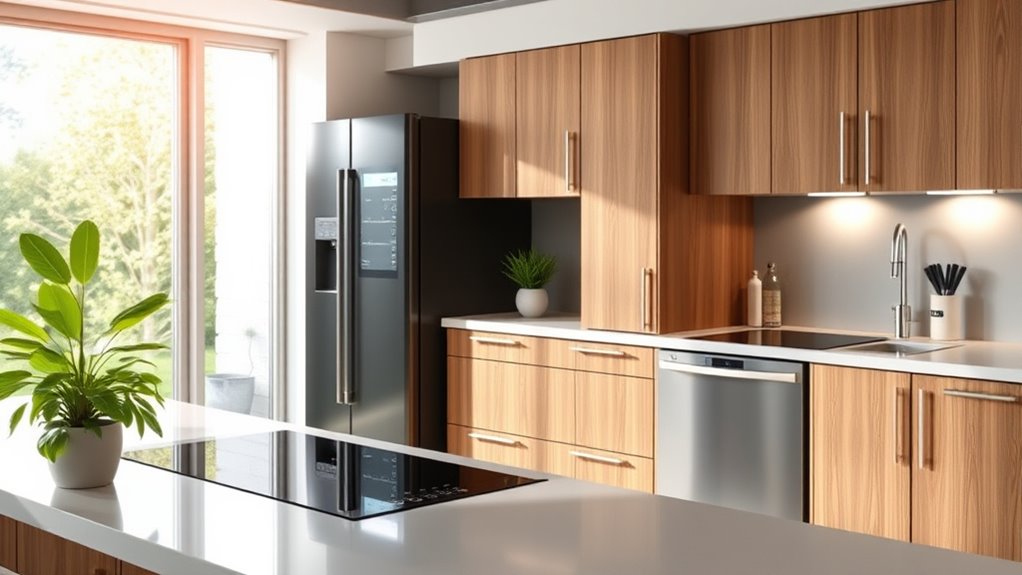
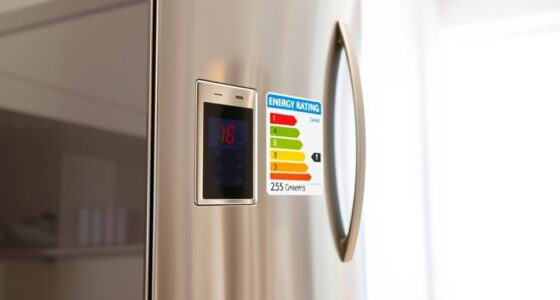
If you’re aiming to make your home more eco-friendly, choosing the right smart appliances is a crucial step. These devices can considerably reduce your energy consumption while providing convenience and control. When selecting smart appliances, prioritizing energy efficiency is key. Look for models that are ENERGY STAR certified or have clear energy-saving labels, as they are designed to use less power without sacrificing performance. Incorporating smart technology into your appliances allows you to monitor and manage their energy use in real-time, helping you make informed decisions that cut unnecessary waste.
Smart technology enhances your ability to optimize your household’s energy consumption. For example, smart thermostats learn your schedule and adjust heating or cooling accordingly, ensuring you’re not wasting energy when no one’s home or during sleeping hours. Similarly, smart lighting systems can be programmed or remotely controlled to turn off when not in use, reducing electricity bills and environmental impact. These devices often come with apps or voice control, giving you seamless management from your smartphone or smart home hub, so you don’t have to remember to switch things off manually.
Smart tech like thermostats and lighting helps optimize energy use effortlessly.
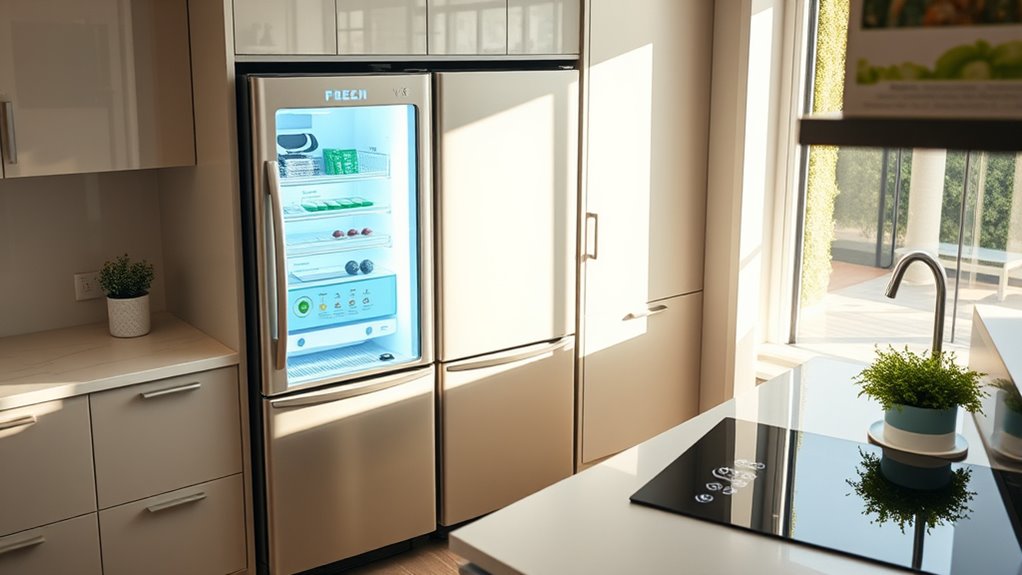
When choosing smart appliances, consider their compatibility with your existing smart home ecosystem. Seamless integration allows you to automate routines, such as scheduling laundry to run during off-peak hours or setting your refrigerator to optimize cooling based on usage patterns. This interconnectedness maximizes energy efficiency and enhances overall convenience. Many smart appliances also feature energy consumption tracking, giving you insights into usage patterns and helping you identify areas where you can improve efficiency further. Additionally, investing in smart utilities can further enhance your home’s overall energy management, leading to even greater savings and environmental benefits.

Electricity Saving Box Energy Power Savings Device to Reduce Electric Bill Power Energy Electricity Factor Saver Smart Intelligent Plug in Home Office Surge Protector Strips Voltage Outlet
Safe Energy Saving Device: This energy saving device is built with flame retardant ABS housing and internal leakage…
As an affiliate, we earn on qualifying purchases.
As an affiliate, we earn on qualifying purchases.
Frequently Asked Questions
How Do Smart Appliances Impact Long-Term Energy Savings?
Smart appliances considerably impact your long-term energy savings by reducing energy consumption through automation and efficiency features. They optimize usage patterns, ensuring appliances run only when needed, which cuts down on unnecessary energy use. As a result, you experience lower utility bills and substantial cost savings over time. Plus, their ability to adapt to your habits makes managing energy more convenient, helping you maintain an eco-friendly home while saving money.
Are Smart Appliances Compatible With Existing Eco-Home Systems?
Did you know over 80% of smart appliances now support compatibility standards? Yes, smart appliances are generally compatible with existing eco-home systems, thanks to common smart home integration protocols like Zigbee, Z-Wave, and Wi-Fi. This means you can seamlessly add new devices without replacing your entire setup. Just confirm your current system supports these standards, making upgrades straightforward and cost-effective for your eco-friendly home.
What Is the Average Lifespan of Eco-Friendly Smart Appliances?
Eco-friendly smart appliances typically last about 8 to 12 years, depending on appliance durability and usage. You should expect longer replacement cycles when you choose high-quality models, which often feature eco-conscious materials and energy-efficient technology. Regular maintenance can extend their lifespan, but eventually, you’ll need to replace them as parts wear out or newer, more efficient options become available. Planning for these cycles helps you stay eco-friendly and cost-effective.
How Secure Are Smart Appliances From Hacking or Data Breaches?
You might wonder if your smart appliances are truly secure. While manufacturers implement cybersecurity measures to protect your data, no system is completely invulnerable. Hackers can exploit vulnerabilities, raising privacy concerns. Staying vigilant by regularly updating firmware, using strong passwords, and choosing reputable brands helps safeguard your devices. Ultimately, understanding potential risks allows you to enjoy the convenience of smart appliances without compromising your home’s security or your privacy.
Do Smart Appliances Require Special Maintenance or Troubleshooting?
Smart appliances do require occasional maintenance and troubleshooting tips to keep them running smoothly. You should regularly update their firmware, clean filters, and check connections to address common maintenance concerns. When issues arise, consult the user manual or app support for troubleshooting solutions. Being proactive helps prevent bigger problems, ensuring your eco-home appliances remain efficient and secure while reducing potential downtime.

Meross Smart Energy Consumption Monitor with 18 Circuit Monitoring, Electricity Usage Monitor, Real-Time Power Usage Monitor, Home Assistant Support, Smart Alerts, No Subscriptions, 2-Year Warranty
SAFE & RELIABLE: Meross smart energy consumption monitor is ETL‑certified and compliant with the UL 61010 testing standard,…
As an affiliate, we earn on qualifying purchases.
As an affiliate, we earn on qualifying purchases.
Conclusion
By choosing smart appliances for your eco-home, you not only save energy but also reduce your carbon footprint. Did you know that using energy-efficient smart devices can cut household energy use by up to 30%? Imagine making a positive impact on the planet with just a few simple upgrades. Every smart choice you make brings us closer to a greener, more sustainable future. Start small, think smart, and watch your eco-home thrive.

ecobee Smart Thermostat Essential – Energy Star Certified programmable Wi-Fi Thermostat – Works with Siri, Alexa, and Google Assistant
Save up to 23% every year on heating and cooling costs, adjusts to your set schedule to save…
As an affiliate, we earn on qualifying purchases.
As an affiliate, we earn on qualifying purchases.

DAYBETTER 100 ft Smart WiFi Led Lights, Led Strip Lights Work with Alexa and Google Assistant, App Voice Remote Control Music Sync Color Changing RGB Strip Lighting for Bedroom Room Decor, 50 ft *2
Hands-Free Voice Control: Smart led strip lights work great with Alexa and Google Assistant, you can effortlessly control…
As an affiliate, we earn on qualifying purchases.
As an affiliate, we earn on qualifying purchases.