Many people assume solar panels last forever, but what you might not realize is that they gradually lose efficiency over time—though not as quickly as you might think. Understanding how much performance drops after 25 years can influence your investment and expectations. With technological improvements and proper maintenance, panels can perform reliably well beyond their initial lifespan. Curious about how much of their original power they can still produce after decades?
Key Takeaways
- Solar panels typically degrade about 0.5% annually, retaining around 87.5% efficiency after 25 years.
- Warranties often guarantee 80% performance at the 25-year mark, reflecting expected degradation.
- Proper maintenance can slow degradation, extending panel lifespan and maintaining energy output.
- Technological advances improve durability, making panels last beyond warranty periods with minimal efficiency loss.
- Overall environmental benefits remain high despite gradual efficiency decline over the panel’s lifespan.

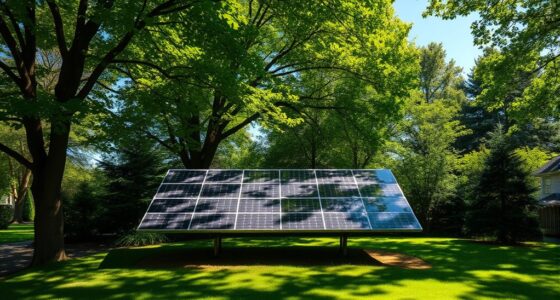
Solar panel degradation is a natural process that gradually reduces the efficiency of your solar energy system over time. As your panels age, they produce slightly less electricity, which is expected after years of operation. However, understanding how this degradation occurs and what protections are in place can help you manage your expectations and investments. Most solar panels come with solar panel warranties, typically covering performance for 25 years. These warranties assure you that your panels will maintain a certain level of efficiency, often around 80% of their original output, even as they age. Knowing this, you can plan for a gradual decline in power production, comfortably relying on your system for decades.
Solar panel warranties typically last 25 years, ensuring efficiency around 80% as they age.
Over the years, a small reduction in energy output might seem insignificant, but it’s important to recognize its environmental impact. As panels degrade, there’s a slight increase in the need for alternative energy sources to meet your household’s demands, which could mean more reliance on fossil fuels if renewable options become less efficient. Nonetheless, the overall environmental footprint remains low because solar panels still generate clean energy long after their initial efficiency drops. The degradation process is slow enough that the environmental benefits of solar power outweigh the minor declines in output, especially when panels are properly maintained and replaced when necessary.
The rate of degradation varies based on panel quality, installation conditions, and maintenance. High-quality panels tend to degrade at a rate of about 0.5% per year, meaning after 25 years, they might produce around 87.5% of their original power. This gradual decline is factored into the warranties offered by manufacturers, giving you peace of mind that your investment remains protected. Proper maintenance, such as regular cleaning and inspections, can also slow down degradation, ensuring you get the most out of your system for as long as possible. Additionally, advancements in panel durability** technology** continue to improve overall longevity and resistance to environmental stressors.
While some worry that degradation could lead to increased costs or environmental harm, the reality is that most panels are designed to last well beyond their warranty periods with minimal efficiency loss. Plus, advancements in technology continue to improve panel durability and performance. When you invest in a solar system with a solid warranty, you’re securing a sustainable energy solution that diminishes environmental impact over its lifetime, even as it ages. Ultimately, understanding the natural degradation process and the protections in place helps you make informed decisions, ensuring your solar investment remains beneficial for years to come.

Solar Panels 100Watt Portable 24% High-Efficiency 18V Foldable Solar Charger with USB Outputs for Power Stations, Phones, IP65 Waterproof Perfect for Camping, RVing, Home Backup and Off-Grid Blackouts
🔋𝐇𝐢𝐠𝐡 𝐂𝐨𝐧𝐯𝐞𝐫𝐬𝐢𝐨𝐧 𝐄𝐟𝐟𝐢𝐜𝐢𝐞𝐧𝐜𝐲 – Harness the power of the sun with our 100W portable solar panel, designed with…
As an affiliate, we earn on qualifying purchases.
As an affiliate, we earn on qualifying purchases.
Conclusion
As you watch your solar panels soak up sunlight year after year, remember they’re like seasoned travelers—gradually losing a bit of their youthful sparkle but still shining brightly. Over 25 years, they’ll gently fade to about 87.5% of their original power, quietly continuing to power your home. With proper care, your panels will remain steadfast, turning sunlight into energy and helping you make a lasting, eco-friendly impact—like a gentle breeze that never quite stops.

Renogy N-Type 400 Watt Solar Panel 24 Volt, 2Pcs 200W Solar Panels 16BB 25% High-Efficiency, PV Module Power Charger for RV Marine Cabin Roof Home Farm Battery and Other Off-Grid Applications
【Perfect Size for Class B Vans】This 400w solar panel is 7.5% smaller and 11.7% lighter than its predecessor,…
As an affiliate, we earn on qualifying purchases.
As an affiliate, we earn on qualifying purchases.

Electric Solar Panel Cleaning Kit, 20FT Solar Panel Cleaning Brush and Pole with Soap Dispenser, Telescopic Water Fed Pole, 100Mins Runtime, Solar Panel Cleaner Solution for Windows, Roof (Black)
Out-of-the-Box Ready. We've Got You Covered: Your time is precious. That's why this solar panel cleaning brush kit…
As an affiliate, we earn on qualifying purchases.
As an affiliate, we earn on qualifying purchases.

Proshopping 200A 100V Power Analyzer Multi Meter, High Precision DC Watt Meter Voltage Amp Tester, Battery Consumption Performance Monitor with Digital LCD Display for RC,Solar Panel, Wind Power
8 in 1 multi-function rc watt meter energy monitor: automatic detect and continuously display a real-time of Current…
As an affiliate, we earn on qualifying purchases.
As an affiliate, we earn on qualifying purchases.