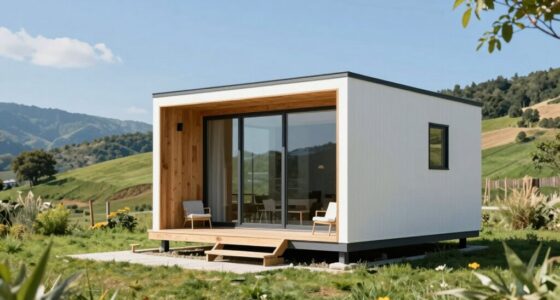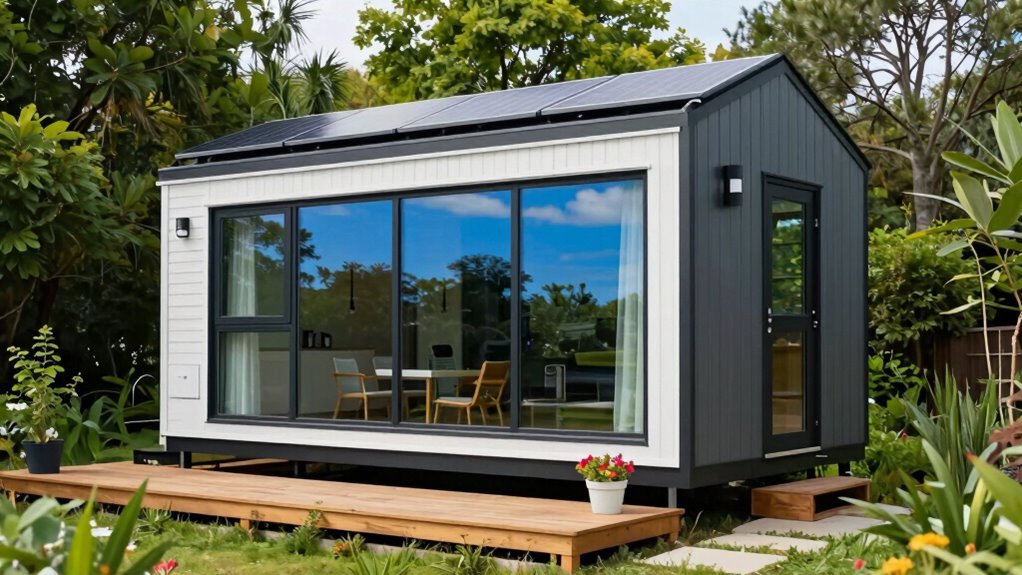

Yes, you might need different rules for full-time tiny house living, depending on where you plan to reside. Zoning laws, permits, and utility regulations can vary widely, especially between permanent homes and RV classifications. Some areas have restrictions on parking, building, or utility hookups. It’s essential to check local regulations beforehand to guarantee you stay compliant. Knowing your options helps avoid legal issues—continue to explore so you can get started confidently.

Get compact home essentials delivered free with Prime
- Fast, free delivery on millions of items
- Prime Video, Amazon Music and more included
- Member-only deals all year
Key Takeaways
- Zoning laws may classify tiny houses differently, affecting whether they’re considered permanent homes or RVs.
- Full-time living often requires permits, insurance, and compliance with local building and utility regulations.
- Certain areas restrict parking or construction of tiny houses, especially for permanent residency.
- Utility regulations may dictate solar power use, greywater disposal, and utility hookups for full-time occupancy.
- Community rules, such as HOA restrictions, can influence the legality of living in a tiny house full-time.
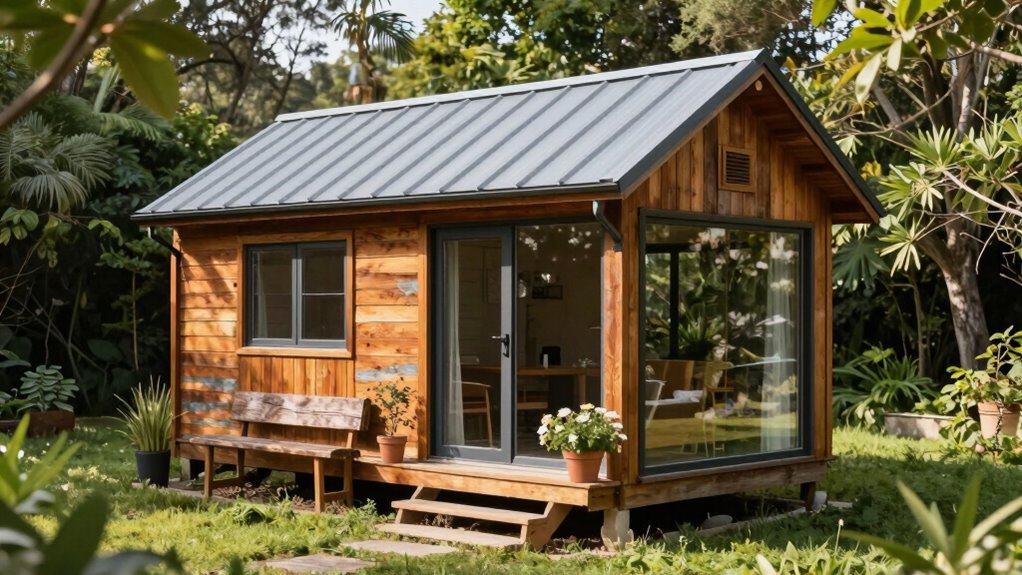
Are you curious about tiny houses and whether they’re right for you? If you’re considering living full-time in a tiny home, it’s important to understand that there are different rules and regulations that might apply compared to traditional homes. One key factor to think about is how zoning restrictions can affect your plans. Many areas have specific regulations about where tiny houses can be parked or built, especially if you’re planning to live in one permanently. Some neighborhoods might classify tiny homes as RVs or mobile units, which could limit your options for permanent residence. It’s essential to check with local zoning offices beforehand, so you’re aware of any restrictions or permits needed for full-time living.
Check local zoning laws to ensure your tiny home is legal for full-time living.
Another aspect to keep in mind is the use of portable appliances. When you live in a tiny house full-time, you often rely on portable appliances because space is limited. These appliances, like compact washers, foldable dishwashers, or portable heaters, help maximize your living space without sacrificing comfort. However, using portable appliances also ties into the rules about utility hookups and energy sources. Some areas have strict regulations about solar power, greywater disposal, or how you can connect to utilities. Knowing these rules upfront can save you a lot of trouble later and guarantee your tiny house remains compliant with local standards. Additionally, understanding zoning laws can help you navigate potential challenges related to permits, insurance, and regulations specific to tiny homes.
Living full-time in a tiny house also involves understanding whether your structure is classified as a permanent dwelling or a recreational vehicle. Depending on this classification, different rules apply for things like property taxes, building codes, and insurance. If your tiny house is considered a permanent dwelling, you might need to adhere to stricter building codes and obtain more permits. Conversely, if it’s categorized as an RV, the rules could be more relaxed, but you’ll need to ensure that you’re following RV-specific regulations, especially if you plan to stay in one place long-term. Some communities also have HOA restrictions that could impact your ability to live in a tiny house full-time, so it’s wise to research those as well. Additionally, piercing care and hygiene knowledge can be helpful if you plan to live in a tiny home long-term, as maintaining cleanliness and health is essential in confined spaces.
Furthermore, understanding building and legal considerations can help you navigate potential challenges related to permits, insurance, and zoning. It’s also wise to research local ordinances to ensure you’re compliant with any additional restrictions that may not be immediately obvious. Ultimately, living full-time in a tiny house requires careful planning around zoning restrictions and utility considerations. It’s not just about the size and cost but also about making certain you’re legally allowed to stay where you want and that your setup complies with local laws. By doing your homework now, you can avoid surprises later and enjoy a simple, efficient lifestyle in your tiny home. Understanding these rules helps you make informed decisions, ensuring your full-time tiny house experience is both comfortable and legal.
As an affiliate, we earn on qualifying purchases.
Frequently Asked Questions
Can I Live in a Tiny House on a Boat?
Yes, you can live in a tiny house on a boat, but you must prioritize boat safety and adhere to marine regulations. Make sure your boat is properly registered and meets safety standards. You’ll need to understand local laws about living on the water, including navigation rules and environmental regulations. Regular maintenance, safety gear, and compliance with maritime laws are essential to make your floating tiny home a safe and legal residence.
Are Tiny Houses Suitable for Extreme Climates?
Yes, tiny houses can be suitable for extreme climates if you focus on climate adaptation. You’ll want to incorporate effective insulation strategies to keep warmth in cold weather and stay cool during hot days. Proper insulation, weatherproofing, and ventilation are essential. By choosing the right materials and design features, you can make your tiny house comfortable and energy-efficient, regardless of how harsh the climate gets.
How Do I Insure a Tiny House?
You can insure your tiny house just like any other home, with specialized tiny house insurance. Notably, over 70% of tiny homeowners choose policies covering both structure and possessions. Start by checking building codes to guarantee compliance, then shop around for providers offering tiny house insurance. Make certain your policy covers potential damages and liability. Proper insurance gives you peace of mind, especially if you plan to live in it full-time.
Can I Build a Tiny House on a Foundation?
Yes, you can build a tiny house on a foundation, but you need to take into account foundation alternatives like concrete slabs or skids. It’s essential to verify that your tiny house meets building code compliance, especially for full-time use. Check local regulations, as some areas require a specific foundation type or permits. Properly anchoring your tiny house on a foundation provides stability, safety, and helps with insurance and long-term durability.
What Are the Financing Options for Tiny Houses?
Around 60% of tiny house owners finance their homes through personal loans or RV loans because traditional mortgages often don’t apply. You should explore financing options like these, but remember that tiny house permits and zoning restrictions vary widely by location. Some lenders may require specific permits or proof of zoning compliance, so it’s smart to verify local rules before securing financing. This guarantees your tiny house project stays on track.
Conclusion
Living full-time in a tiny house isn’t just a trend—over 68% of tiny homeowners report increased happiness and financial freedom. While rules can vary, knowing the specific regulations in your area guarantees a smooth progression. Remember, whether you’re staying put or on the move, understanding local codes helps you avoid surprises. Embrace the tiny house lifestyle confidently, and enjoy the freedom and simplicity it offers—your adventure begins with informed choices!
Halloween Picks
halloween
As an affiliate, we earn on qualifying purchases.