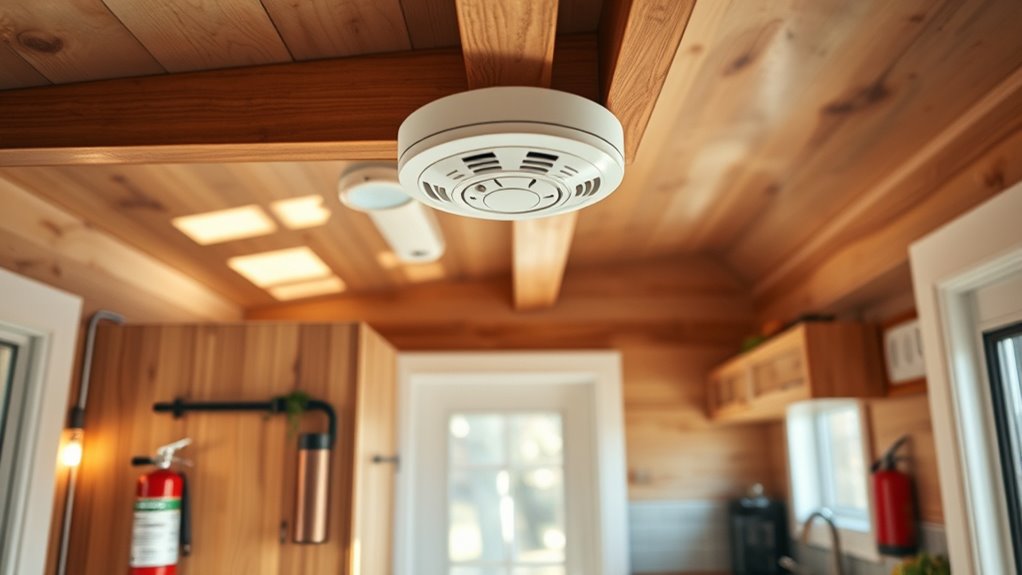

Did you know that tiny homes often lack some of the critical fire safety features found in larger residences? Small spaces can seem safer, but they also pose unique risks if certain precautions are overlooked. From escape routes to smoke detectors, many elements require careful planning. Understanding these often-overlooked features can make all the difference in protecting yourself and your belongings. Here’s what you need to know to truly enhance your tiny home’s safety.
Key Takeaways
- Install interconnected smoke alarms in key areas and test monthly for reliable early warning.
- Keep fire extinguishers accessible, especially near kitchens and heating sources, and know proper operation.
- Use fire-resistant materials for insulation and furnishings to minimize fire spread risks.
- Develop and regularly practice multiple escape routes, keeping pathways free of clutter.
- Stay informed about local fire codes and incorporate safety features like alarms and extinguishers in maintenance.

Living in a tiny home offers freedom and simplicity, but it also requires extra attention to fire safety. With limited space and close quarters, a fire can escalate quickly, making preparedness essential. One of the most critical steps you can take is developing clear fire escape plans. You need to know exactly how you’ll exit your home swiftly if a fire breaks out. Practice these plans regularly so everyone knows what to do and where to go. Consider multiple escape routes from each area of your tiny home, especially since space is tight and obstacles can block paths. Make sure your escape routes are free of clutter and easily accessible at all times.
Develop clear, practiced fire escape plans with multiple routes to stay safe in your tiny home.
Another essential aspect of fire safety is smoke detector maintenance. Smoke alarms are your first line of defense, providing early warnings that can save lives. Regularly test your smoke detectors to ensure they’re working properly—most models have a test button; press it monthly to confirm functionality. Change the batteries at least once a year, or immediately if the alarm chirps to signal low power. Keep smoke detectors clean and dust-free, as dirt can interfere with their sensors. Install smoke alarms in key areas like the kitchen, sleeping zones, and near heating sources. Given the limited space in tiny homes, consider interconnected smoke detectors, so when one sounds, they all do, alerting everyone no matter where they are.
Beyond alarms and escape plans, other features often overlooked include fire-resistant materials and portable fire extinguishers. Using fire-resistant insulation and furnishings reduces the risk of a small fire spreading rapidly. Keep a fire extinguisher within arm’s reach—ideally near the kitchen or any heating appliances—and make sure you know how to use it correctly. Regularly check its pressure gauge and replace it if it’s expired or damaged. Also, be mindful of candles, electrical cords, and heating devices, ensuring they’re used safely and never left unattended. Additionally, understanding city-specific fire codes can ensure your tiny home complies with local safety regulations, further reducing risk.
Living in a tiny home demands heightened awareness of fire hazards. By establishing and practicing fire escape plans, maintaining smoke detectors diligently, and equipping yourself with the right safety tools, you create a safer environment for yourself and your loved ones. Being proactive minimizes risks, giving you peace of mind so you can enjoy the simplicity and freedom that your tiny home offers. Remember, fire safety is not a one-time task but an ongoing commitment to keeping your home and life secure.
Conclusion
By neglecting these tiny home fire safety tips, you’re risking more than just a small accident—you could be inviting disaster into your very sanctuary. Think about it: one overlooked smoke detector or careless candle could turn your cozy dream into chaos in seconds. Stay vigilant, follow safety practices, and never underestimate the power of preparation. Because in a tiny home, a tiny mistake can become a catastrophe—don’t let that happen to you.

Hi, I’m Emma. I’m the Editor in Chief of Tiny House 43, a blog all about tiny houses. While tree houses are often associated with childhood, they can be the perfect adult retreat. They offer a cozy space to relax and unwind, surrounded by nature. And since they’re typically built on stilts or raised platforms, they offer stunning views that traditional homes simply can’t match. If you’re looking for a unique and romantic getaway, a tree house tiny house might just be the perfect option.