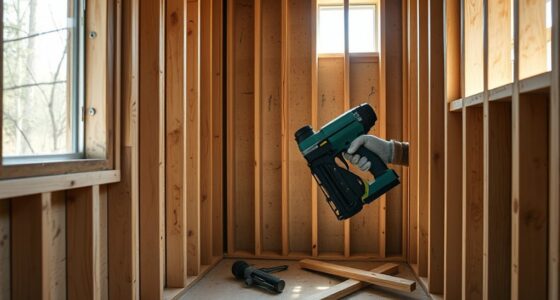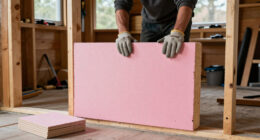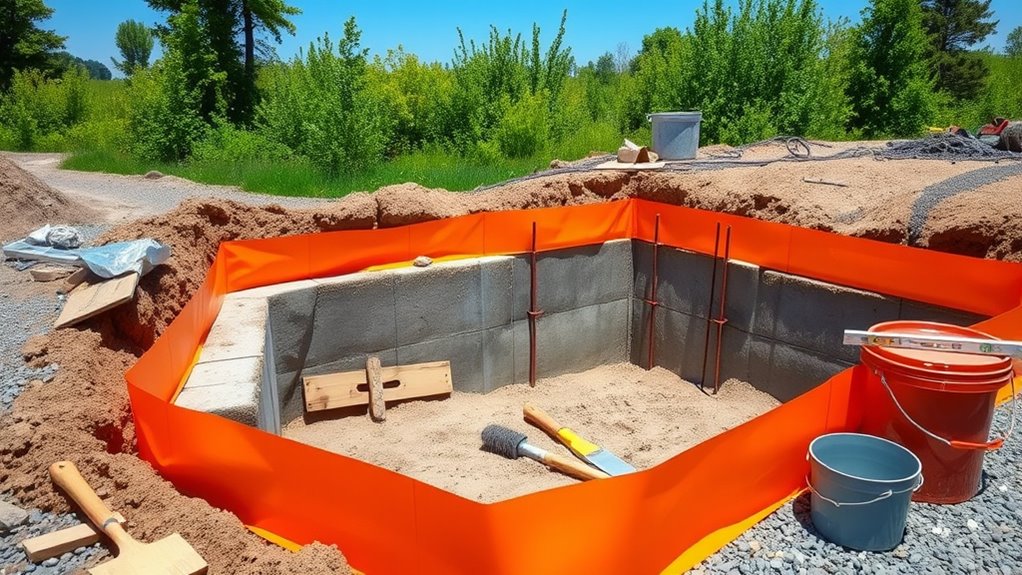

To build a tiny house foundation from scratch, start by choosing the right type—trailer, pier, or slab—based on mobility and site conditions. Prepare the site by clearing and leveling the ground, then construct a sturdy frame or pier supports according to your chosen foundation. Make certain the foundation is level, well-insulated, and properly reinforced to prevent moisture and shifting issues. Proper planning and careful construction are key—later details will show you how to create a reliable, long-lasting base.

Get compact home essentials delivered free with Prime
- Fast, free delivery on millions of items
- Prime Video, Amazon Music and more included
- Member-only deals all year
Key Takeaways
- Determine the appropriate foundation type (trailer, pier, or slab) based on mobility, site conditions, and long-term plans.
- Prepare a level, stable base by clearing and compacting the site, ensuring proper drainage and moisture barriers.
- Build the foundation structure, such as framing for trailers or setting piers and footings for fixed foundations, following local codes.
- Install utilities, including electrical wiring, plumbing, and ventilation, during or after foundation construction for easy access.
- Inspect and level the foundation thoroughly, ensuring stability and proper support before proceeding with the tiny house build.
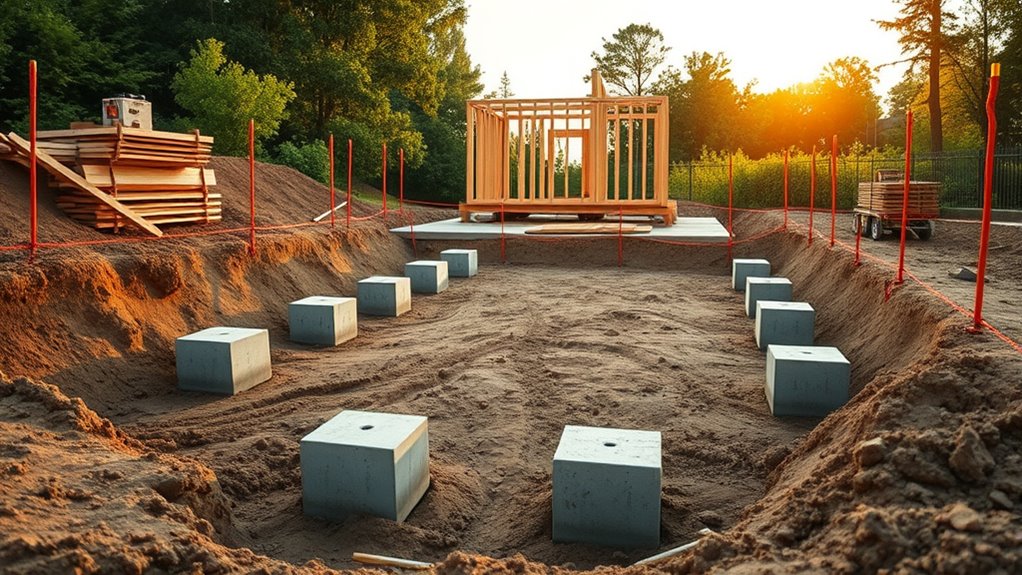
Are you ready to lay the groundwork for your tiny house? Building a solid foundation is essential, and it sets the stage for everything that follows. When constructing a tiny house, you want a foundation that’s both durable and tailored to your needs. Think of it as the backbone of your home, supporting your dreams and your daily life. Before you start pouring concrete or assembling blocks, consider how your tiny house will function and how you’ll use space inside. This will influence your choice of foundation type and design. For example, if you plan to move your tiny house frequently, a trailer-based foundation might be best, but if it’s a permanent fixture, a pier or slab foundation could work better.
Building a solid, tailored foundation is essential for a stable, functional tiny house.
Once you’ve decided on the type, it’s critical to plan your interior design carefully, as it impacts how you’ll arrange portable appliances and other essential elements. Portable appliances, like mini-fridges, microwave ovens, or compact washers, are essential for maximizing space efficiency. Your foundation should accommodate these appliances seamlessly, with enough room for electrical wiring, plumbing, and ventilation. Ensuring proper placement of outlets and hookups during the foundation phase can save you headaches later. When designing the interior, think about how the foundation’s layout influences your furniture placement and movement flow. A well-planned foundation allows your interior design to flow naturally, making your tiny house feel spacious and comfortable despite its small footprint.
Getting the foundation right involves more than just digging holes or pouring concrete. It requires meticulous planning, especially as you consider the integration of utilities and interior elements. If you’re using a trailer, inspect its frame for stability and ensure it can support the interior design choices and portable appliances you plan to include. For fixed foundations, proper insulation and moisture barriers are essential to prevent issues down the line, especially if you want to keep your tiny house cozy and energy-efficient. Remember, your foundation should be level and sturdy, providing a reliable base for your interior design plans and portable appliances. Additionally, considering foundation stability and how it influences long-term durability can help ensure your tiny house remains safe and functional over time.
As you proceed, keep in mind that the foundation is not just a structure but a platform that influences everything from layout to daily comfort. Investing time in the planning and construction process now will pay off by giving you a stable, functional, and beautiful home to enjoy for years to come. Whether you’re building on wheels or on a permanent site, a solid foundation is the first step toward creating your perfect tiny house.
tiny house trailer foundation kit
As an affiliate, we earn on qualifying purchases.
As an affiliate, we earn on qualifying purchases.
Frequently Asked Questions
What Permits Are Required for Tiny House Foundations?
You’ll need permits that cover your tiny house foundation, which vary depending on your location. Check local zoning regulations first, as they determine whether you can build and where. You’ll also need to provide plans detailing your foundation materials and construction methods. Contact your city or county building department early to guarantee you get all necessary permits, avoiding fines or delays during your tiny house project.
How Much Does a Tiny House Foundation Typically Cost?
You’ll typically spend between $1,000 and $5,000 on a tiny house foundation, depending on size and materials. Your cost estimation includes foundation materials like concrete, gravel, and lumber. Factors such as site prep, permits, and labor can increase expenses. To keep within budget, compare prices for materials and choose a foundation type that fits your tiny house’s weight and design. Planning carefully guarantees you get the best foundation at a fair price.
Can I Build a Tiny House Foundation Myself?
Yes, you can build a tiny house foundation yourself. Start with DIY tips like planning carefully and choosing the right material choices, such as concrete or pier blocks. Make sure to research local building codes and get any necessary permits. Prepare your site thoroughly, and consider seeking advice from experienced builders or online tutorials. With patience and proper planning, you can create a solid foundation that supports your tiny house effectively.
What Tools Are Essential for Foundation Construction?
You’ll need essential tools like a tape measure, level, shovel, and sledgehammer for foundation construction. Use these with foundation materials such as concrete, gravel, and rebar to guarantee proper construction techniques. A power drill and wheelbarrow help mix and transport materials efficiently. Don’t forget safety gear like gloves and goggles. These tools and materials work together to create a stable, level foundation that supports your tiny house reliably.
How Long Does It Take to Build a Tiny House Foundation?
Building a tiny house foundation typically takes about one to two weeks, depending on your construction timeline and the complexity of your foundation materials. You’ll need to prepare the site, pour concrete, and allow it to cure properly. If you use simple materials like concrete blocks or poured concrete, the process moves faster. Planning ahead and staying organized can help you complete the foundation efficiently within your desired timeframe.
Conclusion
Building your tiny house foundation might seem intimidating, but it’s a rewarding challenge that sets your dream home in motion. Just like a sturdy root system supports a towering tree, your foundation anchors your future. While the process demands effort and precision, the freedom of a personalized, self-built space makes every step worthwhile. Remember, a solid start isn’t just about bricks and concrete—it’s about creating a lasting home where your story begins.
Halloween Picks
halloween
As an affiliate, we earn on qualifying purchases.